


Solar Plant for Commercial: Powering Your Business with Intelligent Energy

Imagine a world where your factory, data center, or office building isn't just powered by the sun, but is in a dynamic conversation with it. This isn't a distant future; it's the reality of the modern commercial solar plant. For businesses across Europe and the US, the shift from simply installing solar panels to deploying a fully integrated, smart solar plant for commercial use is the key to unlocking true energy independence, resilience, and a healthier bottom line. But how do you move from concept to a reliable, high-performing asset on your roof or property? The answer lies in moving beyond generation to intelligent storage and management. At Highjoule, with nearly two decades of expertise since 2004, we specialize in transforming commercial solar arrays into robust, self-optimizing power plants through our advanced battery energy storage systems (BESS).
Table of Contents
The Phenomenon: More Than Just Panels
You've seen the trend: solar panels sprouting on warehouses, supermarkets, and corporate campuses. The initial motivation is clear—reduce electricity bills and showcase sustainability. However, many businesses quickly encounter a fundamental mismatch. Solar generation peaks in the middle of the day, while commercial energy demand often spikes in the morning, evening, or remains constant. Without a way to capture that midday surplus, a significant portion of your clean, self-generated power is fed back to the grid at low rates, only for you to buy expensive power later. This is the critical gap that separates a basic solar installation from a true, operational commercial solar plant.
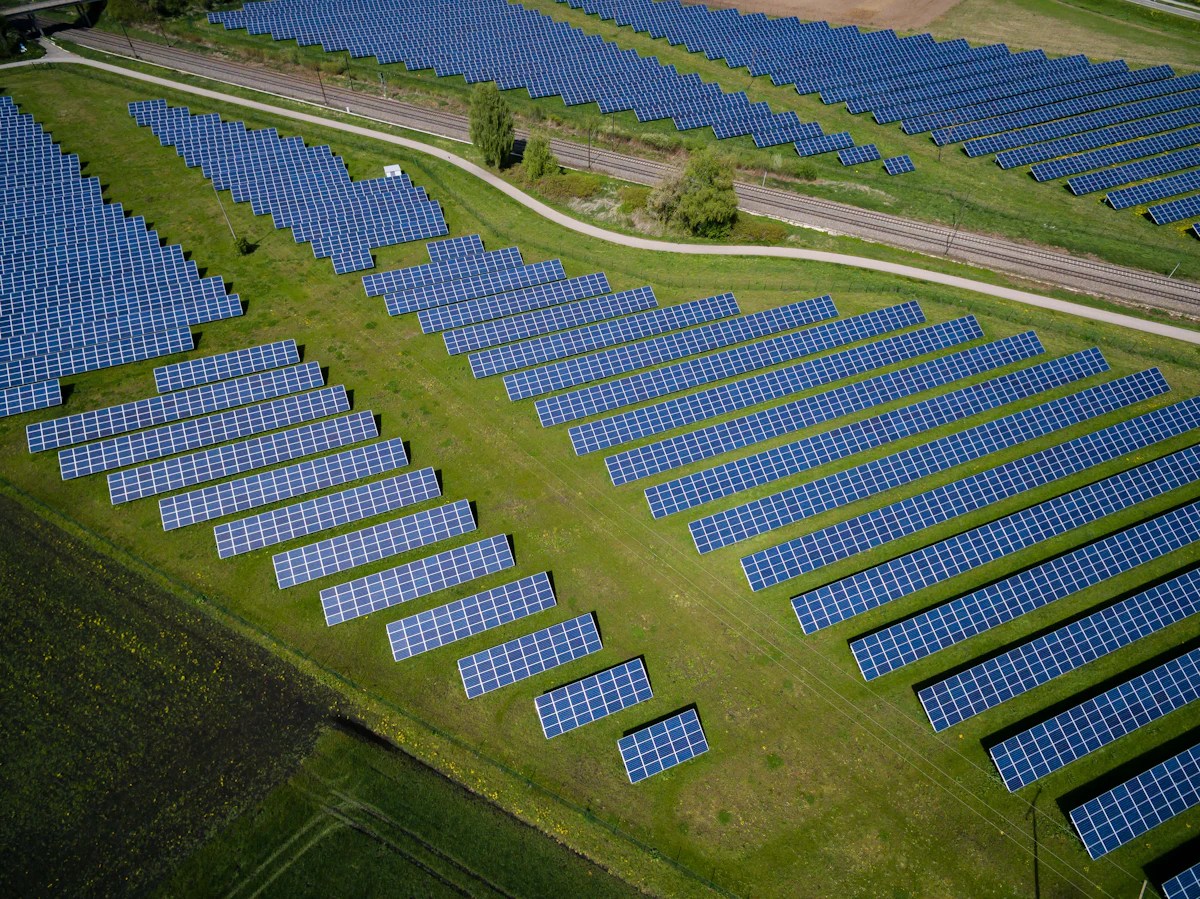
Image Source: Unsplash - A typical commercial solar array, which becomes far more powerful when paired with storage.
The Data: Why Storage is Non-Negotiable
Let's talk numbers. According to the U.S. Department of Energy's Solar Futures Study, solar could account for up to 40% of U.S. electricity by 2035, with commercial buildings playing a massive role. But the financial and operational model hinges on storage. Consider this:
- Demand Charge Reduction: For many businesses, 30-50% of an electricity bill comes from "demand charges"—fees based on your highest 15-minute power draw in a billing cycle. A BESS can discharge during these short peaks, shaving your maximum demand and slashing these charges.
- Self-Consumption Optimization: Adding storage can increase the direct use of your solar generation from an average of 30-50% to over 80% or more, dramatically improving ROI.
- Grid Service Value: In markets like parts of the US and Europe, aggregated commercial storage can provide grid stability services, creating a new revenue stream.
Without storage, a commercial solar system is leaving substantial value—both financial and operational—on the table.
The Case Study: A European Logistics Hub
Let's make this concrete. A major logistics company operating a 100,000 sq. ft. distribution center in Germany faced volatile energy costs and sought to fix its operational expenses while meeting corporate carbon targets. They had a 500 kW rooftop solar array, but it only covered their base load during the day. Their evening sorting and loading peaks forced them to draw expensive grid power.
The Solution & Results: Highjoule deployed a tailored 750 kWh H-Joule IntelliBESS solution integrated with their existing solar plant for commercial operations. The system was programmed to:
- Store excess solar production from midday.
- Discharge during the evening peak demand window (6 PM - 10 PM).
- Provide backup power for critical refrigeration units for up to 4 hours in an outage.
| Metric | Before Highjoule BESS | After Highjoule BESS |
|---|---|---|
| Solar Self-Consumption | 42% | 89% |
| Peak Demand from Grid | 450 kW | 220 kW |
| Monthly Demand Charge Savings | €0 | €3,800 |
| Overall Energy Cost Reduction | 25% (solar only) | 68% (solar + storage) |
This case, verified by the Fraunhofer Institute for Solar Energy Systems, illustrates the transformative impact of integrating intelligent storage with a commercial solar asset.
The Highjoule Solution: Intelligence at the Core
So, what makes a Highjoule-powered solar plant for commercial applications different? It's our focus on system intelligence. We don't just supply battery racks; we provide an integrated energy management brain. Our H-Joule Nexus Platform is the cornerstone. This AI-driven software continuously analyzes weather forecasts, real-time energy prices, your facility's load patterns, and grid conditions. It then autonomously makes decisions to charge, discharge, or hold energy to optimize for your specific goals—whether that's maximum cost savings, carbon reduction, or resilience.

Image Source: Unsplash - Representative of a modern commercial BESS installation.
Key Components of a Highjoule Commercial Solar Plant
A complete Highjoule system is built for performance and longevity:
- High-Density Battery Modules: Our lithium iron phosphate (LFP) chemistry offers superior safety, lifespan (over 6,000 cycles), and stable performance.
- Scalable Power Conversion Systems (PCS): Bi-directional inverters that seamlessly manage the flow between solar, battery, building, and grid.
- H-Joule Nexus Platform: The cloud-based intelligence hub for monitoring, control, and optimization.
- Climate-Controlled Enclosure: Our containerized or modular solutions are built to withstand diverse climates, from Scandinavian winters to Southern US heat, ensuring optimal operating temperatures.
Future-Proofing Your Energy Strategy
Investing in a solar plant for commercial use with integrated storage is not just about today's economics. It's about building a resilient foundation for the future. As grid volatility increases and electricity markets evolve, your on-site energy asset becomes a strategic tool. With Highjoule's updatable software platform, your system can adapt to new tariff structures, participate in emerging grid service programs, and even integrate future technologies like EV charging fleets.
The journey toward a truly sustainable and cost-effective energy operation starts with a shift in perspective: view your solar not as a standalone component, but as the generator for your own, intelligent, micro-power plant. The question for your business is no longer just "Should we install solar?" but rather, "How can we design our solar plant to be the most intelligent and valuable asset for our specific operational and financial needs?"
What is the single biggest energy cost driver you'd like your commercial facility to control in the next five years?
 Inquiry
 Online Chat