


Understanding Solar Panels Wholesale Price: A Smart Buyer's Guide for 2024
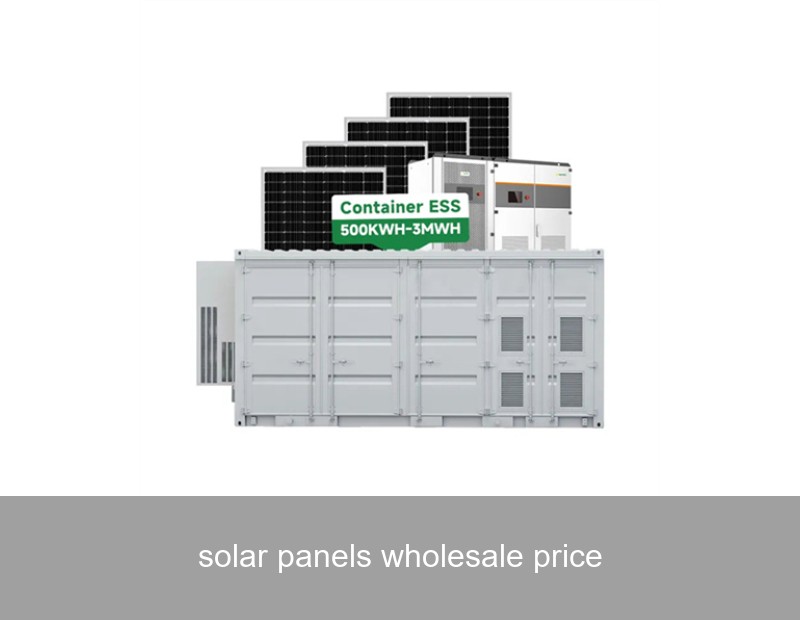
If you're a business owner, project developer, or a savvy homeowner looking to invest in solar, you've likely asked the crucial question: "What drives the solar panels wholesale price?" It's more than just a number on a quote. The final cost per watt is the culmination of a complex global dance of technology, policy, and supply chains. Getting the best value isn't just about finding the cheapest panel; it's about understanding the total cost of ownership and how the hardware integrates into a reliable, high-performing system. This is where the expertise of a seasoned system provider like Highjoule becomes invaluable. Founded in 2005, Highjoule has navigated these market dynamics for nearly two decades, providing intelligent, integrated storage solutions that ensure your solar investment delivers maximum returns, regardless of fluctuating component costs.
Table of Contents
- Key Factors Influencing Solar Panels Wholesale Price
- Looking Beyond the Panel: The True System Cost
- Case Study: A Commercial Real-World Example
- Highjoule's Role: Adding Value Beyond the Wholesale Quote
- Future Trends and Your Next Steps
Key Factors Influencing Solar Panels Wholesale Price in 2024
Let's break down the primary elements that distributors and system integrators consider when setting their wholesale rates. Understanding these helps you evaluate quotes more critically.
1. Panel Technology and Efficiency
Not all photovoltaic cells are created equal. Monocrystalline silicon panels, known for their high efficiency and sleek look, command a premium over polycrystalline models. The emerging player, N-type TOPCon technology, offers even better performance and longevity but at a higher initial cost. As a rule of thumb, a jump from 21% to 23% module efficiency can significantly reduce balance-of-system costs (like racking and land use), which can justify a higher wholesale price per panel.

Image Source: Unsplash - Visual representation of solar cell technology.
2. Raw Material and Supply Chain Dynamics
The cost of polysilicon, the base material for most panels, is notoriously volatile. After spikes in 2021-2022, prices have normalized, applying downward pressure on wholesale prices. Furthermore, policies like the U.S. Inflation Reduction Act are incentivizing domestic manufacturing, potentially creating a bifurcated market between imported and domestically sourced panels with different price points.
3. Market Scale and Order Volume
This is the core of wholesale: volume discounts. A developer purchasing 1 MW of panels will get a vastly different per-watt price than someone buying 100 kW. Large-scale orders (10 MW+) can leverage the lowest commodity prices. However, beware of "warehouse" or "fire-sale" wholesales of obsolete or lower-tier equipment.
| Panel Type (Tier 1 Manufacturer) | Efficiency Range | Estimated Wholesale Price per Watt (Large Volume) | Best For |
|---|---|---|---|
| Polycrystalline | 17-19% | $0.20 - $0.28 | Large-scale utility projects with ample space |
| Monocrystalline (PERC) | 20-22% | $0.25 - $0.35 | Commercial & residential roofs with space constraints |
| N-type (TOPCon/HJT) | 22%+ | $0.30 - $0.40 | Maximizing output in premium commercial/residential projects |
Note: Prices are illustrative and vary daily based on market conditions, volume, and manufacturer.
Looking Beyond the Panel: The True System Cost
Focusing solely on the solar panels wholesale price is a classic mistake. The panel is just one component. The real metric is the Levelized Cost of Energy (LCOE) – the total cost of the system over its lifetime divided by the energy it produces.
- Balance of System (BOS): Inverters, racking, cabling, and combiner boxes can account for up to 50% of total system cost. A cheap panel paired with an unreliable inverter is a poor investment.
- Installation & Soft Costs: Labor, permitting, engineering, and grid connection fees are significant, especially in markets like the U.S. and Europe.
- The Storage Imperative: This is the game-changer. Without storage, excess solar energy is exported to the grid at low rates. Adding a battery allows you to use that cheap, self-generated power at night, dramatically improving ROI. This is where an integrated solution shines.
Case Study: A Commercial Real-World Example
Let's examine a 250 kW commercial rooftop installation in Southern Germany for a mid-sized manufacturing firm.
Initial Challenge (2021): The company sourced panels at a competitive wholesale price of €0.28/W. However, the system was designed without storage. They faced two issues: 1) They exported over 40% of their daytime production to the grid for a meager feed-in tariff, and 2) They still bought expensive peak electricity from the grid in the early evening.
Highjoule Solution: In 2023, the firm partnered with Highjoule to retrofit a Highjoule HES-100 Commercial Battery Energy Storage System (BESS). The BESS was integrated with the existing solar inverters via Highjoule's proprietary energy management system (EMS).
Data & Results:
- Self-Consumption Rate: Increased from ~60% to over 85%.
- Grid Energy Cost Reduction: Reduced peak grid purchases by 90%.
- Payback: The storage system achieved a projected payback of under 6 years, thanks largely to Germany's high electricity prices and the intelligent dispatch of the Highjoule EMS, which optimizes for time-of-use tariffs and grid services.
This case shows that the savings generated by intelligent storage can far outweigh the marginal savings from negotiating a slightly lower solar panels wholesale price.

Image Source: Unsplash - Example of a commercial solar plus storage setup.
Highjoule's Role: Adding Value Beyond the Wholesale Quote
As a global advanced energy storage system provider, Highjoule doesn't sell solar panels. We make the power they generate more valuable and reliable. Our expertise transforms a simple solar procurement decision into a strategic energy investment.
- Intelligent System Integration: Our HES Series for residential and commercial applications seamlessly integrates with any major solar inverter brand. We focus on the brain of the system—our EMS—which ensures every kilowatt-hour from your panels is used in the most economical way possible.
- Focus on Total Lifetime Value: We help you calculate the true LCOE. A premium panel with higher efficiency and degradation warranty, coupled with a Highjoule BESS, often yields a lower LCOE than a system built around the absolute cheapest panels.
- Future-Proofing Your Investment: With our Microgrid Controller for industrial applications, your solar+storage system can become a resilient microgrid, providing backup power during outages—a value that far exceeds simple kilowatt-hour accounting.
Think of it this way: buying solar panels wholesale is like buying a high-performance engine. Highjoule provides the advanced transmission, intelligent drivetrain, and fuel management system that turns that engine into a championship-winning, efficient vehicle.
Future Trends and Your Next Steps
The trend is clear: solar costs will continue to decrease, but grid electricity prices and demand for resilience will rise. According to the International Energy Agency (IEA), solar PV remains the cheapest source of new electricity generation in most countries. The strategic focus is shifting from mere solar panels wholesale price to "value stacking" – using solar + storage for self-consumption, peak shaving, backup power, and even grid services.
So, as you evaluate your next solar project, ask yourself a more profound question: How can I design a system that not only captures the sun but also captures the maximum financial and operational value from every photon, 24 hours a day?
Is your current solar project analysis accounting for the full potential of integrated storage, or are you still primarily focused on the component-level cost?
 Inquiry
 Online Chat