


Solar Panels for Commercial Buildings: Powering Business with Sustainable Energy
Table of Contents
Introduction: A Commercial Energy Shift
Look around at any industrial park or city skyline today. What you’re increasingly likely to see, alongside the classic architecture, are shimmering arrays of solar panels for commercial buildings. This isn't just a trend; it's a fundamental shift in how businesses source power. For facility managers, CFOs, and sustainability officers across Europe and the US, the question has moved from "Why solar?" to "How do we implement it effectively and maximize its value?" The goal is no longer just green credentials, but energy resilience, predictable costs, and a tangible contribution to the bottom line.
The Phenomenon: Rising Costs & Rising Expectations
Commercial operations face a perfect storm of energy challenges. Grid electricity prices are volatile, with significant spikes seen in recent years across markets like Germany, the UK, and California. Simultaneously, stakeholder pressure—from investors, customers, and regulators—demands concrete action on carbon reduction. Power outages, whether from aging infrastructure or extreme weather events, pose a direct threat to operational continuity and revenue. In this context, a rooftop or carport solar array transforms from a capital expense into a strategic asset. It’s a direct, on-site response to these interconnected pressures.
The Data: Why Solar Makes Business Sense
Let's talk numbers. According to the International Renewable Energy Agency (IRENA), the global weighted average levelized cost of electricity (LCOE) for utility-scale solar photovoltaics has fallen by over 88% between 2010 and 2022. For a commercial entity, this translates to a compelling return on investment. A well-designed system can typically offset 30-70% of a building's daytime load, locking in energy costs for 25+ years. Consider this simplified breakdown for a 500 kW system on a large warehouse:
| Metric | Typical Value | Business Impact |
|---|---|---|
| Annual Energy Production | 550,000 - 700,000 kWh | Direct reduction in utility bills |
| Payback Period (with incentives) | 5-8 years | Strong ROI post-payback |
| System Lifespan | 25-30+ years | Decades of low-cost operation |
| Carbon Offset Annually | ~400 metric tons CO2e | Progress toward Scope 2 emissions goals |
These figures are why commercial solar is a boardroom discussion. It's an operational efficiency play as much as an environmental one.
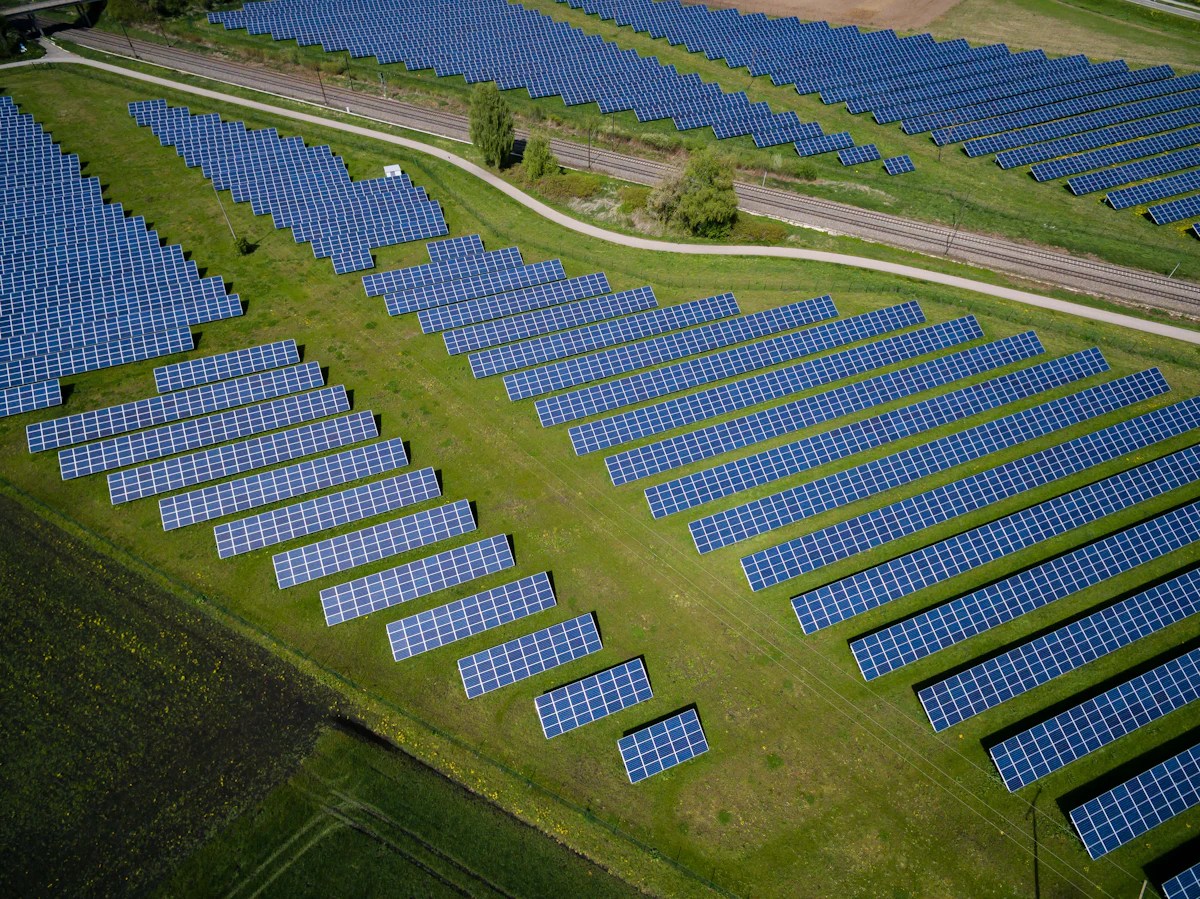
Image: A modern commercial warehouse with a fully utilized rooftop solar array. Source: Unsplash
Real-World Case: A European Logistics Hub
Let's make this tangible. A major logistics and distribution company in the Netherlands operated a 40,000 sqm fulfillment center. Their challenge was twofold: manage soaring energy costs that directly impacted per-unit handling expenses, and meet the stringent corporate net-zero target set by their parent company.
They partnered with Highjoule to design and deploy a comprehensive 1.2 MW rooftop solar system, integrated with a 500 kWh battery energy storage system (BESS). Here are the results after one year of operation:
- Energy Independence: The solar array now meets 65% of the facility's total annual electricity demand.
- Cost Savings: Achieved a 40% reduction in net energy costs, saving over €120,000 annually.
- Peak Shaving: The integrated Highjoule BESS automatically dispatches stored solar energy during peak tariff periods, drastically reducing demand charges—a often-overlooked but substantial line item on commercial bills.
- Resilience: The system provides critical backup power for lighting and security systems during grid interruptions, ensuring 24/7 facility security.
This project exemplifies the modern approach to solar panels for commercial buildings: it's not an isolated installation, but the core of an intelligent, multi-functional energy ecosystem.
Beyond Panels: The Complete Energy Solution
This is where the conversation deepens. While high-efficiency photovoltaic modules are the engine, their true potential is unlocked through integration and intelligence. At Highjoule, with nearly two decades of experience, we view a commercial solar installation as the starting point of a smarter energy strategy.
Our approach centers on the Highjoule Intelligent Energy Platform (HIEP). This platform doesn't just monitor solar production; it orchestrates it. It intelligently decides when to consume solar power directly, when to store it in our integrated battery systems, and when to potentially sell excess back to the grid based on real-time market prices (where available). For businesses with electric vehicle fleets, the platform can even optimize charging schedules using surplus solar generation.
Our commercial solutions, like the Highjoule C&I Series, are designed for scalability and durability. They combine tier-1 solar modules with our proprietary inverter and storage technology, all managed through a single, user-friendly interface. This holistic solution ensures that your investment in solar panels for commercial buildings delivers the maximum possible financial and operational resilience.

Image: Advanced energy management system monitoring solar production and consumption. Source: Unsplash
Key Components of a Commercial Solar System
Understanding the system's anatomy helps in making an informed decision.
- Solar Panels (PV Modules): The workhorse. For commercial applications, we prioritize high-efficiency, durable panels with strong performance warranties to ensure long-term yield.
- Inverters: The brain of the PV system, converting DC solar power to usable AC power. Highjoule's inverters are built for grid-support functions and seamless integration with storage.
- Battery Storage (BESS): The game-changer. Adding a battery, like our Highjoule H-Cube, allows you to use solar power after sunset, shave peak demand charges, and provide backup power.
- Energy Management System (EMS): The orchestrator. Our HIEP software makes all the components work together intelligently, automating decisions to save you the most money.
- Monitoring & Reporting: Transparency is key. Real-time dashboards and detailed reports track production, savings, and carbon impact, data crucial for ESG reporting.
The Future of Commercial Solar Energy
The trajectory is clear. As noted by the International Energy Agency (IEA), solar PV is on track to become the world's largest source of installed power capacity. For commercial buildings, this will evolve from single-building systems to interconnected "energy-aware" campuses that trade power locally, participate in grid flexibility markets, and fully integrate with electric vehicle fleets. The commercial building will become an active node in the energy grid, not just a passive consumer.
This future hinges on choosing a partner that understands both the technology and the evolving market landscape. It's about building a system today that is ready for the opportunities of tomorrow.
Given the unique energy profile, physical constraints, and financial goals of your commercial property, what would be the first operational cost you'd want a customized solar-plus-storage analysis to address?
 Inquiry
 Online Chat