


Understanding Solar Panel Prices in Malta: A 2024 Guide for Smart Energy Investment
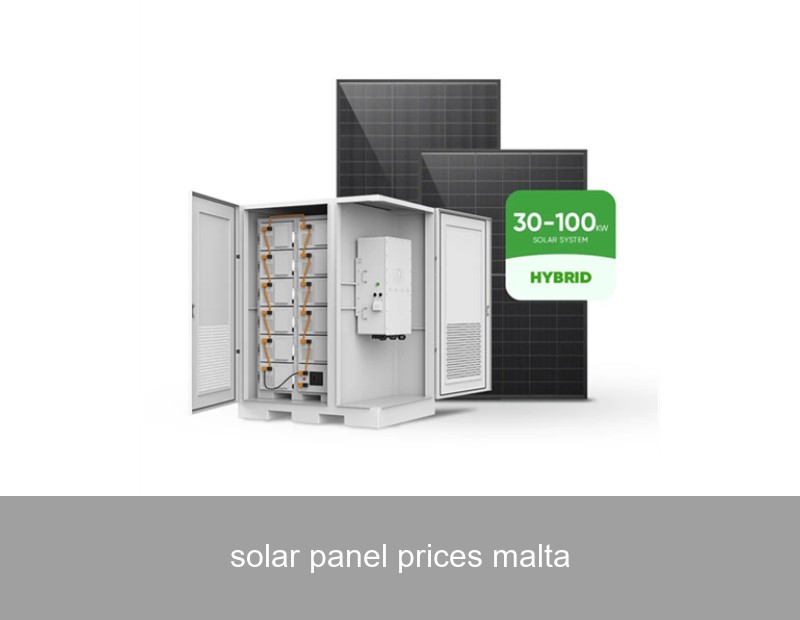
If you're a homeowner or business in Malta looking at the solar market, you've likely asked the central question: what drives solar panel prices in Malta, and is now the right time to invest? The Maltese islands, blessed with abundant sunshine, present a perfect landscape for solar energy. Yet, the initial cost can feel like a barrier. This article will demystify the factors influencing solar PV system costs, present real data, and show how focusing on the complete energy storage solution—not just panels—is key to maximizing your return under the Maltese sun.
Table of Contents
- The Malta Phenomenon: High Potential, Specific Challenges
- Breaking Down the Costs: More Than Just Panels
- The Game Changer: How Battery Storage Redefines Solar Value
- Case Study: A Gozo Family Home's Journey to Energy Independence
- Highjoule's Role: Delivering Intelligent Storage for Maltese Resilience
- Future Outlook: Where Are Solar Panel Prices in Malta Heading?
The Malta Phenomenon: High Potential, Specific Challenges
Malta boasts over 3,000 hours of sunshine annually, a figure that makes solar energy a no-brainer. Government schemes and EU funding have historically spurred adoption. However, the unique Maltese context—limited roof space, high urban density, and a desire for energy security—means evaluating a solar investment requires a local lens. The conversation must shift from simple solar panel prices in Malta to the value of a holistic system that captures, stores, and manages every kilowatt-hour you produce.

Image: Combining modern solar technology with Malta's unique architecture is key. Source: Unsplash
Breaking Down the Costs: More Than Just Panels
As of 2024, the average price for a fully installed residential solar PV system in Malta ranges from €1,200 to €1,800 per kWp, depending on complexity and component quality. A typical 4kWp system might cost between €5,000 and €7,200 before grants. But what does this include?
- Photovoltaic Panels: The most visible component. Prices vary by efficiency (monocrystalline being more efficient and slightly more expensive) and brand warranty.
- Inverter: The "brain" that converts DC to AC power. A critical component where quality dictates system longevity.
- Mounting Structure & Installation: Crucial for Malta's windy conditions and varied roof types (flat, pitched, traditional).
- Balance of System (BOS): Cabling, switches, and safety equipment.
- Planning & Permits: Navigating local regulations.
The most transformative—and increasingly essential—add-on is a battery energy storage system (BESS). While it increases upfront cost, it dramatically improves the economics by allowing you to use your solar power at night, shielding you from peak utility rates.
The Game Changer: How Battery Storage Redefines Solar Value
Think about it: without storage, excess solar energy generated midday is exported to the grid at a lower rate, only for you to buy back expensive electricity in the evening. This mismatch limits your savings. Adding a battery solves this, boosting self-consumption from ~30-40% to 70% or more. For Maltese families and businesses, this isn't just about savings; it's about resilience and predictability in energy costs.
Case Study: A Gozo Family Home's Journey to Energy Independence
Let's examine a real-world example from Gozo. The Attard family installed a 5kWp solar array in 2022. Initially, they faced the classic export/import imbalance.
| Metric | Without Storage (2022) | With Highjoule H2 Battery (2023) |
|---|---|---|
| Solar Self-Consumption | ~35% | ~82% |
| Monthly Grid Import | 210 kWh | 45 kWh |
| Estimated Monthly Bill | €85 | €18 |
| ROI Timeline (Est.) | 7-8 years | 5-6 years |
In early 2023, they integrated a Highjoule H2 Residential Battery System (10 kWh capacity). The intelligent energy management system learned their usage patterns, automatically storing excess daytime solar and discharging during evening peaks. During a planned local grid outage, the system seamlessly provided backup power, a feature the family hadn't fully valued until they experienced it. Their total system cost increased, but the payback period shortened due to drastically reduced grid purchases. "The battery wasn't just an add-on; it made the solar panels work twice as hard for us," Mr. Attard noted.
Highjoule's Role: Delivering Intelligent Storage for Maltese Resilience
This is where Highjoule, with nearly two decades of global expertise, becomes a relevant partner for the Maltese market. We understand that sustainable energy solutions are not one-size-fits-all. For Malta's specific needs—maximizing limited space, ensuring reliability in a island grid, and providing long-term value—our product suite offers tailored answers.
Our H-Series Residential Battery Systems are designed for high-cyclability and safe operation in varied climates. They integrate with leading inverter brands and feature an intuitive app that gives users full control over their energy flow, allowing them to set preferences for backup power or cost savings. For commercial entities in Malta, such as hotels or factories, our C&I Energy Storage Solutions provide scalable power to manage demand charges, participate in grid services, and ensure operational continuity.
Ultimately, Highjoule moves the conversation beyond solar panel prices in Malta and towards total cost of ownership and energy independence. By providing smart, efficient storage, we ensure the sunshine you capture delivers value around the clock.

Image: A modern home battery storage system, like Highjoule's H-Series, enabling energy independence. Source: Unsplash
Future Outlook: Where Are Solar Panel Prices in Malta Heading?
Global trends suggest a continued, gradual decrease in PV module costs, though supply chain factors can cause fluctuations. The real financial evolution is in storage. According to a 2023 IEA report, battery storage costs have fallen over 70% in the last decade, a trend expected to continue. For Malta, this means integrated "solar-plus-storage" systems will become the standard, not the premium option.
Furthermore, innovative financing models and evolving EU policies (like the RePowerEU plan) will continue to shape the economic landscape. The key is to work with certified, experienced partners who can navigate these changes and design a system that is future-proof.
Your Energy, Your Decision
So, while analyzing solar panel prices in Malta is a necessary first step, the most empowering question you can ask today is: "How can I design an energy system that not only saves money tomorrow but also protects my home or business from uncertainty for the next 20 years?" What would you do with the security and savings that true energy independence could bring?
 Inquiry
 Online Chat