


Solar Panel Nanotechnology: The Invisible Revolution Powering Your Future
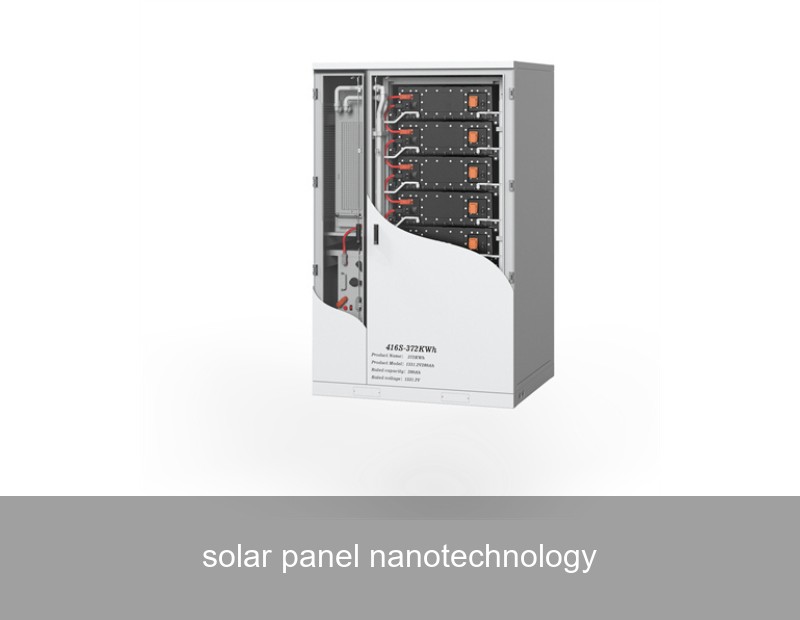
Table of Contents
If you've looked at solar panels on a rooftop in the last decade, you might think not much has changed. The blue or black arrays seem similar. But look closer—solar panel nanotechnology is driving a silent, invisible revolution. This isn't about making panels bigger; it's about making them smarter at the molecular level, unlocking unprecedented efficiency and durability. For homeowners and businesses across Europe and the U.S., this means more power, more reliability, and a faster return on your clean energy investment.
The Efficiency Plateau: A Familiar Frustration
For years, conventional silicon solar cells faced a hard theoretical limit—the Shockley-Queisser limit—capping efficiency at around 29%. In practice, most panels delivered 15-22%. This "efficiency plateau" meant needing more roof space for adequate power, higher installation costs, and longer payback periods. It was a significant barrier for widespread adoption, especially in space-constrained urban environments or for large-scale industrial projects demanding maximum output from every square meter.
What Exactly is Solar Panel Nanotechnology?
Nanotechnology involves engineering materials at the scale of 1 to 100 nanometers (a human hair is about 80,000 nanometers wide). In solar panels, this precision engineering manipulates light and matter in novel ways. Think of it as giving a solar cell a set of ultra-advanced tools: microscopic lenses to capture more light, novel structures to minimize energy loss as heat, and smart coatings that maintain themselves.
This isn't a distant lab concept. Leading manufacturers are already integrating these nano-engineered materials into commercial panels, and system providers like Highjoule are leveraging these advanced panels to build superior energy storage solutions. Our Highjoule H-Series commercial storage systems are specifically designed to pair with high-efficiency, nano-enhanced solar arrays, ensuring not a single kilowatt-hour of that precious, hard-won energy is wasted.
Key Innovations: From Light Traps to Self-Cleaning Surfaces
Let's break down the most impactful applications:
- Anti-Reflective & Light-Trapping Coatings: Nanotextured surfaces, inspired by structures found in moth eyes, dramatically reduce reflection. This allows the panel to capture more light, especially during early mornings, late afternoons, and in overcast conditions—critical for energy yield in regions like Northern Europe or the Pacific Northwest.
- Perovskite Nanocrystals: These are a game-changer. As a thin film on top of traditional silicon, they can capture different wavelengths of light (like blue and green) that silicon misses. This "tandem cell" approach is pushing lab efficiencies beyond 33%. (NREL Efficiency Chart).
- Quantum Dot Solar Cells: These nano-scale semiconductors can be "tuned" to specific light frequencies, offering a path to ultra-high-efficiency, lightweight, and flexible solar applications in the future.
- Self-Cleaning Nano-Coatings: A hydrophobic (water-repelling) nano-layer causes water to bead up and roll off, taking dust and dirt with it. This maintains optimal light absorption and reduces maintenance, a significant advantage for large-scale industrial installations or hard-to-access residential roofs.

Image: Hydrophobic nano-coatings enable self-cleaning, boosting real-world efficiency. (Credit: Unsplash)
Real-World Impact: Case Studies and Data
The theory is compelling, but what happens on an actual rooftop? Let's examine a real-world deployment.
Case Study: Mittelstand Manufacturing Plant, Bavaria, Germany
A mid-sized automotive parts supplier aimed to achieve 80% energy independence and reduce grid power costs. Their roof space was limited. In 2023, they installed a 500 kWp solar array using panels with nano-engineered anti-reflective and light-trapping layers.
| Metric | Standard Panels (Projected) | Nano-Enhanced Panels (Actual) | Improvement |
|---|---|---|---|
| Annual Energy Yield | 525,000 kWh | 589,000 kWh | +12.2% |
| Performance in Low-Light | ~15% of rated power | ~22% of rated power | +7 percentage points |
| Post-Rainfall Performance Recovery | ~95% (manual cleaning needed) | ~99% (self-cleaning effect) | +4% sustained output |
The 12.2% higher yield directly translated to covering a larger portion of their baseload and faster ROI. Crucially, this high-performance generation needed an equally intelligent storage system to maximize self-consumption. The plant integrated a Highjoule H-Series 500kWh battery storage system. Our system's advanced algorithms prioritize storing the surplus nano-panel output, dynamically managing charge/discharge cycles to optimize battery life and financial savings, turning their entire solar-plus-storage installation into a highly resilient power asset.
Beyond the Panel: Nanotech's Role in Complete Energy Systems
The innovation doesn't stop at the panel. Solar panel nanotechnology ultimately serves a broader goal: creating a fully optimized, resilient energy system. Higher efficiency panels produce more dense, intermittent power. To fully harness this, your storage and energy management system must be equally sophisticated.
This is where Highjoule's core expertise integrates seamlessly. Our Intelligent Energy Platform (IEP) doesn't just store energy; it communicates with your nano-enhanced solar array, weather forecasts, and grid signals. It makes millisecond decisions: should energy power the load, charge the battery, or be fed back to the grid for maximum tariff advantage? For our residential clients, the Highjoule HomePower System with its nano-ceramic coated battery cells for improved thermal management, ensures the premium output from advanced solar panels is stored with maximum safety and longevity.

Image: A complete home energy system with solar generation and wall-mounted storage. (Credit: Unsplash)
Furthermore, nanotechnology is enhancing the storage side itself. Research into nano-structured battery electrodes promises higher capacity and faster charging for the next generation of storage systems (U.S. Department of Energy). At Highjoule, our R&D pipeline actively monitors these advancements to future-proof our offerings.
Future Horizons and Your Next Step
The journey of solar panel nanotechnology is just beginning. We are moving towards multi-junction cells with nano-layers, ultra-durable coatings that last the panel's lifetime, and even photovoltaic paints. These advancements will further blur the line between building material and power generator.
For you—whether you're a homeowner in California, a factory manager in Poland, or a municipality planning a microgrid—this means the economics of solar-plus-storage will only improve. The key is to partner with a system integrator who understands both the cutting-edge generation technology and the smart storage that unlocks its full value.
So, as you consider your next step towards energy independence, we leave you with this question: When evaluating your solar and storage options, how will you quantify not just the cost of the equipment today, but the value of the integrated, nano-optimized system that will maximize your energy resilience for the next 25 years?
 Inquiry
 Online Chat