


Solar Panel Microinverters: The Key to Unlocking Your PV System's True Potential
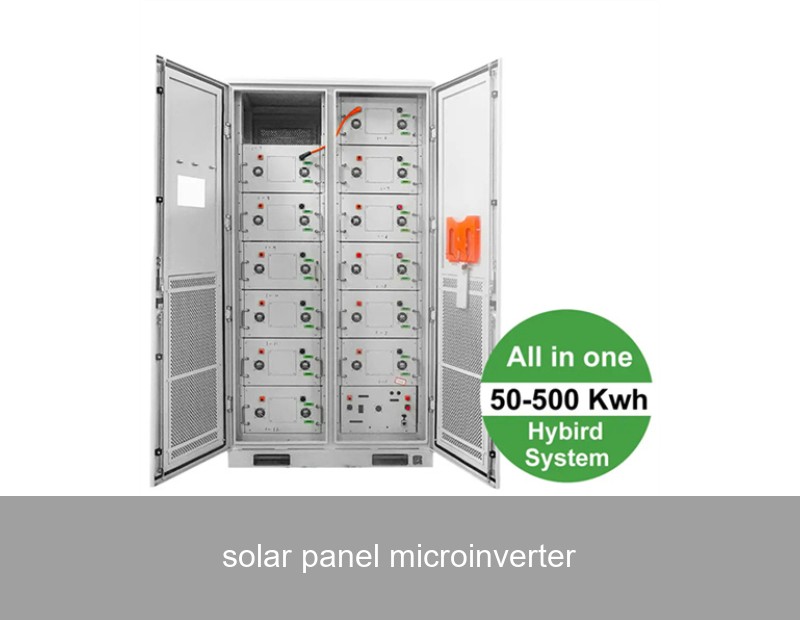
Have you ever looked at your rooftop solar panels and wondered if they're performing as well as they could? You're not alone. A common challenge in solar energy is that a single shaded panel or a bit of dirt can drag down the output of your entire array. This is where the solar panel microinverter comes in—a game-changing piece of technology that is redefining efficiency and reliability for homeowners and businesses alike. Unlike traditional string inverters, a microinverter is attached to each individual solar panel, allowing them to operate independently and at peak performance. In this article, we'll explore why this technology is becoming the preferred choice across Europe and the US, and how companies like Highjoule are integrating it into smarter, more resilient energy systems.
Table of Contents
- What is a Solar Panel Microinverter?
- Microinverters vs. String Inverters: A Clear Comparison
- Core Benefits: Why the Shift is Happening
- Real-World Impact: A Case Study from California
- The Future: Microinverters and Advanced Energy Management
- Choosing the Right System for Your Needs

Image Source: Unsplash (License: Free to use)
What is a Solar Panel Microinverter?
Let's break it down simply. A solar panel microinverter is a small electronic device that performs a critical job: converting the direct current (DC) electricity generated by a single solar panel into the alternating current (AC) electricity used in your home or business. While a central string inverter handles the DC output of 10-20 panels wired together, a microinverter system decentralizes this function. Each panel becomes its own power plant, with its own optimizer. This fundamental shift in architecture addresses some of the most persistent pain points in solar energy generation.
Microinverters vs. String Inverters: A Clear Comparison
To understand the value, a side-by-side look is helpful.
| Feature | String/ Central Inverter | Microinverter System |
|---|---|---|
| Power Harvesting | Limited by the lowest-performing panel ("the Christmas light effect"). | Panel-level Maximum Power Point Tracking (MPPT) ensures each panel operates at its max. |
| Shading & Dirt Impact | Significant system-wide power loss. | Impact is isolated only to the affected panel. |
| Monitoring | Typically system-level only. | Granular, per-panel performance monitoring via apps. |
| Design Flexibility | Panels must be in similar orientations. | Panels can face multiple directions (E, W, S) on complex roofs. |
| Reliability & Warranty | Single point of failure; 8-12 year warranties common. | Distributed system; warranties often extend to 25 years. |
Core Benefits: Why the Shift is Happening
The data supporting microinverters is compelling. Studies and real-world installations show they can yield 5-25% more energy annually compared to string systems, especially on roofs with partial shading or multiple angles. This isn't just a minor improvement; it directly translates to a faster return on investment and greater lifetime savings.
- Maximized Energy Production: Every panel operates independently at its ideal voltage and current, squeezing out every possible kilowatt-hour.
- Enhanced Safety: The system converts DC to AC right at the panel, minimizing dangerous high-voltage DC wiring on your roof and in your home.
- Unmatched Visibility: Imagine getting an alert that Panel #7 on your southwest roof is underperforming due to a bird dropping. That's the level of diagnostic detail microinverter monitoring provides, enabling proactive maintenance.
- Scalability: Expanding your system in the future is straightforward—simply add more panels with their own microinverters.
Where Highjoule Fits In: Smarter Integration
At Highjoule, we see solar panel microinverters as more than just components; they are the intelligent nodes of a broader energy ecosystem. Our Highjoule Hive Energy Management Platform seamlessly integrates data from every microinverter on your roof. This data doesn't just tell you about production; it informs our AI-driven software on how to optimally store excess energy in a Highjoule BESS (Battery Energy Storage System) or when to strategically use that power to avoid peak utility rates. It's this holistic approach—smart generation paired with intelligent storage—that defines the modern, resilient energy system.
Real-World Impact: A Case Study from California
Let's move from theory to practice. Consider a residential project in Sacramento, California, a market with high electricity rates and a mix of sun and shade. A homeowner with a 7.5 kW system installed on a roof with two chimney shadows and east/west facing sections chose a microinverter-based system over a string inverter alternative.
- System Size: 7.5 kW (25 panels x 300W)
- Technology: Tier-1 panels with premium microinverters.
- Challenge: Partial afternoon shading and dual roof planes.
Post-installation data analyzed over 12 months revealed the microinverter system outperformed the projected output of a comparable string system by 18%. This was primarily due to the system's immunity to shading losses and its ability to optimize each panel's output independently across the different roof orientations. The homeowner's annual energy bill savings were approximately $450 higher than initially projected, shaving years off the payback period. This case underscores a critical insight: the value of a solar investment is not just in the panels, but in the intelligence of the power harvesting technology.
For more on the importance of system-level performance, see resources from the National Renewable Energy Laboratory (NREL).

Image Source: Unsplash (License: Free to use)
The Future: Microinverters and Advanced Energy Management
The evolution of the solar panel microinverter is closely tied to the rise of smart grids and home energy management. These devices are becoming communication hubs. Future-ready microinverters can respond to grid signals, gently curtail output if the grid is stressed, or coordinate with home batteries to form a "virtual power plant."
This is precisely the vision behind Highjoule's integrated solutions. Our microinverter-compatible Highjoule BESS doesn't just store energy; it uses production data from your microinverters to forecast energy patterns. It can decide to store surplus midday sun for use during the expensive evening peak, or even provide backup power during an outage by forming an instant microgrid with your solar array. The microinverter's panel-level control is essential for the stability and safety of such islanded systems.
Choosing the Right System for Your Needs
So, is a microinverter system right for you? While they often have a slightly higher initial hardware cost, the long-term energy gains, reliability, and peace of mind frequently justify the investment. They are particularly advantageous for:
- Roofs with unavoidable shading (trees, vents, chimneys).
- Complex roof designs with multiple angles or orientations.
- Homeowners who plan to expand their system later.
- Anyone who values detailed system monitoring and maximum safety.
For large, unshaded commercial roofs with uniform panels, a well-designed string system with power optimizers might still be a viable option. The key is to get a detailed analysis. Reputable installers and providers like Highjoule use sophisticated simulation tools (like Aurora Solar) that model shading and performance differences between technologies specific to your property.
Highjoule's Commitment: Your Partner in Intelligent Energy
Since 2005, Highjoule has been at the forefront of advanced energy storage and management. We understand that superior solar generation is the first pillar of energy independence. That's why we partner with leading microinverter manufacturers and design our storage and control platforms to leverage their full potential. Whether for a residential home in Germany, a commercial facility in Texas, or a community microgrid, our solutions are built to maximize the return on every solar panel you install.
Image Source: Unsplash (License: Free to use)
Ready to see how much more your roof could produce? What would discovering a 15% energy gain mean for your energy goals and your wallet?
 Inquiry
 Online Chat