


The Solar Panel Manufacturing Process: Engineering Sunlight into Reliable Power
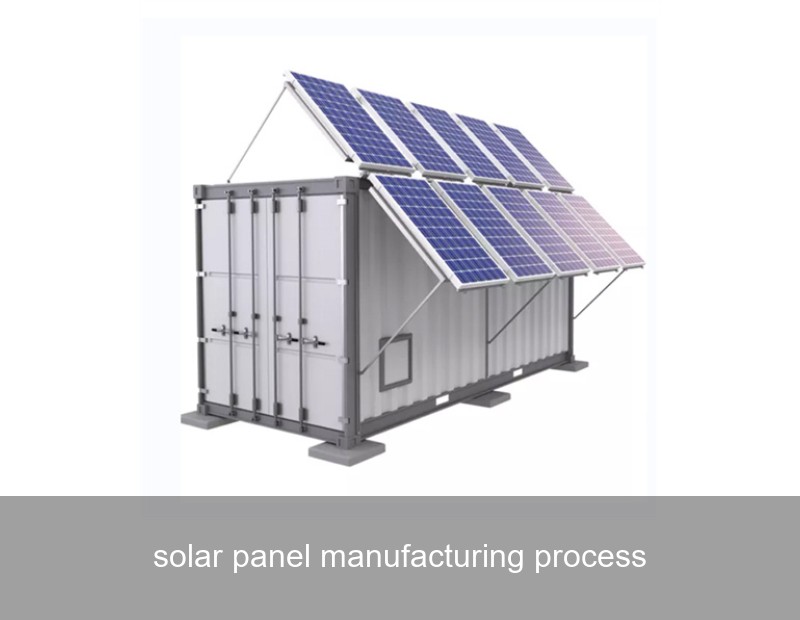
Have you ever looked at the sleek, blue-black array on a rooftop and wondered about the journey it took to get there? The solar panel manufacturing process is a fascinating feat of modern engineering, transforming raw materials into sophisticated devices that silently harvest sunlight. But here's something we at Highjoule think about every day: a panel is only as good as the system that stores and manages its power. While manufacturers perfect the art of capturing photons, the real challenge for homes and businesses is integrating that intermittent energy into a reliable, 24/7 power supply. Let's pull back the curtain on how panels are made and explore what happens after they leave the factory gate.
The Solar Panel Manufacturing Process: A Step-by-Step Journey
Creating a photovoltaic (PV) module is a multi-stage symphony of chemistry, physics, and precision engineering. The goal is to produce a durable, efficient product that can withstand decades of outdoor exposure while maximizing energy conversion.
Step 1: From Sand to Silicon Wafers
It all starts with one of Earth's most abundant resources: silica sand. Through a high-temperature carbon arc furnace, silica is purified into metallurgical-grade silicon (98% pure). For solar applications, this is further refined via the Siemens process into ultra-pure polycrystalline silicon (99.9999% pure). This polysilicon is then melted in a crucible, often with a small amount of boron to create a positive (p-type) electrical characteristic. A single crystal seed is dipped into the melt and slowly pulled up, forming a cylindrical ingot of monocrystalline silicon. For polycrystalline panels, the molten silicon is simply cast into square molds and cooled. These ingots are then sliced into paper-thin wafers using diamond-wire saws—a process where minimizing material loss ("kerf loss") is key to efficiency and cost.

Image Source: Unsplash - Photograph of silicon wafers.
Step 2: Cell Fabrication – The Heart of the Panel
The wafer is now the substrate for the PV cell, where the magic of the photovoltaic effect is engineered. This involves:
- Texturing: The smooth wafer surface is etched to create a microscopic pyramid texture. This reduces light reflection, trapping more sunlight inside the cell.
- Doping: Phosphorus is diffused in a high-temperature furnace onto the surface of the p-type wafer, creating a thin negative (n-type) layer. This forms the crucial p-n junction—the electric field that will separate light-generated charges.
- Coating and Printing: An anti-reflective coating (typically silicon nitride) is applied to further enhance light absorption. Then, conductive silver paste is screen-printed onto the cell to form the front grid and rear contact, which will collect the electrical current.
Step 3: Assembly and Lamination
Finished cells are interconnected with thin copper ribbons (tabbing and busbars) into a string, and multiple strings are arranged into a matrix. This cell matrix is sandwiched between two layers of encapsulant—almost always ethylene-vinyl acetate (EVA). This "solar sandwich" is topped with a high-transparency, tempered glass frontsheet and a polymer backsheet. The stack then enters a laminator, where heat and vacuum bond the layers together, creating a waterproof, protective seal that will last for 25+ years.
Step 4: Framing, Junction Box, and Final Testing
An aluminum frame is attached for rigidity and easy mounting. A junction box is glued and wired to the back, providing the electrical output terminals. Finally, every panel undergoes rigorous flash testing under Standard Test Conditions (STC: 1000W/m², 25°C, AM1.5 spectrum) to measure its peak power output (Watt-peak), efficiency, and current-voltage characteristics. Only panels meeting strict specifications are cleared for shipment.
Innovation in Manufacturing: Driving Efficiency & Sustainability
The solar panel manufacturing process is not static. Innovations like PERC (Passivated Emitter and Rear Cell) technology, which adds a rear passivation layer to boost efficiency, have become industry standards. Half-cut cells and multi-busbar designs reduce electrical resistance and shading losses. There's also a strong push towards sustainability within manufacturing itself, with efforts to reduce energy and water consumption, recycle silicon, and develop lead-free solders. According to the National Renewable Energy Laboratory (NREL), average module efficiencies have climbed steadily, with top commercial panels now exceeding 22%. This relentless innovation means more power from the same rooftop footprint—a critical factor for space-constrained installations.
Case Study: A German Manufacturer's Leap to High Efficiency
Let's look at a real-world impact. A major solar panel manufacturer in Germany recently retooled its production line to shift from standard polycrystalline modules to monocrystalline PERC technology. The investment in new manufacturing processes aimed to address the demand for higher power density in the competitive European residential market.
| Metric | Old Production Line (Poly) | New Production Line (Mono PERC) | Change |
|---|---|---|---|
| Average Module Efficiency | 17.5% | 21.2% | +21% |
| Power Output per Panel (approx.) | 330 Wp | 410 Wp | +80 Wp |
| Estimated Annual Energy Yield per Rooftop System (5kW) | 4,750 kWh | 5,700 kWh | +950 kWh |
This 20%+ boost in efficiency, driven by advanced cell architecture and manufacturing precision, directly translates to nearly 1,000 more kilowatt-hours of clean electricity annually for a typical home. That's significant energy that either powers more appliances or, crucially, needs to be intelligently managed and stored—which is where the next piece of the puzzle comes in.
Beyond Manufacturing: Why the Full Energy Ecosystem Matters
Here's the pivotal insight: the most sophisticated solar panel manufacturing process in the world only solves part of the energy equation. Panels produce power when the sun shines, but energy demand peaks often occur in the early morning and evening. This mismatch creates a challenge of integration and value.
This is precisely the gap that Highjoule bridges. We view the solar panel as the first, vital component in a smarter energy ecosystem. Our advanced battery energy storage systems (BESS) are engineered to be the perfect partner to high-efficiency PV. For a homeowner with those new 410W German panels, pairing them with a Highjoule HomePower system means capturing that excess 950 kWh instead of feeding it back to the grid at low rates. The energy is stored for use at night, during peak tariff periods, or as backup during outages.
On a larger scale, for commercial and industrial facilities investing in solar arrays, our Highjoule GridMax solutions provide the stability and control needed. They manage solar intermittency, perform peak shaving to reduce demand charges, and can even provide grid services. The intelligence isn't just in the silicon of the panel; it's in the software and power electronics that optimize every kilowatt-hour from generation through to consumption and storage. You can learn more about grid integration challenges from the U.S. Department of Energy.
Image Source: Unsplash - Photograph of a home with solar and storage.
Your Energy Future: A Question of Integration
So, the next time you evaluate a solar investment, look beyond the panel's spec sheet. Ask yourself: How will I use the power when the sun isn't shining? How can I maximize my independence and resilience? The journey from sand to silicon is remarkable, but the journey from sunlight to reliable, sustainable power for your home or business is the true end goal. How ready is your current energy setup to integrate with the next generation of high-efficiency solar?
 Inquiry
 Online Chat