


Solar Panel Floating Platform: The Next Wave in Renewable Energy
As the world intensifies its search for clean energy solutions, a surprising contender is making waves—literally. The solar panel floating platform, or floating photovoltaic (FPV) system, is transforming reservoirs, lakes, and even seas into power-generating assets. For regions in Europe and the United States facing land constraints or seeking to maximize renewable output, this technology isn't just innovative; it's becoming essential. But what does it take to make solar successful on water, and how can these systems integrate reliably into our energy grids? The answer lies not just in the panels, but in the intelligent, durable, and safe technology that supports them.
Table of Contents
- The Rise of Floating Solar: A Solution to a Global Challenge
- Key Components of a Robust Floating Solar Platform
- Case Study: The Oostvoornse Meer Lake Project, Netherlands
- The Critical Role of Battery Energy Storage Systems (BESS)
- Highjoule's Expertise: Integrating Floating Solar with Advanced Storage
- The Future Potential and Challenges
The Rise of Floating Solar: A Solution to a Global Challenge
Think about the last time you saw a large-scale solar farm. Chances are, it was on a field or a rooftop. Now, imagine that same installation, but gracefully floating on a body of water. This is the reality of floating solar. The phenomenon is driven by a simple dilemma: prime land for solar farms is often expensive, scarce, or needed for agriculture. Meanwhile, vast expanses of man-made reservoirs, quarry lakes, and industrial ponds sit unused.
The data is compelling. According to a World Bank report, the global technical potential of floating solar on man-made reservoirs alone could be in the terawatts. In water-scarce regions, these systems offer a dual benefit: generating power while reducing water evaporation by up to 70%. The cooling effect of the water can also boost panel efficiency by 5-15% compared to their land-based counterparts, especially during hot summer months. It's a classic win-win scenario that's catching on fast from California's drought-prone valleys to the historic waterways of Europe.

Floating solar farms utilize underused water bodies, conserving land and improving efficiency. Credit: Wikimedia Commons.
Key Components of a Robust Floating Solar Platform
Building a solar power plant on water is more complex than simply making panels float. It requires a system engineered for a demanding, dynamic environment. Let's break down the essential components:
- The Floating Structure: Typically made of high-density polyethylene (HDPE) or similar corrosion-resistant materials. These modular floats are interconnected to form a stable platform that can withstand waves, wind, and constant water exposure.
- The Solar PV Array: Specially mounted panels, often with enhanced encapsulation and framing to resist higher humidity and potential corrosion.
- The Mooring and Anchoring System: This is the unsung hero. It securely tethers the entire platform to the bed of the water body, allowing for safe movement with water level fluctuations while preventing drift.
- The Underwater Cabling: All generated DC electricity is collected and transmitted to shore via submersible cables designed for long-term aquatic life.
- The Onshore Inverter & Grid Connection: This is where the DC power is converted to AC and fed into the local grid or facility.
However, the chain doesn't end at the grid connection. The intermittent nature of solar power—even floating solar—creates the next big challenge: how to store and manage that energy for when it's needed most.
Case Study: The Oostvoornse Meer Lake Project, Netherlands
Europe, with its dense population and limited open land, has been a pioneer in floating solar. A standout example is the project on the Oostvoornse Meer lake in the Netherlands. This 8.4 MW installation, one of the largest in Western Europe, covers about 20 hectares of the lake's surface.
The project developers faced a classic North Sea challenge: strong winds and variable weather. The platform was engineered with a unique tracking system that allows sections of the array to rotate slightly, maximizing yield while minimizing wind load. The results speak for themselves: the system generates approximately 7,800 MWh of electricity annually, enough to power over 2,300 Dutch households. Crucially, by using the lake's surface, it saved valuable Dutch land that would have been equivalent to about 40 football fields. This case perfectly illustrates the PAS framework:
Problem: High land pressure and renewable energy targets.
Agitation: Conventional solar competes with agriculture and conservation.
Solution: Deploy a technologically advanced, site-adapted floating solar platform.
Yet, a project of this scale also highlights the need for grid stability. The local utility must manage this new, significant influx of variable power. This is where the final, critical piece of the puzzle comes in: energy storage.
The Critical Role of Battery Energy Storage Systems (BESS)
Imagine your floating solar platform is producing a surplus of energy at noon on a bright, windy day. Without storage, this excess power can strain the grid or even be curtailed (wasted). A Battery Energy Storage System (BESS) acts as a shock absorber and a reservoir for this clean electricity.
| Challenge of Floating Solar | How BESS Provides the Solution |
|---|---|
| Intermittent Generation (clouds, night) | Stores excess energy during peak sun for use during low/no generation periods. |
| Grid Congestion & Curtailment | Absorbs surplus power locally, preventing grid overload and revenue loss. |
| Frequency Regulation | Provides millisecond-response services to stabilize grid frequency. |
| Enhancing Energy Security | Can act as a backup power source for critical on-shore infrastructure. |
Integrating a BESS transforms a floating solar plant from a simple generator into a reliable, dispatchable power asset. This is paramount for commercial and industrial (C&I) users who need predictable power and for utilities seeking to balance their grids with higher renewable penetration.
Highjoule's Expertise: Integrating Floating Solar with Advanced Storage
This is where Highjoule's nearly two decades of experience becomes invaluable. While we don't manufacture the floating platforms themselves, we specialize in the brain and the battery that make these and all renewable projects truly intelligent and grid-friendly.
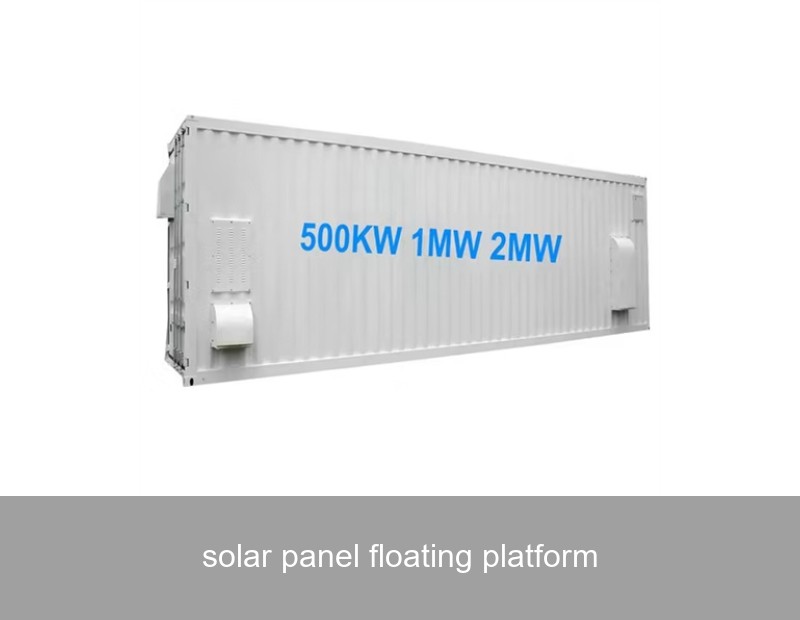
For a floating solar installation, Highjoule provides a complete, containerized Battery Energy Storage System solution. Our HPS Series is ideally suited for such hybrid applications. It features:
- High-Energy Density Cells: Maximizing storage capacity in a compact footprint, crucial for sites with limited onshore space.
- Advanced Liquid Cooling & Thermal Management: Ensuring safety and longevity of the battery system, which is critical when located near water bodies.
- AI-Powered Energy Management System (EMS): This is the true differentiator. Our EMS doesn't just store and release energy. It intelligently forecasts solar production (using weather data), analyzes grid demand patterns, and autonomously optimizes charge/discharge cycles to maximize self-consumption, reduce energy costs, and even participate in grid service markets.
For a utility-scale floating project like the one in the Netherlands, a Highjoule BESS could store midday solar peaks and discharge during the evening demand ramp, smoothing the output and increasing the plant's value. For a smaller industrial application on a corporate water reservoir, our system would allow the facility to operate more on its own clean, low-cost solar power, day and night.

Intelligent control systems, like Highjoule's EMS, are key to optimizing solar-storage hybrids. Credit: Unsplash.
The Future Potential and Challenges
The journey for floating solar is just beginning. We're seeing research into offshore floating solar in calm seas and co-location with hydropower reservoirs, creating complementary generation profiles. However, challenges remain, such as long-term ecological impact studies, navigating regulatory frameworks for water use, and of course, the total system cost.
The most successful projects will be those that view the solar panel floating platform not as an isolated technology, but as the core of an integrated energy solution. Pairing robust floating structures with high-efficiency panels and, most importantly, with a smart, resilient storage system like Highjoule's, is what creates a truly sustainable and bankable power plant.
So, as you consider the future of energy in your region—whether you're a project developer, a utility planner, or a large energy consumer—ask yourself this: Are we just looking for places to put solar panels, or are we building intelligent, flexible, and resilient energy systems that can power our future, come rain or shine?
 Inquiry
 Online Chat