


Navigating the Solar Net Metering Change: What It Means for Your Energy Future
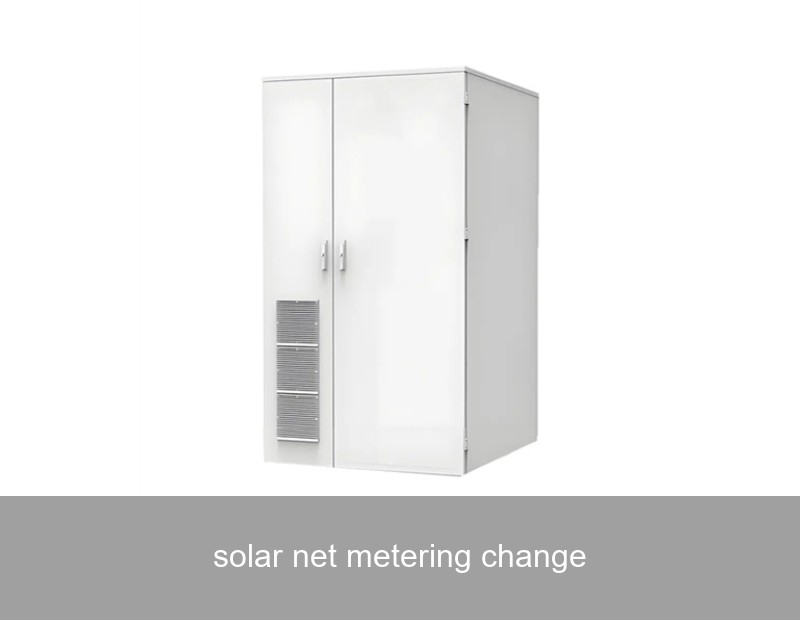
If you're a solar homeowner or considering going solar, you've likely heard the buzz: solar net metering change is sweeping across key markets. This once-stable policy, which allowed you to send excess solar energy back to the grid for a credit, is undergoing significant transformation. But what does this shift truly mean for your investment, your energy bills, and our collective push towards renewables? Let's demystify the evolving landscape and explore how smart technology is turning this challenge into an opportunity for greater energy independence.
Table of Contents
What is Changing with Solar Net Metering?
For years, traditional net metering (NEM) acted as a simple, one-for-one swap. You'd export a kilowatt-hour (kWh) of solar energy to the grid during the day and receive a credit to draw a kWh back at night. It was the financial bedrock that made rooftop solar economically viable. However, utilities and regulators are now revising these rules, citing grid cost concerns and evolving energy dynamics. The core of the solar net metering change typically involves:
- Reduced Export Rates: Compensation for excess solar sent to the grid is often lowered significantly, sometimes to a fraction of the retail electricity rate.
- New Grid Access Fees: Some proposals include monthly fixed charges specifically for solar customers connected to the grid.
- Time-of-Use (TOU) Alignment: Export credits increasingly vary by time of day, pushing value to late afternoon/evening peaks rather than midday solar peaks.
- Transition Deadlines: Many changes include "grandfathering" periods, creating urgency for current solar adopters.
This isn't just a policy tweak; it's a fundamental shift in the value proposition of a standard solar-only system.
By the Numbers: The Real Financial Impact
Let's talk data. Under older NEM 1.0 policies, the payback period for a residential solar system in a sunny state could be 5-7 years. With drastic export rate reductions—like moving from a full retail credit of $0.30/kWh to an avoided-cost rate of $0.05/kHz—the calculus changes dramatically. A report by the U.S. Department of Energy's NREL highlights that while solar hardware costs have fallen, policy changes can significantly alter the financial returns. The new equation is simple: to maximize the value of every photon your panels capture, you need to consume it directly or store it—not export it at a low rate.

Image: A modern home equipped for self-consumption with solar and storage. (Source: Unsplash)
A Real-World Case: California's NEM 3.0
California, the U.S. solar leader, offers a pivotal case study. In April 2023, the state implemented NEM 3.0. The key change? Average export compensation rates dropped by about 75% compared to NEM 2.0. According to the California Public Utilities Commission (CPUC), the new tariff is designed to incentivize pairing solar with battery storage.
The Data-Driven Outcome: Under NEM 3.0, a typical 6kW solar-only system might see its annual bill savings reduced by roughly 60% compared to NEM 2.0. However, when that same system is coupled with a sufficiently sized battery, the homeowner can increase their self-consumption from around 30-40% to over 80%. This means using cheap, self-generated solar power during expensive peak evening hours (4-9 pm), drastically improving savings and payback. This policy shift isn't an end to solar; it's a redirection towards solar-plus-storage as the new standard.
Your Path Forward: Beyond Net Metering
The message from the market is clear. To thrive amid solar net metering change, your energy system must be smarter and more self-reliant. The goal shifts from maximizing exports to maximizing self-consumption and resilience.
- Energy Storage is No Longer Optional: A battery allows you to capture midday solar excess and use it when the sun sets and grid prices soar.
- Intelligent Energy Management: Smart systems can automatically decide when to charge, discharge, or export based on real-time rates and your usage patterns.
- Design for Resilience: With the right setup, you can keep critical loads running during grid outages, a value proposition net metering alone never offered.
How Highjoule Empowers You in This New Era
At Highjoule, with nearly two decades of experience since 2005, we've anticipated this evolution. Our solutions are designed not just for the old net metering paradigm, but for the intelligent, resilient, and efficient energy systems of today and tomorrow.
Our HES (Highjoule Energy System) series for residential and commercial applications is a prime example. It's an integrated solar-plus-storage solution built with a sophisticated energy management system (EMS) at its core. The HES doesn't just store energy; it constantly optimizes it. It considers:
| Input Factor | System Action | Benefit to You |
|---|---|---|
| Low export rates (e.g., midday) | Prioritizes battery charging over exporting | Captures full value of your solar production |
| High grid prices (e.g., evening peak) | Discharges battery to power your home | Avoids buying expensive grid electricity |
| Grid outage detected | Instantly islandes critical loads | Provides seamless backup power |
For our commercial and industrial clients facing demand charges and complex tariffs, Highjoule's GridSynch Platform offers even more granular control, enabling peak shaving and participation in grid service programs for additional revenue streams. We provide the hardware and the intelligence to turn policy challenges into financial and operational advantages.

Image: A scalable battery energy storage system for commercial applications. (Source: Unsplash)
What's Your Energy Resilience Strategy?
The solar net metering change is a reality, but it's far from a death knell for solar. In fact, it's an invitation to build a more sophisticated, cost-effective, and resilient energy asset. The question is no longer just "How many panels do I need?" but "How do I intelligently manage and store the energy I produce to maximize its value for my home or business?"
As you contemplate your next step, consider this: With the right partner and technology, you can not only adapt to these changes but emerge with a system that offers greater control, security, and long-term savings. Are you ready to design an energy system that thrives independently of shifting grid policies?
 Inquiry
 Online Chat