


Unlocking Energy Freedom: Your Guide to the Solar Hybrid Off-Grid Inverter
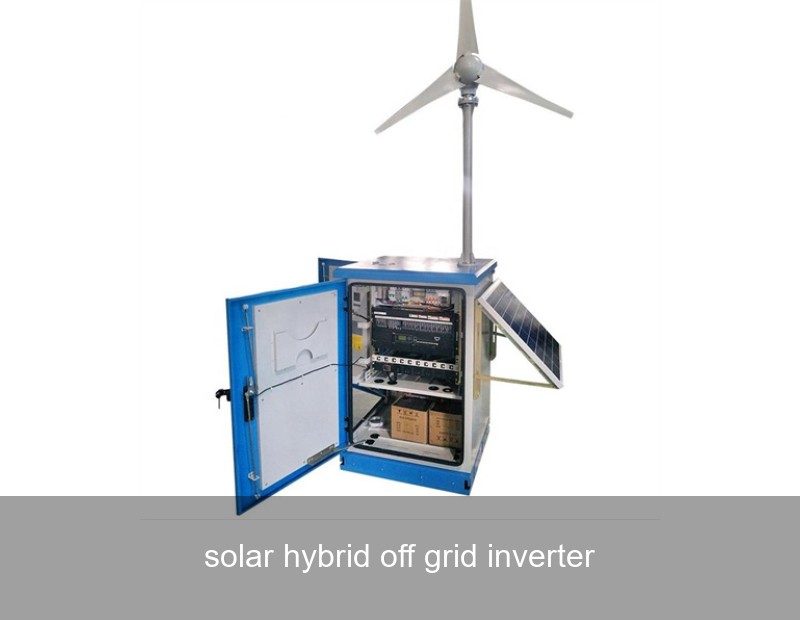
Imagine this: the grid goes down during a storm, but your lights stay on, your fridge keeps humming, and your life continues uninterrupted. This isn't just a dream for a remote cabin; it's a growing reality for homes and businesses worldwide, thanks to one pivotal piece of technology: the solar hybrid off-grid inverter. As a cornerstone of modern renewable energy systems, this intelligent device is redefining what it means to be truly energy independent. Let's demystify how it works and why it might be the missing link in your sustainable power strategy.
The Power Behind Energy Independence: Key Features
So, what exactly is a solar hybrid off-grid inverter? Think of it as the brain and central command unit of your personal power station. Unlike a standard grid-tie inverter that shuts off when the grid fails, a hybrid inverter seamlessly integrates multiple energy sources and gives you control. Its core function is to convert the direct current (DC) electricity from your solar panels into the alternating current (AC) that powers your appliances. But the "hybrid" and "off-grid" capabilities are where the magic happens.
Here’s a breakdown of its critical functions:
- Multi-Source Integration: It intelligently manages power from solar panels, a battery bank, and optionally a backup generator or the grid.
- Uninterruptible Power Supply (UPS) Functionality: It switches to battery power in milliseconds during a grid outage, ensuring zero downtime.
- Advanced Battery Management: It protects your battery investment with precise charging algorithms, extending its lifespan.
- Energy Prioritization: You can set preferences to use solar power first, then batteries, and finally the grid or generator, maximizing self-consumption and savings.

Image Source: Unsplash - A modern home energy system with solar and storage.
For businesses, this translates to operational resilience. For homeowners, it's peace of mind. And for the environment, it's a significant step towards a decarbonized future. The global market for these systems is booming, driven by rising energy costs and increasing climate volatility. According to the International Energy Agency (IEA), solar PV and storage are set to dominate global capacity additions, with decentralized systems playing a major role.
How a Hybrid System Compares
| System Type | Grid Dependence | Backup Power | Energy Bill Savings | Best For |
|---|---|---|---|---|
| Grid-Tie Only | High (shuts off if grid fails) | No | Moderate | Areas with stable, cheap grid power |
| Off-Grid Only | Zero | Yes (always on battery) | High (no bills) | Remote locations without grid access |
| Solar Hybrid Off-Grid | Optional (can work with or without) | Yes (seamless backup) | Very High (maximizes self-use) | Urban & rural areas seeking resilience and savings |
Real-World Case Study: A California Farm's Transformation
Let's move from theory to practice. Consider the challenge faced by a medium-sized organic farm in California's Central Valley. Their operations—irrigation pumps, cooling barns, processing equipment—were at the mercy of an aging grid and frequent Public Safety Power Shutoffs (PSPS) during wildfire season. These outages threatened crop loss and significant financial damage.
The Solution: They installed a robust solar hybrid off-grid system centered around a high-capacity inverter. The system included:
- 120 kW of solar PV capacity.
- A 240 kWh lithium-ion battery storage system.
- A Highjoule HPS Series Hybrid Power Station, chosen for its robust off-grid capability and ability to manage the high starting currents of agricultural motors.
The Results (Data from 12-month operation):
- Energy Independence: Achieved 98% grid independence during peak season.
- Outage Protection: Survived 14 grid outages totaling over 200 hours with zero operational disruption.
- Financial Impact: Reduced energy costs by 85% annually, with an estimated payback period of under 7 years.
- Resilience: Secured critical water supply for crops during a critical 3-day PSPS event, preventing an estimated $150,000 in potential losses.
This case, documented in part by the National Renewable Energy Laboratory (NREL) on agricultural microgrids, highlights the tangible value proposition. It's not just about saving money; it's about safeguarding livelihoods and ensuring business continuity.
Why Choose Highjoule for Your Hybrid Inverter Solution?
At Highjoule, we've been engineering resilience into the power grid since 2005. We understand that a solar hybrid off-grid inverter is more than a component; it's the heart of a reliable energy ecosystem. Our products are built on decades of field experience across Europe and North America, designed to meet the highest standards of efficiency and durability.
Our flagship solution for such applications is the Highjoule HPS Series Hybrid Power Station. This all-in-one unit simplifies complex energy management by integrating the hybrid inverter, MPPT solar charge controller, and grid/generator transfer switch into a single, robust enclosure. Key advantages include:
- Unmatched Off-Grid Stability: Proprietary voltage/frequency control technology ensures "grid-quality" power even when islanded, safely running sensitive medical equipment, industrial tools, and IT servers.
- Scalable Architecture: Start with a basic system and easily expand battery storage or solar capacity as your needs grow, thanks to modular parallel capability.
- Smart, User-Centric Management: The intuitive Highjoule EnergyOS platform provides real-time monitoring, customizable operating modes, and remote diagnostics via a smartphone app.
- Built for Harsh Environments: With a wide operating temperature range and high ingress protection rating, our systems perform reliably in everything from Scandinavian winters to Arizona summers.

Image Source: Unsplash - Professional monitoring an advanced energy storage system.
For commercial and industrial clients, our Highjoule Microgrid Controller can orchestrate multiple HPS units alongside diesel generators and load management, creating a truly autonomous and optimized power network. From a remote telecom tower in the Scottish Highlands to a suburban community in Texas seeking resilience, our technology delivers peace of mind.
Making the Right Choice for Your Needs
Selecting the right solar hybrid off-grid inverter is crucial. It's not a one-size-fits-all decision. You need to consider your critical load requirements, local climate (affecting solar yield), the desired duration of backup power, and future expansion plans. An undersized inverter will leave you in the dark; an oversized one is an unnecessary capital expense.
Here are a few guiding questions to ask yourself or your installer:
- What are the essential appliances I need to power during an outage, and what is their total wattage?
- Do I have high-surge equipment like well pumps or air conditioners that require an inverter with strong surge capacity?
- Is my primary goal maximum financial return (self-consumption) or maximum resilience (long-duration backup)?
- How important is remote monitoring and management to me?
We encourage you to look beyond the spec sheet. Consider the manufacturer's track record, the availability of local technical support, and the warranty terms. The U.S. Department of Energy provides excellent resources for planning a resilient power system. A well-designed system with a quality inverter like Highjoule's is an investment that pays dividends in security and savings for decades.
Ready to explore what true energy independence could look like for your home or business? What's the first load you would secure if the grid went down tomorrow?
 Inquiry
 Online Chat