


Understanding Solar Grid Tie Inverter Price: Your Guide to Smart Investment
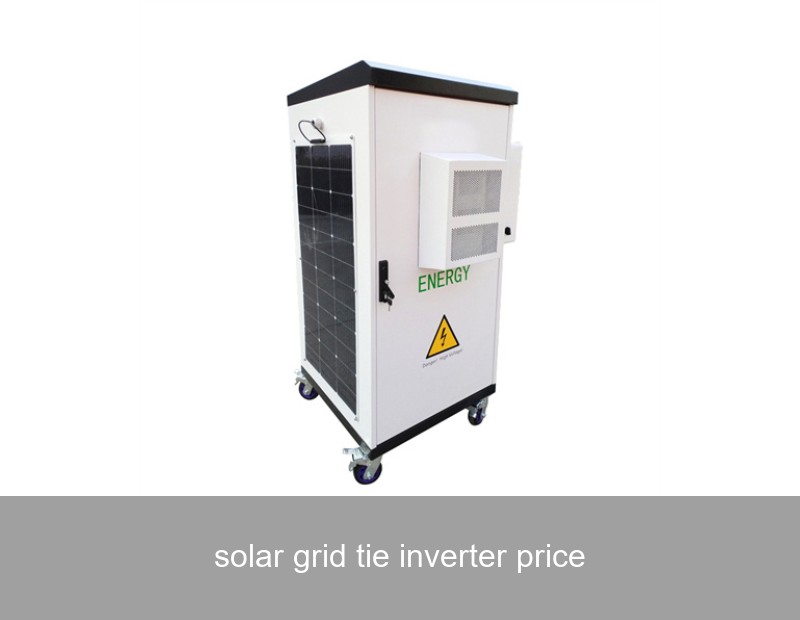
When planning a solar power system, the solar grid tie inverter price often becomes a central point of discussion. It's more than just a line item on a quote; it's the intelligent heart of your grid-connected solar array, converting the sun's DC power into usable AC electricity for your home or business. But with prices ranging significantly, how do you determine what's fair and what's truly valuable? This article will demystify the cost factors, highlight the critical role of quality and features, and show you why the right inverter is a cornerstone of a reliable, high-yielding solar investment, especially for markets like Europe and the U.S. where energy independence and grid stability are paramount.
Table of Contents
Key Factors Influencing Solar Grid Tie Inverter Price
Let's break down what you're really paying for. The sticker price of a grid-tie inverter is a composite of its technology, capabilities, and intended application.
- Power Rating (kW): This is the most straightforward factor. A 10kW inverter will cost more than a 5kW model. You need to match the inverter's size to your solar panel array's expected output.
- Inverter Topology: The core technology inside dictates performance and cost. String inverters are the established, cost-effective workhorses. Microinverters, attached to each panel, optimize individual panel performance and add resilience but at a higher initial solar grid tie inverter price point. Newer innovations like hybrid inverters, which can integrate battery storage, command a premium due to their added functionality.
- Efficiency Rating: A 98% efficient inverter versus a 95% one might seem like a small difference, but over 25 years, that 3% represents a significant amount of "lost" electricity you've already paid for in panels. Higher efficiency units cost more upfront but generate more value long-term.
- Smart Features & Grid Services: Modern inverters are grid-interactive computers. Features like advanced monitoring, rapid shutdown for fire safety, and the ability to provide grid support functions (like frequency regulation) add to the cost but are increasingly essential, particularly in advanced grids like those in North America and Europe.
- Brand, Warranty, and Service: Established brands with proven field reliability and robust 10-12+ year warranties justify a higher price. This peace of mind and access to technical support is a critical part of the value equation.

Image Source: Unsplash - A modern inverter is the command center of a solar system.
The Real Cost: Quality, Efficiency, and Longevity
Focusing solely on the lowest solar grid tie inverter price can be a costly mistake. Think of it as an engine: a cheap, inefficient engine wastes fuel and is prone to breakdowns. Here’s the data-backed perspective:
- Efficiency Losses = Revenue Losses: According to the National Renewable Energy Laboratory (NREL), inverter efficiency is a primary driver of overall system performance ratio. A drop of a few percentage points can translate to hundreds of dollars in lost energy production annually for a commercial system.
- Mean Time Between Failures (MTBF): High-quality inverters use superior components designed for 24/7 operation in harsh environments. A cheaper unit with a higher failure rate means added service costs, downtime, and lost production.
- Warranty as an Insurance Policy: A standard 5-year warranty is common, but leaders in the field offer extendable warranties up to 25 years. This isn't just a marketing gimmick; it's a manufacturer's confidence in their product's durability, directly protecting your return on investment (ROI).
Where Highjoule Fits In
At Highjoule, we approach inverter selection with this total cost of ownership lens. We don't just supply components; we engineer integrated solutions. Our HPS Series Hybrid Power Systems feature our own intelligent, high-efficiency inverters that are natively designed to work with battery storage and advanced energy management. This eliminates compatibility issues and ensures peak system harmony, maximizing your energy independence and financial return over the system's entire lifespan.
A Real-World Case: The German Commercial Rooftop
Let’s look at a concrete example from Southern Germany. A mid-sized manufacturing company with a 250 kW rooftop array faced a decision: replace their aging, failing string inverters with the lowest-cost option or invest in a more robust, feature-rich solution.
- Phenomenon: Frequent inverter trips and poor monitoring led to unexplained production drops.
- Data & Decision: An audit showed a 7% annual production loss due to downtime and suboptimal operation. The company chose a system featuring advanced string inverters with individual power point tracking (MPPT) and detailed monitoring, at a 15% higher solar grid tie inverter price than the baseline option.
- Result: In the first year, production increased by 9% due to optimized performance and instant fault detection. The advanced monitoring platform allowed the facility manager to correlate production with energy consumption, identifying further savings. The projected payback period for the premium inverter investment was under 4 years, thanks to the increased yield and operational savings.
This case underscores that the true metric is Levelized Cost of Energy (LCOE)—the total cost of the system divided by the total energy produced over its life. A higher-quality inverter often delivers a lower, more favorable LCOE.
Beyond the Inverter: The Value of an Integrated System
Today's energy challenges require thinking beyond the inverter as a standalone device. The real power lies in how it communicates and controls the entire energy ecosystem of your property.
| Component | Traditional "Bolt-on" Approach | Highjoule's Integrated Approach |
|---|---|---|
| Inverter | May not communicate optimally with third-party batteries or management systems. | Acts as the native brain of the Highjoule HPS System, with seamless control over solar, battery, and grid flow. |
| Battery Storage | Added later, often requiring additional hardware and leading to efficiency losses. | Pre-engineered for perfect compatibility, ensuring maximum round-trip efficiency and battery life. |
| Energy Management | Separate software platform, often with limited functionality. | The Highjoule Energy OS provides a single pane of glass for monitoring, forecasting, and automated control to maximize self-consumption and savings. |

Image Source: Unsplash - An integrated system manages energy from multiple sources.
For our clients in the U.S. and Europe, this integration is crucial. It allows them to not only save on electricity bills but also participate in grid-balancing programs (like demand response), creating a new potential revenue stream. The initial solar grid tie inverter price becomes part of a larger, more valuable capital asset.
Making the Right Choice for Your Project
So, how do you navigate this complex landscape? Start by asking the right questions:
- What are my primary goals? (Maximize ROI, achieve energy independence, ensure backup power, participate in grid services?)
- What is the total system design? (Panel layout, future battery expansion plans?)
- What does the warranty and service support truly cover? (On-site service? Remote diagnostics? Replacement terms?)
- How will this inverter perform in 10 years? (Is the software upgradeable? Can it adapt to new grid requirements?)
The Highjoule Advantage
With nearly two decades of experience since 2005, Highjoule specializes in answering these questions for commercial, industrial, and microgrid applications. We provide end-to-end solutions where the inverter is a perfectly tuned component of a high-performance system. Our experts assess your site, energy profile, and goals to recommend a configuration that delivers optimal lifetime value, not just the lowest upfront cost. We stand behind our technology with comprehensive support, ensuring your investment is protected.
Ready to see how a smart investment in the right inverter technology can transform your energy profile? What would a 10% increase in your solar system's annual yield, coupled with the ability to store and manage that power intelligently, do for your operational costs or home energy independence?
 Inquiry
 Online Chat