


Unlocking the Potential of Solar Government Programs: Your Guide to Savings and Energy Independence
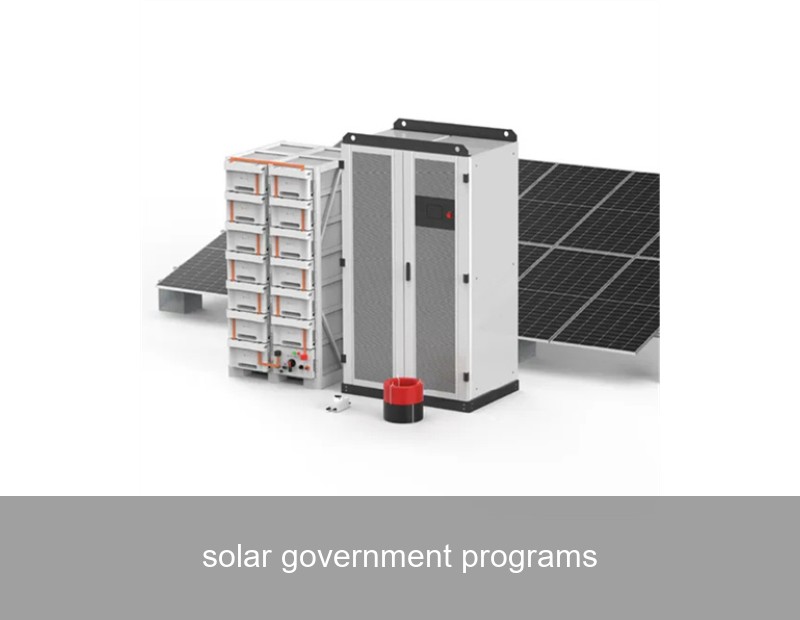
Have you ever looked at your rising electricity bill and wondered if there's a better way? You're not alone. Across Europe and the United States, homeowners and businesses are facing increasing energy costs and a growing desire to reduce their carbon footprint. This is where the powerful combination of solar energy and government support comes into play. Solar government programs are designed to make the transition to clean energy not just an environmental choice, but a financially savvy one. These initiatives, from tax credits and rebates to innovative financing models, are the catalysts turning solar dreams into reality. But to truly maximize their value, you need more than just panels; you need a smart, integrated system that stores and manages that energy. Let's explore how these programs work and how you can leverage them to build a resilient, cost-effective energy future for your home or business.
Table of Contents
- The Rise of Solar Incentives: A Global Phenomenon
- Understanding Key Solar Government Programs
- The Missing Piece: Why Storage is Crucial for Program Success
- Case Study: Maximizing California's NEM 3.0 with Highjoule
- Navigating the Application Process
- The Future of Solar Policy and Technology
The Rise of Solar Incentives: A Global Phenomenon
The shift towards renewable energy is no longer a niche movement; it's a central pillar of national and regional energy strategies. Governments on both sides of the Atlantic have recognized that to meet ambitious climate targets—like the EU's Green Deal or the U.S.'s clean energy goals—they need to actively empower citizens and companies to participate. This has led to a robust ecosystem of solar government programs. The logic is compelling: by lowering the upfront cost barrier, these incentives accelerate adoption, create green jobs, enhance grid stability, and reduce long-term greenhouse gas emissions. It’s a win-win policy framework that addresses both economic and environmental concerns simultaneously.
Understanding Key Solar Government Programs
While programs vary by country and even state, they generally fall into a few key categories. Understanding these is your first step to accessing potential savings.
1. Tax Credits and Deductions
These are direct reductions in the amount of tax you owe. The most prominent example is the U.S. Federal Investment Tax Credit (ITC), which, as of 2024, offers a 30% tax credit for the cost of a solar PV system and paired battery storage. In the EU, while there's no single federal credit, many member states offer similar VAT reductions or income tax deductions for renewable energy installations.
2. Rebates and Direct Grants
These provide upfront cashback or a direct discount on your system. Often administered by states, municipalities, or utilities, they immediately lower the installed cost. For instance, many utility companies in Germany and the UK offer grants for solar-plus-storage systems to alleviate grid congestion during peak times.
3. Net Metering (NEM) and Feed-in Tariffs (FiTs)
These policies govern how you're compensated for excess solar energy you send back to the grid.
| Policy | How It Works | Current Trend |
|---|---|---|
| Net Metering | Your electric meter runs backward when you export solar power, crediting you at or near the retail electricity rate. | Evolving towards less favorable rates (e.g., California's NEM 3.0), increasing the value of on-site storage. |
| Feed-in Tariff | You are paid a fixed, guaranteed price per kWh for all renewable electricity you generate, often for a contract period of 15-20 years. | Common in Europe, though rates for new installations have generally decreased as technology costs have fallen. |
The key trend here is that the economic advantage is shifting from simply exporting power to using it yourself. This is a critical point we'll return to.
4. Renewable Energy Certificates (RECs) / Guarantees of Origin (GOs)
These are tradable certificates that prove electricity was generated from a renewable source. By selling your RECs (in the U.S.) or GOs (in Europe), you can generate an additional income stream from your solar system, further improving its return on investment.
The Missing Piece: Why Storage is Crucial for Program Success
Here's the insider perspective many miss: to get the absolute most out of modern solar government programs, solar panels alone are no longer enough. The real synergy happens when you pair them with an advanced battery energy storage system (BESS). Why? Because the latest policies are designed to encourage consumption, not just generation.
Think about it. With net metering rates becoming less generous, the value of each kilowatt-hour you send to the grid is dropping. However, the cost of electricity you pull from the grid during the evening peak remains high. A smart storage system like the Highjoule Hive for residential use or the Highjoule Matrix for commercial applications changes this equation entirely. It stores your cheap, abundant midday solar energy for use when the sun isn't shining and grid power is expensive. This maximizes your self-consumption, shields you from peak rates, and ensures you have backup power during outages—a feature whose value is increasingly recognized in incentive programs.

Image Source: Unsplash - A modern home utilizing solar and storage.
For businesses, this is even more critical. Time-of-use charges and demand fees based on peak power draw can constitute a significant portion of a commercial electricity bill. A Highjoule industrial storage system can be programmed to "peak shave," discharging the battery during times of highest demand to keep grid draw below a costly threshold. Many utility demand response programs even pay you for this service, creating yet another revenue stream facilitated by storage.
Case Study: Maximizing California's NEM 3.0 with Highjoule
Let's look at a real-world example to see the power of technology and policy working together. In April 2023, California implemented its new Net Metering 3.0 policy. The change was dramatic: the export rate for solar sent to the grid dropped by about 75% compared to NEM 2.0. This significantly extended the payback period for solar-only systems.
The Challenge: A medium-sized manufacturing facility in Fresno, CA, had planned a 250 kW solar array. Under NEM 2.0, the economics were strong. Under NEM 3.0, the projected savings plummeted, jeopardizing the project.
The Highjoule Solution: The project was redesigned to include a 500 kWh Highjoule Matrix battery storage system. The intelligent energy management system was configured for:
- Self-Consumption Optimization: Storing over 90% of the solar generation for direct use on-site.
- Peak Shaving: Automatically discharging to cap grid demand at a pre-set level, eliminating demand charges.
- Grid Services Participation: Enrolling in the utility's demand response program to earn additional incentives.
The Data-Driven Result: By leveraging the 30% federal ITC (which applied to both the solar AND storage), along with a state-specific storage incentive, the combined system achieved:
- A 22% reduction in overall project payback time compared to the solar-only NEM 3.0 scenario.
- An increase in annual electricity cost savings from an estimated 40% to over 85%.
- Provision of critical backup power for essential loads, enhancing business resilience.
This case clearly shows that in the new policy landscape, storage isn't an optional add-on; it's the key to unlocking value. Highjoule's expertise lies in designing these integrated systems that are precisely calibrated to maximize the benefits of local solar government programs.
Navigating the Application Process
The complexity of incentives can be daunting. Here’s a simplified roadmap:
- Audit & Plan: Start with a detailed energy audit. Highjoule's technical consultants begin every project by analyzing your past utility bills, consumption patterns, and local climate data to model the optimal system size.
- Program Research: We help identify all applicable programs—federal, state, local, and utility-specific. Resources like the Database of State Incentives for Renewables & Efficiency (DSIRE) are invaluable for the U.S. market.
- Integrated Design: We design the solar and storage system as a single, holistic solution, ensuring all components qualify for incentives and work together seamlessly.
- Documentation & Submission: Our team assists in preparing and submitting all necessary paperwork, from equipment certifications to interconnection agreements, streamlining the process for our clients.

Image Source: Unsplash - Professional energy consultation.
The Future of Solar Policy and Technology
The direction is clear. Policies will continue to evolve to favor systems that provide grid benefits—like storage that can release energy during evening peaks or stabilize local grid frequency. The next generation of solar government programs will likely offer even more targeted incentives for storage, virtual power plant (VPP) participation, and integration with electric vehicle charging. Companies like Highjoule are at the forefront of this transition, developing smart energy management platforms that allow residential and commercial customers to automatically participate in these value streams, turning a passive solar system into an active grid asset that generates multiple revenue flows.
With so many evolving incentives and technologies, the most important question isn't just "What programs exist?" but rather, "How can I design a system that will adapt and thrive within these programs for the next 20 years?" What is the first step you'll take to answer that question for your own energy needs?
 Inquiry
 Online Chat