


Powering Your Nigerian Home: The Smart Guide to Choosing a Solar Generator
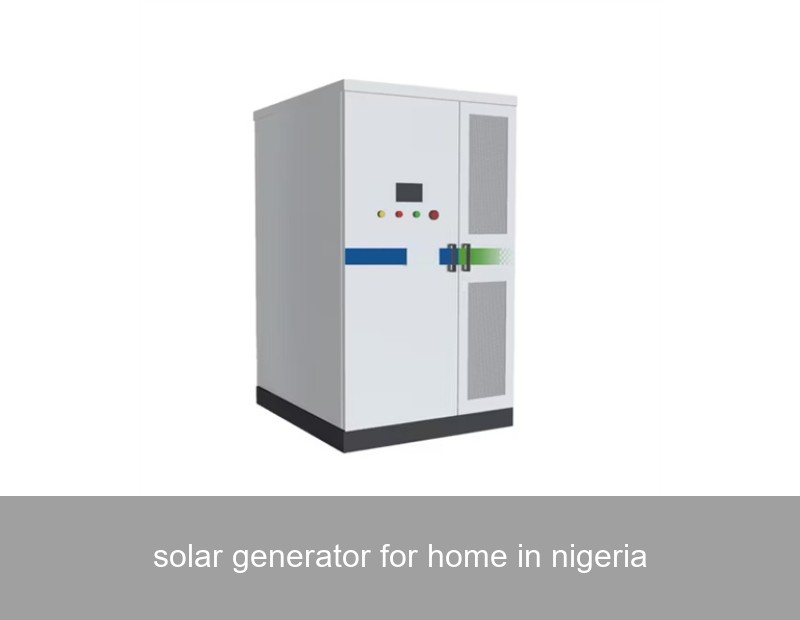
If you're a homeowner in Nigeria researching a solar generator for home, you're likely seeking more than just a product. You're seeking independence, stability, and a practical solution to an unpredictable grid. It's a common scene: the lights flicker, the hum of appliances dies, and daily life grinds to a halt. But today's solution isn't a noisy, fume-spewing petrol generator. The modern answer is a clean, intelligent, and integrated solar power system—a true solar generator. Let's explore how this technology works and how to select the perfect system to power your Nigerian home reliably.
The Power Problem: More Than Just Outages
In many parts of Nigeria, power outages aren't an occasional inconvenience; they're a regular part of life that disrupts work, education, and comfort. Relying on traditional fuel generators comes with significant burdens: the constant and rising cost of petrol or diesel, the noise pollution, the maintenance headaches, and the harmful emissions. According to a World Bank report, over 85 million Nigerians lack access to grid electricity, and those connected face unreliable supply. This isn't just about keeping the lights on; it's about powering livelihoods, preserving food, ensuring security, and enabling connectivity in an increasingly digital world.
Why a "Solar Generator" is the Modern Solution
The term "solar generator" often refers to an all-in-one system that captures, stores, and delivers solar electricity. Unlike a portable power station, a full solar generator for home in Nigeria is typically a permanent installation designed to handle essential or even all household loads. The core advantage is energy sovereignty. Once installed, your primary "fuel" is the abundant Nigerian sunshine, which is free and sustainable. You drastically reduce or eliminate generator fuel costs, enjoy silent operation, and contribute to a cleaner environment. It's a long-term investment that pays back through savings and unparalleled peace of mind.

Image Source: Unsplash (Representative image of residential solar)
Key Components of a Home Solar Generator System
A robust system is more than just panels on a roof. It's an integrated ecosystem:
- Solar Panels: Capture sunlight and convert it to direct current (DC) electricity. Quality and durability are key in Nigeria's hot, humid climate.
- Solar Inverter: The brain of the system. It converts the DC electricity from the panels into the alternating current (AC) used by your home appliances. Modern hybrid inverters are essential for integrating battery storage and the grid.
- Battery Storage System (BSS): The heart of your independence. High-quality batteries store excess solar energy for use at night or during grid outages. Lithium-ion batteries, like Lithium Iron Phosphate (LFP), are now the standard for their long lifespan, safety, and depth of discharge.
- Charge Controller & System Monitoring: Manages the flow of power to protect the batteries and provides real-time data on your energy production and consumption via a smartphone app.
Case Study: A Family in Lagos Reclaims Stability
Consider the Abiola family in Ikeja, Lagos. Before 2023, they faced an average of 8 hours of grid outage daily, spending over ₦70,000 monthly on petrol for their 5.5kVA generator. Their goals were clear: power essential loads (refrigerators, lights, fans, TVs, and computers) 24/7 and eliminate generator noise and fumes.
They installed an 8kW solar PV system with a 15kWh lithium-ion battery storage unit and a 10kW hybrid inverter. The results after one year were transformative:
| Metric | Before Installation | After Installation |
|---|---|---|
| Monthly Fuel Cost | ₦70,000 - ₦85,000 | ₦0 |
| Grid Power Reliance | ~40% | <10% (mostly for backup) |
| Daily Power Availability | ~16 hours | 24 hours |
| Generator Noise | Constant daily | None |
| Estimated Payback Period | N/A | 4-5 years |
The system now provides over 90% of their electricity, with the grid as a rare backup. The family reports not only financial savings but also improved sleep, productivity for home businesses, and a general reduction in stress. This real-world example underscores the tangible benefits of a correctly sized solar generator for home in the Nigerian context.
Choosing the Right System for Your Nigerian Home
Selecting a system isn't one-size-fits-all. Key considerations include:
- Energy Audit: List the appliances you want to power and their wattage. Calculate your daily kWh consumption. Do you want a whole-home or a partial backup solution?
- Battery Capacity: This determines your "power autonomy" – how long you can run without sun or grid. For essential loads, 10-20kWh is a common starting range.
- Inverter Capacity: Must be able to handle the simultaneous peak load of all running appliances.
- Quality & Warranty: Opt for tier-1 components with strong warranties. The harsh climate demands equipment built for reliability.
- Installation Partner: Professional design and installation are non-negotiable for safety, performance, and system longevity.

Image Source: Unsplash (Representative image of battery installation)
Highjoule's Tailored Solutions for Reliable Home Energy
At Highjoule, with nearly two decades of experience as a global leader in advanced energy storage, we understand that reliability is paramount. Our solutions for the Nigerian market are engineered for resilience and simplicity. We don't just sell components; we provide integrated, intelligent systems.
Our Highjoule HomePower Stack series features modular lithium iron phosphate (LFP) battery systems that can be easily scaled from 5kWh to over 30kWh to match your growing needs. Paired with our smart hybrid inverters, the system seamlessly manages energy between solar panels, batteries, and the grid. The intuitive Highjoule Energy Management App gives you complete control, allowing you to monitor production, track savings, and even set backup priorities from your phone—a crucial feature for managing energy during extended outages.
What sets us apart is our focus on system intelligence and durability. Our batteries are designed with advanced thermal management for optimal performance in high temperatures, and our inverters are built to handle the voltage fluctuations common in the region. We work with a network of certified local installers to ensure your solar generator for home in Nigeria is designed, installed, and supported to the highest standards.
The Future is Bright: Trends in Home Solar Power
The technology continues to evolve. We're seeing trends like AI-powered energy forecasting, which optimizes battery charging and discharging based on weather predictions and usage patterns. Vehicle-to-Home (V2H) technology, where an electric car battery can power your home, is on the horizon. Furthermore, as noted by the International Energy Agency (IEA), global innovation continues to drive down costs and improve efficiency, making solar and storage more accessible than ever.
Your journey to energy independence starts with a clear assessment of your needs and a trusted technology partner. The question is no longer *if* solar is viable for your Nigerian home, but *how* to implement the most robust and intelligent system for your specific lifestyle. What is the first appliance you would want to secure with uninterrupted, clean solar power?
 Inquiry
 Online Chat