


Solar Energy Storage Cabinet Accessories: The Unsung Heroes of Your Power System
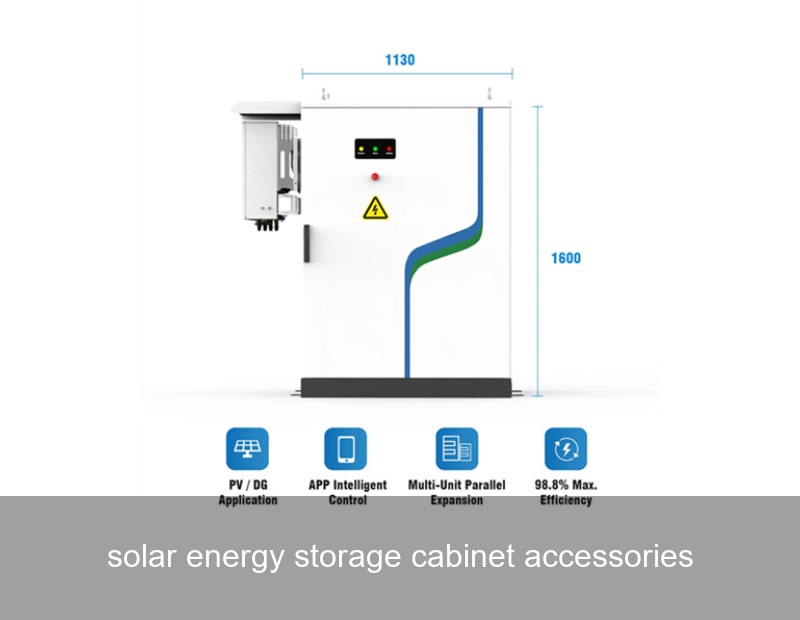
You've invested in solar panels and a sleek battery cabinet. The sun is shining, and your system is producing clean energy. But what happens when a critical component fails, or you need to expand capacity? Often, the key to long-term resilience and performance lies not in the main units themselves, but in the solar energy storage cabinet accessories. These vital components ensure safety, optimize efficiency, and unlock the full potential of your energy storage investment, especially for commercial and industrial applications across Europe and the US.
Table of Contents
The Phenomenon: Why "Just the Cabinet" Isn't Enough
Think of your solar energy storage cabinet as the heart of your power backup system. Now, consider the accessories as the arteries, nervous system, and protective armor. A cabinet without the right accessories is like a high-performance engine without a proper cooling system or gauges—it might work initially but is prone to failure, inefficiency, and can't be monitored or managed effectively. Common pain points we see include thermal hot spots reducing battery life, difficulty in scaling systems, and a lack of real-time visibility into system health.

Image Source: Unsplash (Representative image of cabinet interior components)
The Data: Quantifying the Accessory Impact
Ignoring accessories has a measurable cost. According to a study by the National Renewable Energy Laboratory (NREL), proper thermal management can extend lithium-ion battery cycle life by up to 30%. Conversely, operating at just 10°C above recommended temperature can halve a battery's lifespan. Furthermore, the lack of proper monitoring can lead to "phantom" energy losses and undetected faults, reducing overall system efficiency by 5-15%. For a 500 kWh system, that's a significant amount of wasted clean energy and lost revenue.
A Real-World Case Study: Boosting Resilience for a Bavarian Manufacturing Plant
A medium-sized automotive parts manufacturer in Bavaria, Germany, had a 300 kWh solar-plus-storage system. Their initial installation focused on the main cabinets and inverters. However, they faced two issues: 1) Voltage fluctuations during peak machinery startup were causing the system to momentarily trip, and 2) They had no granular data to predict maintenance needs.
The solution wasn't a new battery cabinet, but strategic accessories. A Highjoule engineer recommended and installed:
- Advanced Power Conditioning Modules: Integrated into the cabinet to smooth out voltage sags and surges.
- Distributed Temperature Sensing (DTS) Kits: Placed at every battery module tier for precise thermal mapping.
- A Granular Monitoring Gateway: Providing cell-level voltage and resistance data to their energy management system.
The results were documented over 12 months:
| Metric | Before Accessories | After Accessories | Improvement |
|---|---|---|---|
| System Availability During Peak Load | 92% | 99.8% | +7.8% |
| Estimated Battery Degradation | ~4% per year | ~2.5% per year | +37.5% life extension |
| Operational Insight (Data Points) | System-level only | Module & Cell-level | Enabled predictive maintenance |
This case highlights how targeted accessories transform a basic storage system into a resilient, intelligent, and data-driven asset.
Key Solar Energy Storage Cabinet Accessories Explained
Let's demystify the essential categories of accessories that should be on your specification list.
1. Thermal Management & Climate Control
Beyond basic fans, look for active liquid cooling plates or directed air-channel kits that ensure even temperature distribution. For colder climates, cabinet-integrated heating pads prevent batteries from operating below freezing, which can cause permanent damage.
2. Safety & Protection
This includes arc-fault circuit interrupters (AFCIs) specifically designed for DC solar circuits, smoke and gas detection sensors that integrate with the main system alarm, and seismic bracing kits for regions in the US like California or seismic zones in Southern Europe.
3. Monitoring & Communication
This is where intelligence is added. Expanded sensor suites (voltage, current, temperature at more points), protocol converters (enabling legacy equipment to talk to modern EMS), and secure remote data loggers are crucial. The IEA emphasizes the need for smart charging and grid interaction, which is impossible without these communication accessories.

Image Source: Unsplash (Representative image of energy data analytics)
4. Power Quality & Management
Advanced busbars and connectors minimize resistance and heat. In-rush current limiters protect circuits during startup. Modular DC disconnects allow for safe maintenance on one string while the rest of the system operates.
5. Structural & Integration
Modular racking systems inside the cabinet allow for easy battery module addition or replacement. Cable management trays and sealed gland plates ensure a tidy, safe, and weather/rodent-proof environment.
The Highjoule Approach: Integrated Intelligence from the Start
At Highjoule, we believe that accessories shouldn't be an afterthought. Our H-Series Commercial Energy Storage Cabinets are designed with a holistic "accessory-ready" architecture. What does this mean for you?
- Pre-Engineered Compatibility: Every cabinet has standardized ports, mounting points, and communication protocols for our range of Highjoule Optimize Accessories. This eliminates guesswork and ensures seamless integration.
- Proactive Health Monitoring: Our proprietary CellSentry monitoring nodes (available as an upgrade accessory) provide data not just on voltage and temperature, but on internal resistance trends, allowing our AI-driven platform to predict potential cell failures weeks in advance.
- Scalability Designed In: Our cabinet busbar systems are designed to accept additional battery modules or capacitor banks via simple plug-in expansion kits, making it cost-effective to grow your storage capacity alongside your business needs.
For a large-scale microgrid project in Texas, we supplied not just the core battery containers, but a full suite of accessories including custom switchgear interfaces and a multi-layered fire suppression system, all managed by our Highjoule GridMind™ controller. This integrated approach was key to the project meeting stringent local grid codes and achieving operational certification.
Future-Proofing Your System: Questions to Ask Your Provider
As you plan or upgrade your system, ask these critical questions about solar energy storage cabinet accessories:
- Does your cabinet design have dedicated, standardized interfaces for future accessory additions?
- Can your monitoring system integrate cell-level data from third-party or upgraded sensor kits?
- What is the process and cost for adding safety or cooling accessories 3-5 years from now?
- How do your accessories ensure compliance with evolving local standards (like the new EU Battery Regulation or the latest NEC in the US)?
The right accessories turn a static piece of equipment into a dynamic, adaptable, and intelligent component of your energy strategy. They are the critical link that ensures your investment delivers safety, performance, and a strong return for decades.
Given the rapid evolution of both battery technology and grid requirements, what single accessory do you think will become indispensable for solar storage systems in the next five years, and is your current system ready to integrate it?
 Inquiry
 Online Chat