


Solar Energy Storage Cabinet 1kVA: The Smart Power Hub for Modern Energy Independence
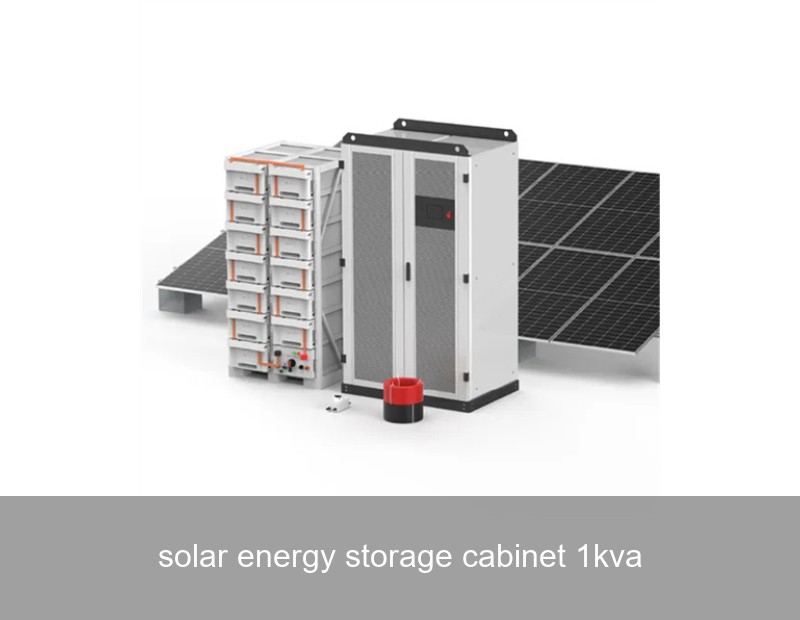
Imagine this: your solar panels are working hard under the midday sun, but you're at work. That precious, self-generated electricity is flooding into the grid for a modest feed-in tariff. Later, in the evening when energy costs peak, you're drawing expensive power back. This mismatch is the core challenge for solar owners across Europe and the US. The solution? A solar energy storage cabinet 1kVA. This isn't just a battery in a box; it's an intelligent energy management system designed to maximize your solar investment and provide unwavering power security. For over 18 years, Highjoule has been at the forefront of this technology, engineering smart storage solutions that turn solar installations from simple generators into resilient, independent power hubs.
Table of Contents
- What is a 1kVA Solar Energy Storage Cabinet?
- The Phenomenon: Solar Abundance vs. Power Poverty
- The Data: Why 1kVA is the Sweet Spot for Many
- Case Study: A German Household's Journey to 95% Self-Consumption
- Key Components Inside a High-Quality Storage Cabinet
- The Highjoule Approach: Intelligence Beyond Storage
- Choosing the Right System for Your Needs
What is a 1kVA Solar Energy Storage Cabinet?
Let's demystify the term. "1kVA" (kilovolt-ampere) refers to the power rating—essentially, how much electricity the system can deliver at any one moment. A 1kVA system can simultaneously power a sustained load of around 1000 watts. Think of it as the width of the energy pipe. The "storage cabinet" is the complete, integrated unit that houses the battery cells (typically Lithium Iron Phosphate or LiFePO4 for safety and longevity), the battery management system (BMS), an inverter/charger, cooling systems, and safety disconnects—all in one robust, often wall-mountable enclosure. Unlike a string of separate components, a cabinet like Highjoule's EcoCube 1kVA is a plug-and-play solution, professionally installed and configured to seamlessly integrate with your existing solar PV system.
The Phenomenon: Solar Abundance vs. Power Poverty
The solar revolution has been phenomenal. Rooftops across California, Texas, Germany, and Spain are gleaming with panels. However, this creates a new curve on the energy demand graph: the "duck curve." As solar production soars during the day, net demand plummets. Then, as the sun sets, demand rapidly spikes, forcing grid operators to rely on fast-starting, often fossil-fueled "peaker" plants. This volatility leads to two things: falling compensation for exported solar power and rising evening electricity rates. For the homeowner or small business, it means you generate wealth in sunlight but can't spend it in the dark. You're rich in kilowatts at noon but poor in usable power at night.

Image Source: U.S. Department of Energy (Public Domain) - Illustrating the "Duck Curve" challenge of high solar penetration.
The Data: Why 1kVA is the Sweet Spot for Many
Why focus on 1kVA? The data from residential energy use paints a clear picture. According to the U.S. Energy Information Administration, the average American home consumes about 30 kWh per day. Critical loads—refrigeration, lighting, internet, essential appliances—often fall within a continuous 500W to 1500W range. A 1kVA system, paired with a sufficient battery capacity (e.g., 5-10 kWh), is perfectly sized to:
- Cover Essential Loads: Keep the lights, fridge, and critical devices running during a grid outage for 8+ hours.
- Maximize Self-Consumption: Shift 60-80% of your solar generation for direct use, dramatically reducing grid imports.
- Provide Cost-Effective Entry: It offers a significant boost in energy independence without the upfront cost of a whole-home backup system, which might be 5kVA or larger.
For a European household with higher efficiency standards or a small business running a office and small workshop, the 1kVA cabinet is the logical, scalable cornerstone of a smart energy setup.
Case Study: A German Household's Journey to 95% Self-Consumption
Let's look at a real example from Bavaria, Germany. The Müller family had a 6 kWp solar array installed in 2018. Despite good feed-in tariffs, they were only using 35% of their solar power directly. In early 2023, they installed a Highjoule EcoCube 1kVA/10kWh storage cabinet.
| Metric | Before Installation (2022 Avg.) | After Installation (2023 Avg.) |
|---|---|---|
| Solar Self-Consumption Rate | 35% | 95% |
| Grid Electricity Import (Monthly) | 210 kWh | 25 kWh |
| Annual Electricity Bill (Estimated) | €1,150 | €220 |
| Grid Independence During Summer Months | 0 Days | Near-Total (Grid used only for peak shaving) |
"The system isn't just a battery; it's our personal energy manager," says Mr. Müller. "The Highjoule app shows us exactly when we're using stored power, solar, or the grid. During the recent storm-related blackout, we didn't even notice—the transition was instant. Our system kept the essentials running for over 14 hours." This case highlights how a correctly sized 1kVA storage cabinet, backed by intelligent software, can transform energy economics and resilience.
Key Components Inside a High-Quality Storage Cabinet
Not all storage cabinets are created equal. When evaluating a solar energy storage cabinet 1kVA, look for these critical components:
- LiFePO4 Battery Cells: The industry standard for safety (non-flammable chemistry) and long life (6,000+ cycles to 80% capacity). Highjoule uses only Grade-A automotive-grade cells.
- Advanced Battery Management System (BMS): This is the brain that monitors each cell for voltage, temperature, and state of charge, ensuring balance, safety, and longevity.
- Hybrid Inverter/Charger: A true hybrid inverter is built-in, capable of managing DC power from solar panels, AC power from the grid, and DC from the battery, all while converting it to usable AC for your home.
- Thermal Management: Passive or active cooling to maintain optimal battery temperature, which is crucial for performance and lifespan in both hot US summers and cold European winters.
- Grid-Forming Capability (Optional): Advanced units like Highjoule's ProSeries can create a stable "microgrid" during an outage, allowing them to start and run without any grid reference—a feature once reserved for large industrial systems.
The Highjoule Approach: Intelligence Beyond Storage
At Highjoule, we believe the hardware is only half the story. Our storage cabinets are built around our EnergyOS™ platform. This proprietary software turns your storage system into an autonomous energy asset. It can:
- Learn your consumption patterns and weather forecasts to optimize charge/discharge cycles.
- Integrate with dynamic electricity tariffs (common in Europe and emerging in the US), automatically charging the battery when rates are low and discharging when they are high.
- Provide detailed, real-time analytics and remote diagnostics through a user-friendly mobile app.
- Enable virtual power plant (VPP) participation, where, with your consent, your distributed storage can support grid stability and earn you additional revenue.
This intelligence ensures our EcoCube and ProSeries cabinets don't just store energy—they manage it for maximum financial and practical benefit.

Image Source: National Renewable Energy Laboratory (NREL) - Showing the concept of a Virtual Power Plant integrating home storage.
Choosing the Right System for Your Needs
Selecting a solar energy storage cabinet 1kVA requires careful consideration. Ask yourself and your installer these questions:
- What are my primary goals? (Bill savings, backup power, environmental impact?)
- What are my critical loads? List the appliances you must keep on during an outage to size the battery capacity (kWh) correctly.
- What is my existing solar setup? Ensure compatibility, particularly with the inverter.
- What are the local regulations and incentives? For instance, the US Investment Tax Credit (ITC) and various European subsidies can significantly reduce net cost.
- What is the manufacturer's reputation and warranty? Look for a company with a proven track record and a comprehensive warranty (at least 10 years on the battery). Highjoule, with its nearly two decades of specialization, offers robust warranties and a global service network.
Ultimately, the right solar energy storage cabinet is a bridge—a bridge between solar generation and actual consumption, between grid dependence and personal energy resilience. It's the key to unlocking the full potential of the sunshine already falling on your roof.
What single energy-consuming device in your home would make you feel most secure if it kept running through a power outage, and how quickly do you think a well-designed storage system could pay for itself given your current electricity rates?
 Inquiry
 Online Chat