


Harnessing Solar Energy for Africa: A Bright Future for Kampala and Beyond
Imagine a city where power cuts are a distant memory, businesses thrive without interruption, and homes are powered by the abundant African sun. This isn't a distant dream; it's the tangible future being built today, with solar energy for Africa taking center stage. Cities like Kampala stand at the crossroads of rapid growth and energy challenge. The solution, however, shines brightly overhead. This article explores how innovative solar and storage technologies are transforming energy access, focusing on the unique opportunities in Uganda's vibrant capital and the continent at large.
Table of Contents
- The Challenge: Energy Demand Outpaces Grid Capacity
- The Data: Africa's Solar Potential is Unmatched
- Kampala in Focus: A Case Study in Urban Solar Integration
- The Solution: Beyond Panels - Intelligent Storage Systems
- Highjoule's Role: Delivering Reliable Power for Kampala's Growth
- The Future is Hybrid and Intelligent
The Challenge: Energy Demand Outpaces Grid Capacity
Across Africa, and in bustling urban centers like Kampala, a common phenomenon persists: economic ambition is often dimmed by unreliable electricity. The grid, while expanding, struggles with stability. For a hospital, this can mean life-support systems on backup generators. For a manufacturer, it translates to costly downtime. For a family, it's evenings spent in darkness. This reliability gap forces a reliance on expensive, polluting diesel generators—a paradoxical step backward in a sun-rich region.
The Data: Africa's Solar Potential is Unmatched
The numbers tell a compelling story. According to the International Renewable Energy Agency (IRENA), Africa possesses some of the world's best solar resources, with many regions receiving over 2,000 kWh of solar irradiation per square meter annually. To put that in perspective, Germany, a global leader in installed solar capacity, receives about 40% less sunlight. Yet, Africa's solar generation capacity remains a fraction of its potential. This isn't just an energy problem; it's a massive economic opportunity. Harnessing this solar potential means creating jobs, fostering industrial growth, and building energy independence.
Why Solar is Particularly Suited for Urban Africa:
- Modularity: Systems can be scaled from a single rooftop to an industrial park.
- Speed of Deployment: Commercial and industrial solar-storage systems can be operational in months, not years.
- Reduced Transmission Loss: Generating power where it's consumed (like on a factory roof in Kampala) avoids losses from long-distance power lines.
Kampala in Focus: A Case Study in Urban Solar Integration
Let's bring this home to Kampala. The city is a hub of commerce and innovation, but its energy needs are complex. A real-world example is the Nakawa Industrial Park. A medium-sized textile factory here was losing over $15,000 monthly due to productivity halts during frequent grid outages. Their diesel generator bill was exceeding $8,000. Their turning point came in 2023 with the installation of a 500 kW rooftop solar array coupled with a 1 MWh battery energy storage system (BESS).
| Metric | Before Solar+BESS | After Solar+BESS |
|---|---|---|
| Grid Dependency | ~85% | ~35% |
| Diesel Generator Use | 40-50 hours/week | <5 hours/week |
| Effective Energy Cost | $0.28/kWh | $0.11/kWh |
| CO2 Emissions Reduction | Baseline | ~140 tonnes/year |
This case, documented in part by the World Bank's climate initiatives, highlights the dual win: radical cost savings and a dramatic drop in carbon footprint. The BESS was the key, storing midday solar surplus to power evening production shifts, effectively making the factory's own solar energy available 24/7.

Image: Rooftop solar installations on commercial buildings, similar to projects in Kampala. Source: Unsplash (Credit: American Public Power Association)
The Solution: Beyond Panels - Intelligent Storage Systems
This brings us to the core insight: solar energy for Africa reaches its full potential only when paired with advanced storage. Solar panels generate power intermittently. An intelligent battery storage system is the linchpin that converts a solar installation from a daytime supplement into a firm, reliable power source.
Think of it this way: the solar array is the excellent farm producing crops (energy). The battery storage system is the modern granary and logistics network—it stores the surplus harvest for when it's needed most, prevents spoilage (curtailment), and ensures a steady supply to the market (your operations). Without it, much of the value is lost.
What Makes a Storage System "Intelligent"?
- Advanced Battery Management (BMS): Ensures safety, longevity, and performance of lithium-ion or other battery chemistries.
- Sophisticated Energy Management System (EMS): The brain of the operation. It decides when to charge from solar, when to discharge to the load, and when to interact with the grid, based on weather forecasts, usage patterns, and cost signals.
- Grid-Forming Capabilities: In areas with weak grids, the system can create a stable, local microgrid to keep critical operations running seamlessly.
Highjoule's Role: Delivering Reliable Power for Kampala's Growth
This is where Highjoule's nearly two decades of expertise becomes critical. As a global leader in advanced energy storage, we don't just supply batteries; we provide integrated, intelligent power solutions designed for challenging environments. For businesses and communities in Kampala and across East Africa, our systems translate solar potential into predictable, clean, and affordable electricity.
Our HPS Series commercial and industrial battery storage systems are engineered for durability and simplicity. They feature our proprietary Adaptive EMS that automatically optimizes for the highest self-consumption of solar energy and the greatest cost savings. For larger-scale applications like industrial parks, shopping malls, or university campuses, our Microgrid Controller can seamlessly orchestrate multiple energy sources—solar, storage, existing generators, and the grid—into a single, resilient network.

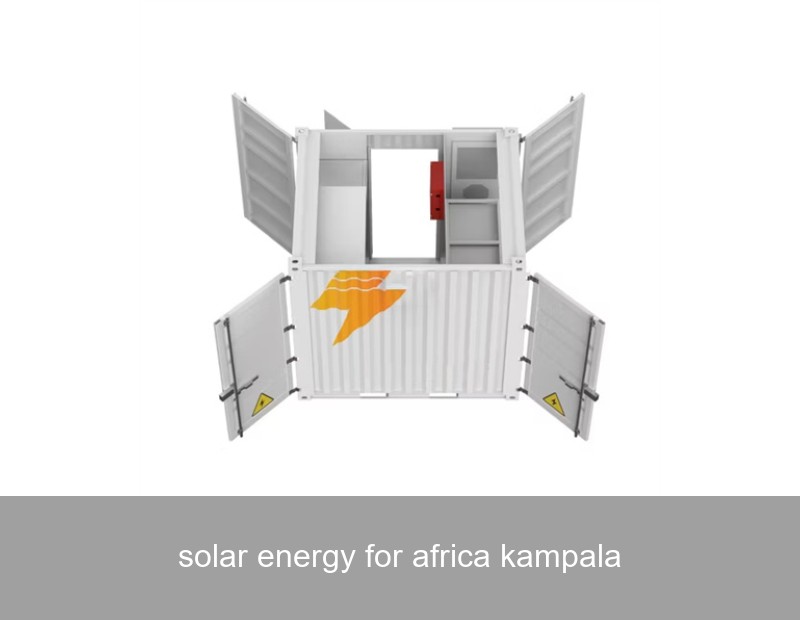
Image: A technician performing maintenance on a containerized battery energy storage system. Source: Unsplash (Credit: ThisisEngineering)
Consider a scenario for a Kampala hospital: Highjoule's solution would ensure that critical care units never experience a blackout. The system would prioritize solar power, use the battery to cover any shortfall, and only use the grid or backup generator as a last resort—all while slashing energy costs that can be redirected to patient care.
The Future is Hybrid and Intelligent
The path forward for solar energy in Africa, with cities like Kampala leading the charge, is not about choosing between solar, storage, or the grid. It's about intelligent integration. The future energy system is hybrid, leveraging the best of each source through smart software and proven hardware. It's about building energy security from the ground up (and from the roof down).
As battery technology continues to advance and costs decline, the economic case becomes irrefutable. The question for business leaders, utility planners, and policymakers is no longer "if" but "how soon" and "with whom."
What does your organization's energy resilience blueprint look like for the next decade, and how can the sun overhead become its most reliable cornerstone?
 Inquiry
 Online Chat