


Solar Energy Battery for Home: The Complete Guide to Energy Independence
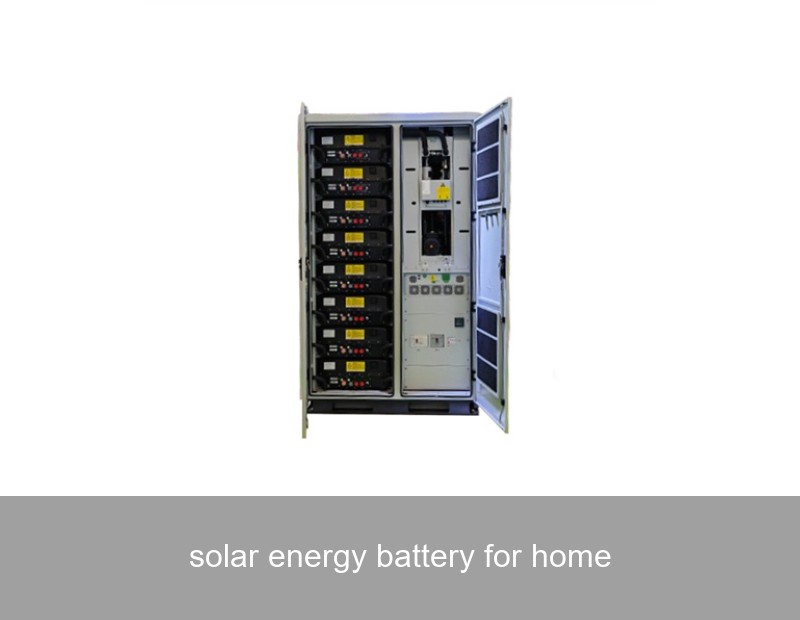
Have you ever watched your electricity bill climb with a sense of resignation, or wondered what happens to all that clean energy your solar panels produce when the sun goes down? If so, you're not alone. Across Europe and the US, homeowners are increasingly turning to a powerful solution: the solar energy battery for home. This isn't just a backup gadget; it's the key to truly unlocking the potential of your rooftop solar, transforming how you generate, store, and use power. In this guide, we'll cut through the complexity and show you how modern home battery storage systems work, why they're a game-changer, and what you should consider for your own journey toward energy resilience.
Table of Contents
- The Solar Dilemma: Generation vs. Consumption
- How Home Solar Batteries Work: Your Personal Energy Bank
- Key Benefits: Beyond Just Backup Power
- Real-World Impact: A Case Study from California
- Choosing the Right System for Your Home
- The Highjoule Solution: Engineered for Intelligent Storage
- The Future of Home Energy Starts Today

A modern home equipped with solar panels and a wall-mounted battery storage system, representing energy self-sufficiency.
The Solar Dilemma: Generation vs. Consumption
Here's a common scenario for solar homeowners: your panels are most productive in the middle of the day when you're likely at work. Your energy consumption, however, peaks in the early morning and evening. This creates a fundamental mismatch. Without a solar energy battery for home, excess daytime energy is often fed back to the grid for a credit (net metering), but you then draw power back at night, often at a higher rate. The situation is evolving; in many regions, feed-in tariffs are decreasing, making it less profitable to export surplus solar. According to the U.S. Department of Energy, adding storage is the logical next step to maximize the value of a solar investment, allowing you to use more of what you produce directly.
How Home Solar Batteries Work: Your Personal Energy Bank
Think of a home battery system as a sophisticated energy savings account. It sits quietly in your garage or utility space, integrated with your solar panel inverter. During sunny hours, instead of sending all surplus electricity to the grid, it is diverted to charge the battery. When the sun sets or during a power outage, your home automatically draws electricity from this stored reserve. Modern systems like those from Highjoule feature an intelligent energy management system (EMS) that learns your usage patterns and can be programmed to optimize for self-consumption, time-of-use rates, or backup readiness.
Core Components of a System:
- Battery Cells: Typically lithium-ion (like LiFePO4 for safety and longevity), these are the core storage units.
- Battery Management System (BMS): The brain that monitors cell health, voltage, and temperature to ensure safe operation.
- Hybrid or AC-Coupled Inverter: Converts the DC electricity from solar and batteries to AC for your home, and vice-versa for charging.
- Energy Management Software: The user interface, often a mobile app, that lets you monitor and control your energy flow.
Key Benefits: Beyond Just Backup Power
While peace of mind during outages is a major driver, the advantages of a solar battery for home extend much further.
| Benefit | Description | Impact |
|---|---|---|
| Increased Self-Consumption | Use more of your own solar energy, reducing grid dependence. | Can increase direct solar usage from 30-50% to over 70-80%. |
| Bill Savings & Rate Optimization | Store solar energy to use during peak evening hours when grid rates are highest. | Significant savings under Time-of-Use (TOU) tariff plans. |
| Reliable Backup Power | Seamless transition to battery power during grid failures. | Keeps essential loads (lights, fridge, internet) running for hours or days. |
| Grid Support & Sustainability | Reduces strain on the grid during peak demand, supporting community resilience. | Lowers your carbon footprint by maximizing clean energy use. |
Real-World Impact: A Case Study from California
Let's look at a concrete example. The Smith family in Sacramento, California, installed a 10 kW solar array in 2020. Despite having solar, they were still subject to high Pacific Gas & Electric (PG&E) rates in the evening. In 2022, they added a 13.5 kWh home battery system. The results over one year were compelling:
- Grid Import Reduction: Their grid electricity purchase dropped by 92% during summer peak periods (4-9 PM).
- Self-Sufficiency: Their overall energy self-consumption rate jumped from 40% to 85%.
- Financial: They saved an additional $1,200 annually on their electricity bill beyond solar savings alone.
- Resilience: The system provided backup during two planned public safety power shutoffs (PSPS), totaling 36 hours.
This case illustrates the tangible value proposition: batteries transform solar from a bill-reducer to a near-total energy independence solution.

Professional installation of a modern, wall-mounted home battery system.
Choosing the Right System for Your Home
Selecting a solar energy battery for home isn't one-size-fits-all. Key considerations include:
Capacity & Power:
Capacity (measured in kWh) is how much energy the battery can store. Power (measured in kW) is how much it can deliver at once. You need enough power to start appliances and enough capacity to run them for your desired duration.
Battery Chemistry:
Lithium Iron Phosphate (LiFePO4) is becoming the preferred choice for homes due to its superior safety profile, long cycle life (often over 6,000 cycles), and stability, compared to older lithium-ion variants.
Scalability & Integration:
Can you add more batteries later? Does the system integrate seamlessly with both new and existing solar installations? A modular design offers future-proofing.
The Highjoule Solution: Engineered for Intelligent Storage
This is where Highjoule's expertise comes into play. With nearly two decades of experience as a global leader in advanced energy storage, we've engineered our ResiCore Home Battery System specifically to meet the demands of modern homeowners in Europe and North America. Our system isn't just about storage; it's about intelligent energy management.
The Highjoule ResiCore system features:
- Ultra-Safe LiFePO4 Chemistry: Engineered for maximum safety and a lifespan designed to outlast your solar panels.
- Modular Scalability: Start with a base unit and expand from 10 kWh to 30 kWh+ as your needs evolve.
- HighJoule Smart EMS: Our proprietary software platform uses predictive weather data and real-time utility pricing (where available) to automatically optimize charge/discharge cycles, putting savings on autopilot.
- Seamless Backup Transition: In the event of a grid outage, our system switches to backup power in milliseconds, ensuring your essential home functions never skip a beat.
We provide a complete solution—from initial consultation and system design to professional installation and ongoing monitoring support—ensuring your transition to energy independence is smooth and successful.
The Future of Home Energy Starts Today
The combination of solar panels and a home battery is more than a product; it's a fundamental shift in how we interact with energy. It empowers you as a producer, manager, and consumer—a "prosumer." It enhances your home's resilience against an uncertain grid and volatile energy prices. As we move towards smarter grids and more renewable integration, homes with storage will be at the forefront, potentially even providing services back to the community.

A family monitors their home energy production and battery status via a smart tablet application.
So, we leave you with this question: What would energy independence look like for your household? Is it the security of an uninterrupted power supply, the satisfaction of maximizing your clean energy, or the financial control over your monthly bills? Imagine a day where your home's energy flow is as intelligent and self-sufficient as the technology that manages it.
 Inquiry
 Online Chat