


Solar Companies in Singapore: Powering a Sustainable Island Nation
Imagine a bustling, modern city-state with limited land, no natural energy resources, and a strong commitment to a green future. This is Singapore, a nation where the push for solar energy isn't just an option—it's a strategic necessity. As the island harnesses the power of the tropical sun, a dynamic ecosystem of solar companies in Singapore is emerging, driving innovation and installation. But with abundant sunshine comes a critical challenge: how to ensure this clean energy is available when it's needed most, after sunset or during cloudy periods. This is where advanced energy storage transforms solar from an intermittent source into a reliable, round-the-clock power solution.
Table of Contents
The Phenomenon: Singapore's Solar Surge
You've likely seen them: glimmering blue panels on the rooftops of HDB flats, industrial parks, and even floating on reservoirs. Singapore is on a determined path to increase its solar capacity, targeting at least 2 gigawatt-peak (GWp) by 2030. This push is led by a diverse mix of solar companies in Singapore, ranging from large developers to specialized installers. Their mission? To overcome the inherent constraints of dense urban living and maximize every square meter of available space—rooftops, facades, and water bodies. The phenomenon is clear: solar is becoming a cornerstone of Singapore's energy mix, driven by government initiatives like the Singapore Green Plan 2030 and falling technology costs.

Solar panels installed on industrial rooftops in Singapore. (Image source: Energy Market Authority of Singapore)
The Data: Ambition Meets Geography
Let's look at the numbers. As of 2023, Singapore had deployed over 1 GWp of solar capacity. To put that in perspective, on a sunny day, solar can now power over 200,000 households. However, solar's intermittent nature means its actual contribution to the grid is variable. The Energy Market Authority (EMA) notes that solar energy's average capacity factor in Singapore is about 12-15%, primarily due to cloud cover and urban shading. This variability creates a "duck curve" effect—a rapid drop in net electricity demand during peak solar hours, followed by a steep ramp-up as the sun sets. Managing this curve is crucial for grid stability, and this is where data points to the inevitable next step: integrating energy storage systems (ESS) to store excess solar energy for later use.
| Metric | Data | Implication |
|---|---|---|
| 2030 Solar Target | ≥ 2 GWp | Massive installation drive underway |
| Land Area for Solar | ~ 1.5% of total land | Extreme need for efficiency & innovation |
| Typical Daily Generation Peak | Midday (4-5 hours) | Mismatch with evening energy demand peak |
| Potential with 4-hr Storage | ↑ Up to 30% more usable solar energy | Storage dramatically increases solar value |
The Case Study: A Commercial Rooftop Revolution
Consider a real-world example from a leading industrial estate. A large logistics warehousing company in Jurong partnered with one of the innovative solar companies in Singapore to install a 1.5 MWp rooftop solar system. The goal was to reduce operational costs and carbon footprint. The system performed well, cutting daytime grid consumption by 40%. However, the facility's highest energy loads occurred in the early evening during sorting and loading operations—precisely when solar generation ceased.
The solution? A retrofit battery energy storage system (BESS). By integrating a 500 kWh / 1000 kWh BESS, the company could store excess solar energy generated at midday and dispatch it during the evening peak. The results were compelling:
- Self-consumption of solar increased from 65% to over 90%, minimizing wasted energy.
- Grid dependence during peak tariff periods dropped by an additional 25%, leading to significant cost savings.
- The system provided backup power for critical cooling systems, enhancing operational resilience.
This case exemplifies the new paradigm: solar + storage is greater than the sum of its parts. It's no longer just about generating kilowatt-hours; it's about intelligently managing energy flow for maximum economic and operational benefit.
The Insight: Storage is the Key to Unlocking Solar's Full Value
So, what's the key takeaway for businesses or communities looking at solar? Simply put, pairing your solar PV system with a smart battery storage solution transforms your energy profile. Think of solar panels as your energy "harvesters" and the battery system as your energy "bank account." You can store your surplus "savings" from the day to spend when "prices" (grid demand) are high or when production stops. This insight is crucial for solar companies in Singapore and their customers aiming for true energy independence and optimal return on investment.
Advanced storage does more than just time-shift energy. Modern systems, like those developed by global providers, offer capabilities such as:
- Peak Shaving: Automatically discharging the battery during periods of highest grid demand to avoid costly demand charges.
- Frequency Regulation: Helping to stabilize the national grid by responding to minute-by-minute fluctuations in supply and demand.
- Backup Power: Providing a seamless transition to battery power during grid outages, ensuring business continuity.
Highjoule's Role: Intelligent Storage for Intelligent Grids
This is where Highjoule's expertise becomes pivotal. As a global leader in advanced energy storage systems since 2005, Highjoule understands the unique challenges faced by dense, urban environments like Singapore. For solar companies in Singapore and their end customers, Highjoule provides more than just batteries. We deliver integrated, intelligent storage solutions designed to maximize the value of every solar panel installed.
Our HyperCell™ BESS, for instance, is engineered for high energy density and safety—a critical consideration for space-constrained installations. Coupled with our GridSync™ AI Energy Management Platform, the system doesn't just store energy; it learns energy usage patterns, predicts solar generation, and autonomously optimizes charge/discharge cycles to achieve the lowest possible energy costs and the highest resilience. For a commercial building, industrial facility, or a microgrid project, this means turning a solar investment into a smart, grid-interactive asset. Partnering with Highjoule allows solar integrators to offer a complete, future-proof energy solution that addresses the core challenge of intermittency head-on.

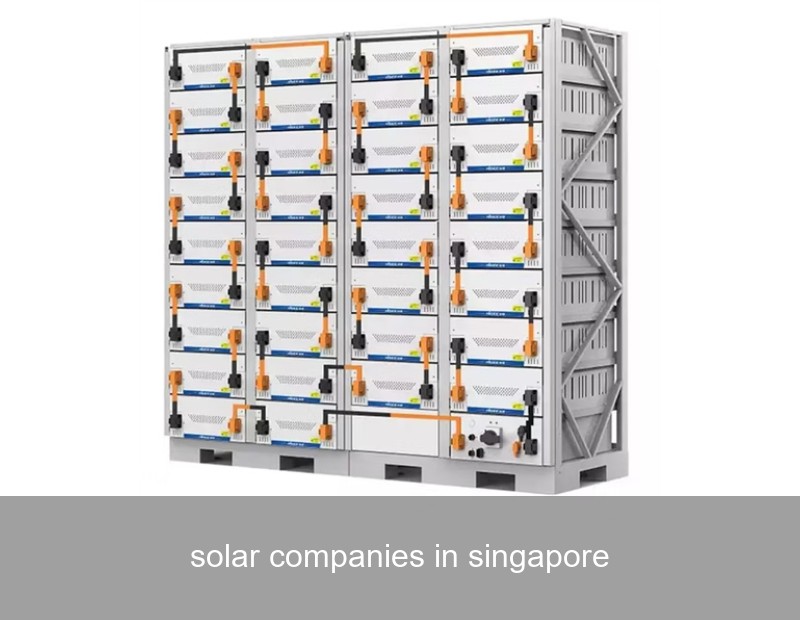
A modern, containerized battery energy storage system (BESS) for commercial/industrial use. (Image source: NREL, National Renewable Energy Laboratory)
The Future of Solar in Singapore
The trajectory is set. Singapore will continue to see growth in solar deployment, driven by technological advances like bifacial panels and building-integrated photovoltaics (BIPV). However, the next frontier of growth lies in software and systems integration. The most successful solar companies in Singapore will be those that evolve into holistic energy solution providers, seamlessly combining solar generation, intelligent storage, and smart energy management into a single, optimized package.
Initiatives like the EMA's Distributed Energy Resources Management System (DERMS) pilot highlight the future direction: a distributed, flexible grid where thousands of solar-plus-storage systems can act in concert to support national energy security. In this landscape, the choice of storage technology and its intelligence becomes as important as the solar panels themselves.
An Open Question for Your Energy Strategy
As you evaluate proposals from solar companies in Singapore, what questions will you ask to ensure your investment is resilient for the next 20 years? Are you considering how your solar system will perform not just at noon today, but at 7 PM five years from now? The integration of smart storage isn't an add-on; it's the upgrade that defines the next generation of solar energy. What step will you take to ensure your transition to solar is truly complete?
 Inquiry
 Online Chat