


Solar Cattle Watering Systems: The Ultimate Guide to Off-Grid Livestock Hydration
a sprawling ranch under a relentless sun. Your cattle need constant access to fresh water, but the nearest power line is miles away. For generations, ranchers have grappled with this challenge, relying on costly diesel generators or complex piping systems. But what if the very sun beating down on the pastures could power the solution? Enter solar cattle watering systems – a transformative, sustainable technology that is revolutionizing livestock management. By harnessing photovoltaic (PV) energy to pump water, these systems offer freedom from the grid, slash operational costs, and ensure a reliable water supply. As a leader in advanced energy storage, Highjoule understands that the true power of solar isn't just in generation, but in creating intelligent, resilient systems that work seamlessly, day in and day out, for critical applications like remote agriculture.
Table of Contents
The Problem: Watering Cattle Off the Grid
For ranchers operating on vast, remote lands, providing water is the single most critical and often most difficult task. Traditional methods have significant drawbacks:
- Diesel Generators: High fuel costs, frequent maintenance, noise, pollution, and the logistical hassle of fuel delivery.
- Grid Extension: Prohibitively expensive, often costing tens of thousands of dollars per mile to run power lines.
- Windmills: A classic solution, but dependent on consistent wind, requiring mechanical maintenance, and sometimes insufficient in high-demand summer months.
- Hauling Water: An extremely labor-intensive and time-consuming stopgap that is not scalable.
The consequence of unreliable water isn't just inconvenience; it directly impacts animal health, weight gain, and ultimately, the ranch's profitability. According to research from the Penn State Extension, water is the most important nutrient for livestock, and restricted access can lead to immediate reductions in feed intake and productivity.

Image Source: Unsplash - A reliable water source is the cornerstone of any successful livestock operation.
The Solar-Powered Solution: How It Works
A solar cattle watering system elegantly converts sunlight into hydraulic energy. Here's the basic workflow:
- Solar Panels: Mounted on a fixed or tracking frame, they capture sunlight and generate direct current (DC) electricity.
- Solar Pump Controller: This crucial device (often a variable frequency drive) matches the pump's power input to the solar array's variable output, allowing the pump to start and run efficiently even under low-light conditions.
- Water Pump: Typically a submersible pump for deep wells or a surface pump for ponds and streams. DC pumps are common, but AC pumps paired with an inverter are also used.
- Water Storage & Trough: Pumped water is stored in an elevated tank or a large trough to create gravity-fed pressure and provide a buffer for periods without sun (nighttime, cloudy days).
The system is elegantly autonomous. Sunrise starts the pump, filling the storage; as demand depletes the trough, the pump cycles on again, maintaining supply with minimal human intervention.
Key Components of a Robust System
Not all solar pumping systems are created equal. A dependable setup for agricultural use must be built with quality and foresight.
| Component | Function | Key Consideration |
|---|---|---|
| Solar Array | Energy generation | Size (watts) must account for pump power, total daily water needs, and seasonal "solar insolation" (sun hours) in your region. |
| Pump & Controller | Water movement & system brain | Match pump type (submersible/surface) and lift/flow rate to your water source. A quality controller maximizes efficiency and protects the pump. |
| Water Storage | Pressure & supply buffer | Capacity should cover 2-5 days of herd consumption as a safety margin for poor weather. |
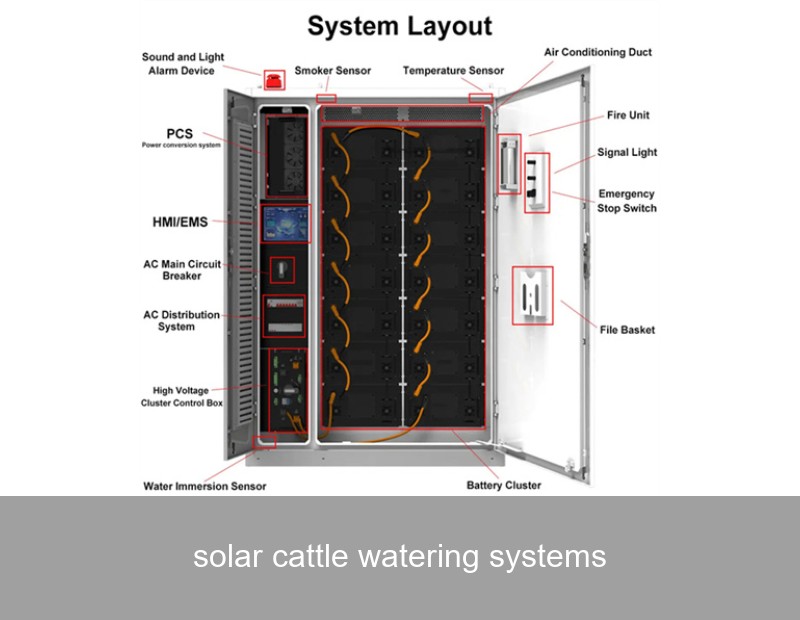
| Energy Storage (Battery Backup) | Extended operation & reliability | Optional but highly recommended. Allows pumping at night or on cloudy days, protects against pump start-up surges, and enables smart monitoring. |
This last point on energy storage is where modern technology truly elevates the basic solar water pump. Integrating a battery system transforms it from a fair-weather tool into a 24/7 reliable utility.
Beyond the Pump: The Role of Smart Energy Storage
While a direct solar-to-pump system works, adding a battery buffer and intelligent control unlocks new levels of performance and management. This is where Highjoule's expertise becomes directly relevant to the forward-thinking rancher.
Highjoule's commercial & industrial (C&I) and microgrid energy storage systems can be scaled to support large agricultural operations. Imagine a system where:
- The solar array charges a Highjoule battery bank during the day.
- The battery bank powers the water pump on demand, regardless of sunlight, ensuring consistent trough levels.
- Excess solar energy can power other farm needs – fence chargers, lighting, or sensor networks.
- System health, water levels, and energy data can be monitored remotely via Highjoule's intelligent energy management platform, alerting you to issues before they affect the herd.
This integrated approach moves beyond simple pumping to creating a resilient, off-grid energy hub for the entire remote site.
Real-World Impact: A Case Study from Texas, USA
Let's look at hard data. The Texas A&M AgriLife Research Center in Sonora conducted a multi-year study on solar watering systems for cattle. One implementation involved a 1.5 kW solar array powering a submersible pump to serve a 100-head cattle section.
The Results:
- 100% Elimination of diesel fuel costs and associated generator maintenance.
- Reliable water delivery even during peak summer heat, with a 3-day water storage buffer.
- Payback Period: The system's upfront cost was recouped in approximately 4 years compared to the ongoing cost of diesel.
- Animal Performance: Consistent water access contributed to observed improvements in average daily weight gain during the trial period.
This case underscores the tangible financial and operational benefits. For a larger operation, integrating a Highjoule battery storage system would further enhance resilience, potentially allowing for a smaller solar array (by using stored power for morning/evening pumping) and guaranteeing operation during extended cloudy periods common in other regions like the Midwest or Northern Europe.

Image Source: Unsplash - Solar panels providing power in an agricultural setting.
Choosing and Maintaining Your System
Investing in a solar watering system requires careful planning:
Key Sizing Factors:
- Herd Size & Consumption: A mature cow can drink 30-50+ gallons per day, more in heat.
- Water Source: Well depth (static & dynamic level) or surface water lift height (total dynamic head).
- Climate & Sunlight: Average peak sun hours in your location, especially during critical dry seasons.
- Future Expansion: Size your system with a 20-30% capacity margin.
Maintenance is Minimal, But Critical:
- Keep solar panels clean and free of dust, snow, or bird droppings.
- Regularly inspect electrical connections for corrosion.
- Check troughs, tanks, and floats for leaks or damage.
- Winterize systems in freezing climates with tank heaters (powered by your solar/battery system!) or drain-down setups.
The Future of Solar in Agriculture
The adoption of solar cattle watering systems is more than a trend; it's a logical step towards sustainable, precision agriculture. The next evolution connects these systems to the Internet of Things (IoT). Sensors monitor water quality, tank levels, and animal presence, while intelligent controllers like those in Highjoule's systems optimize energy use, prioritizing water pumping when the herd drinks most and storing energy when it doesn't.
This creates a truly smart, closed-loop farm: sun provides energy, energy provides water, water sustains the herd, and data sustains the entire system's efficiency. It represents a perfect alignment of environmental stewardship and economic sense.
Could your ranch's most persistent challenge be solved by the sun overhead? What other remote farm operations could be transformed by pairing solar generation with intelligent, Highjoule-style energy storage and management?
 Inquiry
 Online Chat