


Solar Business in Poland: Powering Growth with Intelligent Energy Storage
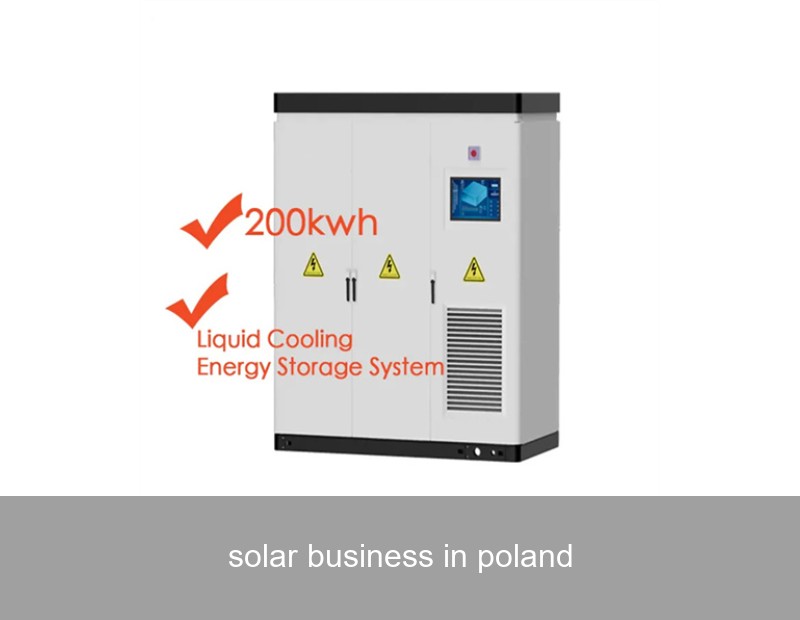
If you're involved in the solar business in Poland, you're riding a powerful wave. From ambitious government targets to soaring energy prices and a strong drive for energy independence, Poland has become one of Europe's most dynamic photovoltaic (PV) markets. But as the initial gold rush of panel installation matures, forward-thinking businesses are asking a crucial question: How do we maximize this investment and ensure reliable, 24/7 clean power? The answer, increasingly, lies not just on the rooftops, but in what happens to the energy after it's generated. This is where intelligent energy storage systems (ESS) are transforming the landscape, turning solar from a supplementary power source into a foundational business asset.
The Sunrise of Polish Solar: A Market Overview
Poland's solar journey is nothing short of remarkable. Historically reliant on coal, the country has executed a stunning pivot. Driven by EU climate directives, attractive subsidy programs like "Mój Prąd" (My Electricity), and strategic economic needs, installed PV capacity skyrocketed from just 0.2 GW in 2018 to over 17 GW by the end of 2024. The commercial and industrial (C&I) sector is a major driver, with factories, warehouses, and agricultural businesses investing heavily to reduce operating costs and hedge against volatile energy prices.
This boom, however, presents its own set of complexities. The Polish power grid, built for centralized coal generation, is experiencing strain from the decentralized, variable nature of solar production. You've likely seen the graphs: a massive peak at midday when the sun shines, followed by a steep drop as demand rises in the evening. This phenomenon, known as the "duck curve," creates challenges for grid stability and impacts the long-term value of solar installations.

Image Source: Unsplash - Representative image of industrial solar growth.
Challenges Beyond the Panels: The Intermittency Problem
For a business owner or energy manager, the solar equation is simple on paper: generate your own power, slash your bills. The reality is more nuanced. Consider these critical pain points:
- Grid Congestion and Curtailment: In regions with high PV penetration, local grid operators may be forced to curtail (turn off) solar generation to prevent overloads. This means your assets sit idle, and you lose potential revenue.
- Shifting Energy Price Dynamics: As more solar floods the grid at noon, wholesale electricity prices during those hours can plummet, sometimes even turning negative. The value of simply exporting all your excess solar is decreasing.
- Lack of Nighttime Power: Your factory or facility doesn't stop at sunset. Without storage, you're forced to buy expensive power from the grid during evening and morning peaks, undermining your solar savings.
A report by the International Energy Agency (IEA) highlights the need for Poland to invest in grid flexibility and storage to integrate its rapidly growing renewable capacity effectively.
The Missing Piece: Why Energy Storage is Non-Negotiable
This is where the narrative for the solar business in Poland evolves. Adding a battery energy storage system (BESS) is the logical next step, transforming a solar PV system from a one-trick pony into a versatile, profit-optimizing powerhouse. Think of it as a high-performance battery for your entire business operation.
The benefits are concrete and multi-layered:
| Business Challenge | Storage Solution | Direct Benefit |
|---|---|---|
| High grid energy costs at peak times | Discharge stored solar energy during peak hours | Dramatically reduced electricity bills (peak shaving) |
| Excess solar energy at noon with low value | Store cheap, self-generated solar for later use | Increased self-consumption, reduced waste |
| Grid instability or power outages | Provide seamless backup power for critical loads | Enhanced business continuity and resilience |
| Future participation in grid services | Stabilize grid frequency through ancillary services | Creation of a new revenue stream |
Case Study: An Industrial Success Story in Wrocław
Let's look at a real-world application. A mid-sized food processing plant near Wrocław, operating 18 hours a day with high refrigeration loads, installed a 500 kWp rooftop solar array in 2022. While daytime bills fell, evening energy costs remained crippling. In 2024, they partnered with Highjoule to integrate a 360 kWh Highjoule C&I ESS with our proprietary energy management system (EMS).
The results after one year are telling:
- Self-Consumption Rate: Increased from 35% to over 85%.
- Peak Grid Draw: Reduced by 70%, eliminating costly capacity charges.
- Overall Energy Cost Savings: An additional 28% on top of solar-only savings.
- ROI Period: The integrated solar + storage system is projected to pay for itself in under 6 years, thanks to Poland's energy price landscape.
“The Highjoule system wasn't just a battery; it became the brain of our energy flow,” noted the plant's facility manager. “It automatically decides when to store, when to discharge, and how to protect us from price spikes, all with minimal oversight from my team.”
Highjoule: Your Intelligent Storage Partner in Poland
Entering the storage market requires a partner with deep technological expertise and a firm understanding of local market dynamics. This is where Highjoule stands out. Since 2005, we have been at the forefront of advanced energy storage, designing systems that are not just hardware, but intelligent energy platforms.
For businesses in Poland looking to future-proof their solar investments, our Highjoule C&I ESS offers a compelling solution:
- All-in-One, Scalable Design: Our modular, containerized or rack-mounted systems simplify installation and allow for easy expansion as your needs grow.
- Advanced, AI-Driven EMS: The true core of our system. Our software continuously analyzes weather forecasts, energy prices, and your consumption patterns to optimize every kilowatt-hour for maximum financial return.
- Unmatched Safety & Reliability: Built with lithium iron phosphate (LFP) battery chemistry, known for its thermal stability and long cycle life, our systems are engineered to the highest international safety standards.
- Local Support & Grid Integration Expertise: We work with trusted Polish partners to ensure seamless integration, compliance with local grid codes (PSE requirements), and provide ongoing technical support.
We view storage as the critical enabler that allows the solar business in Poland to reach its full potential, both for individual enterprises and for the stability of the national grid.

Image Source: Unsplash - Representative image of a modern C&I battery storage system.
Future Outlook: Building a Resilient Polish Grid
The conversation is rapidly shifting. The Polish government's draft National Energy and Climate Plan (NECP) explicitly recognizes the need for energy storage to achieve its 2040 targets. New market mechanisms for flexibility and ancillary services are on the horizon. This means businesses with smart storage today will be first in line to capitalize on these future revenue opportunities tomorrow.
The question is no longer if to add storage to your solar business in Poland, but when and with whom. As energy markets evolve, the competitive advantage will belong to those who control and optimize their power flow with precision.
Is your solar installation operating at its full potential, or is it leaving money on the table every time the sun sets?
We invite you to connect with the Highjoule team for a personalized analysis of how intelligent energy storage can solidify your energy independence and improve your bottom line. What would a 30% further reduction in your energy costs do for your business's competitiveness?
 Inquiry
 Online Chat