


Solar Battery Systems Australia: Powering the Sunburnt Country's Energy Future
Australia, a land blessed with abundant sunshine, is undergoing a remarkable energy transformation. With some of the highest solar radiation levels in the world, it's no surprise that rooftop solar panels are a common sight from Sydney suburbs to Perth homes. Yet, a critical question remains: how can households and businesses truly harness this golden power after the sun sets? The answer lies in the rapid evolution of solar battery systems in Australia. This technology is moving from a niche addition to a central component of a resilient, cost-effective, and sustainable energy strategy for the nation.
Table of Contents
- The Australian Solar Phenomenon and Its Night-Time Challenge
- The Data: Why Batteries Are Becoming Non-Negotiable
- A Real-World Case Study: The Melbourne Manufacturing Shift
- Inside the Box: What Makes a Modern Solar Battery System Tick?
- Highjoule's Intelligent Solutions for the Australian Landscape
- What Does the Future Hold for Australian Energy Independence?
The Australian Solar Phenomenon and Its Night-Time Challenge
You've likely seen the graphs – Australia leads the world in rooftop solar penetration per capita. Over 3.4 million homes have embraced PV panels, turning rooftops into mini power stations. But here's the catch: solar generation peaks in the middle of the day, often when families are at work or school. Meanwhile, energy demand soars in the early evening when people return home, cook dinner, and switch on appliances. This creates a famous "duck curve" – a mismatch between solar supply and household demand. Without a way to store the midday surplus, excess solar energy is exported to the grid, often for a minimal feed-in tariff, only for households to buy back expensive grid power at night. It's a cycle that limits the true potential of your solar investment.
The Data: Why Batteries Are Becoming Non-Negotiable
The economic and practical case for solar battery systems in Australia is stronger than ever. Let's look at the numbers. According to the Australian Energy Market Operator (AEMO), the combined capacity of small-scale and large-scale batteries in the National Electricity Market (NEM) is set to skyrocket from around 1.5 GW in 2023 to over 15 GW by 2030. Why this explosive growth?
- Soaring Grid Prices: Wholesale electricity prices have been volatile and generally trending upwards, making self-consumption of solar energy more valuable.
- Declining Feed-in Tariffs (FiTs): Once generous, FiTs in most states are now a fraction of the retail price of electricity, making exporting solar less attractive.
- Technology Cost Reduction: The cost of lithium-ion battery storage has fallen significantly over the past decade, improving payback periods.
- Grid Resilience: With increasing extreme weather events, a battery provides critical backup power, a feature highly valued in regions prone to bushfires or storms.
It's no longer just about saving money; it's about taking control. A quality solar battery system acts as a personal energy reservoir, letting you time-shift your solar power and dramatically increase your energy independence.

Credit: Unsplash - A modern Australian home equipped for solar self-sufficiency.
A Real-World Case Study: The Melbourne Manufacturing Shift
Consider the story of "Precision Engineering Co.," a mid-sized metal fabrication workshop in Melbourne's industrial belt. Operating heavy machinery, their energy bills were substantial, and their existing 100kW solar array only offset their daytime operational costs. Their evening and early morning shifts still relied entirely on the grid.
In 2023, they installed a 120kWh commercial solar battery storage system. The results, monitored over one year, were compelling:
| Metric | Before Battery | After Battery |
|---|---|---|
| Grid Energy Consumption | 65% of total need | 28% of total need |
| Solar Self-Consumption | 35% | 82% |
| Peak Demand Charges | Reduced by 40% | Reduced by 40% |
| Bill Savings (Annual) | ~$18,000 (solar only) | ~$42,000 (solar + battery) |
Furthermore, the system provided seamless backup during two brief grid outages, preventing costly production halts. This case illustrates a powerful trend: for Australian businesses, batteries are moving from a sustainability statement to a core operational and financial asset.
Inside the Box: What Makes a Modern Solar Battery System Tick?
Not all battery systems are created equal. A modern, efficient setup consists of more than just battery cells in a cabinet. It's an integrated ecosystem:
- Battery Chemistry: Lithium Iron Phosphate (LFP) is now the dominant chemistry for home and commercial storage in Australia due to its superior safety, long cycle life, and stability in our climate.
- The Inverter: Often the brain of the operation. A hybrid inverter manages DC power from the panels, charges/discharges the battery, and converts DC to AC for home use. Some systems use separate inverters and battery managers.
- Energy Management System (EMS): This intelligent software decides when to store, use, or export energy. Advanced EMS can learn consumption patterns, consider weather forecasts, and even respond to grid signals to optimize for cost or grid support.
- Safety & Integration: Robust thermal management, fire safety compliance (like AS/NZS 5139), and seamless integration with existing solar are non-negotiable for a reliable installation.
Highjoule's Intelligent Solutions for the Australian Landscape
At Highjoule, with nearly two decades of global experience in advanced energy storage, we understand the unique demands of the Australian market. Our solutions are engineered not just for performance, but for the harsh Aussie conditions and the smart, cost-conscious consumer.
For the residential sector, our H-Joule HomePower series is a standout. This all-in-one AC-coupled system features LFP battery packs with a modular design, allowing homeowners to start with a base capacity and expand as needed. Its integrated AI-driven EMS, which we call NeuronGrid, doesn't just react—it predicts. By analyzing your historical usage and local weather data, it proactively manages your energy flow to ensure maximum self-consumption and preparedness for peak tariff periods or potential outages.
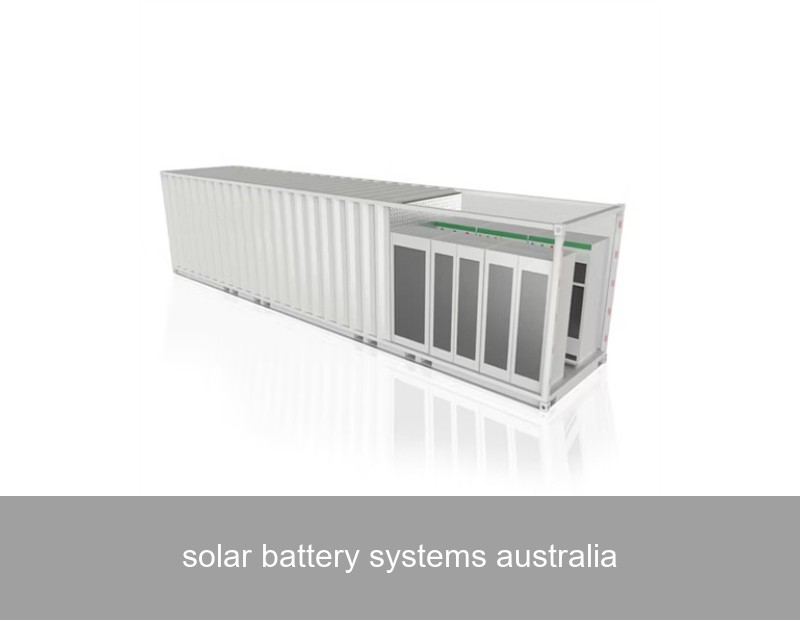
For commercial and industrial clients, like the Melbourne workshop mentioned earlier, our H-Joule IndustrialStack platform provides a scalable, containerized or rack-mounted solution. These systems are built for high-cycle, high-power applications and can be configured for complex demand charge management and even grid services participation. Highjoule's global expertise in microgrids also means we can design systems that allow businesses to operate as an "energy island" during extended grid disruptions, a critical capability for essential services and remote operations.
Our approach is holistic. We partner with a network of certified Australian installers to ensure every Highjoule system is not only high-performing but also safely and perfectly integrated into your property, backed by strong warranties and local support.

Credit: Unsplash - Precision monitoring is key for commercial-scale storage.
What Does the Future Hold for Australian Energy Independence?
The journey towards a truly decentralized and resilient grid is accelerating. We're seeing the rise of virtual power plants (VPPs), where networks of home batteries like Highjoule's HomePower can be aggregated to support the grid during stress events, creating a new revenue stream for participants. The integration of electric vehicles as bi-directional storage devices ("vehicle-to-home" or V2H) is also on the horizon.
This evolution means your choice of a solar battery system in Australia is about selecting a platform for the future. Will it be compatible with emerging standards? Can its software be updated to participate in new energy markets? Is it built by a company with the R&D depth to evolve with the technology?
So, as you contemplate taking the next step in your energy journey, we leave you with this question: Is your current energy setup simply a cost, or is it ready to become an intelligent, adaptable asset that powers your home or business for the next two decades?
 Inquiry
 Online Chat