


Solar Battery Storage: Why Lithium-Ion is Powering the Energy Independence Revolution
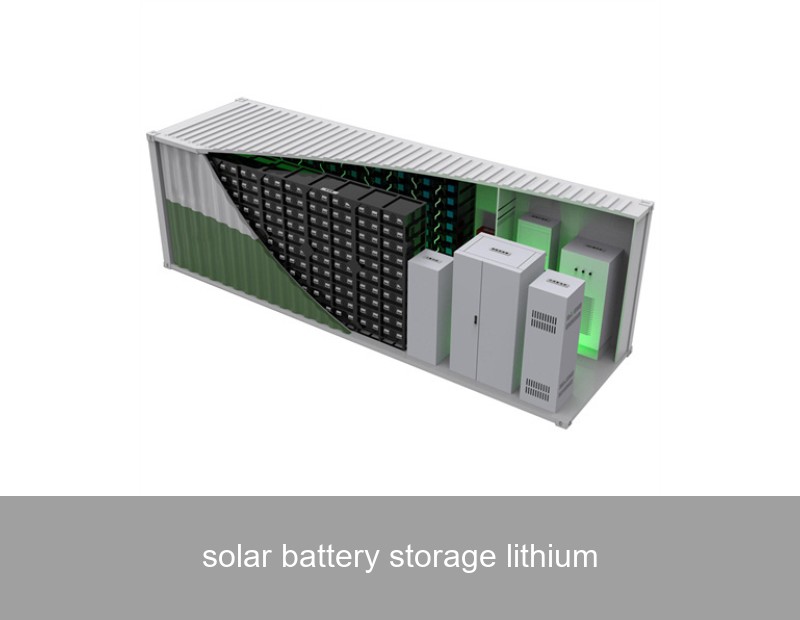
Have you ever watched your solar panels generate a surplus of clean energy on a bright afternoon, only to see that power go to the grid while your electricity bill stubbornly remains? You're not alone. This common phenomenon is the very challenge that modern solar battery storage lithium systems are designed to solve. By pairing your photovoltaic (PV) array with an intelligent battery, you can capture that excess sunshine and use it on your own terms—whether that's after sunset, during a grid outage, or when utility rates are at their peak. This isn't just about backup; it's about taking complete control of your energy footprint and costs. As a leader in this field since 2005, Highjoule has been at the forefront of developing smart, efficient, and sustainable lithium-ion battery storage solutions that make this energy independence a practical reality for homes and businesses across the globe.
Table of Contents
The Solar Paradox: Generating Power When You Don't Need It
Solar energy production is beautifully predictable in its pattern, yet often misaligned with our energy consumption. For most homes and businesses, energy demand peaks in the early morning and evening. Solar production, however, crests in the middle of the day. This creates a supply-demand mismatch. Without storage, the excess solar energy is fed back into the grid, often for a minimal feed-in tariff that is far lower than the retail price you pay to buy electricity back later. This fundamental disconnect is the "solar paradox," and it limits both the financial return and the self-sufficiency potential of a solar investment. The solution is a buffer—a reservoir for electrons—that bridges the gap between production and consumption.

Image: A modern home integrating solar panels with a wall-mounted battery storage system. (Source: Unsplash)
Lithium-Ion: The Data-Driven Champion for Solar Storage
Why has lithium-ion technology become the undisputed leader for solar battery storage? The answer lies in a superior combination of key performance metrics compared to older technologies like lead-acid.
| Battery Metric | Lithium-Ion (e.g., LFP) | Traditional Lead-Acid | Impact on Solar Storage |
|---|---|---|---|
| Round-Trip Efficiency | 95-98% | 70-85% | More of your solar energy is retained for use. |
| Depth of Discharge (DoD) | 90-100% | ~50% | You can use almost all the stored capacity without damage. |
| Cycle Life | 6,000+ cycles | 1,000-1,500 cycles | Longer lifespan, better long-term value. |
| Energy Density | High | Low | Compact size, flexible installation options. |
Particularly, Lithium Iron Phosphate (LFP) chemistry has become the preferred choice for stationary storage. It offers exceptional safety (excellent thermal stability), a long cycle life, and maintains high performance without using cobalt. This makes it an ideal, sustainable workhorse for daily solar cycling. According to the U.S. Department of Energy's Solar Energy Technologies Office, the continued decline in lithium-ion battery costs is a primary driver for the rapid adoption of solar-plus-storage systems.
Case Study: A German Bakery's Recipe for Energy Resilience
Let's look at a real-world example from Bavaria, Germany. "Bäckerei Schmidt," a family-owned bakery with high energy demands for ovens, refrigeration, and lighting, had a 50 kW solar array. Despite significant generation, they were still purchasing over 60% of their power from the grid during early mornings and evenings, facing high time-of-use rates.
In 2022, they installed a Highjoule lithium battery storage system: a modular 80 kWh H-Stack Commercial unit paired with their existing PV and our intelligent energy management system (EMS).
- Goal: Maximize self-consumption of solar energy, reduce peak grid demand charges, and ensure backup power for critical refrigeration.
- Solution: The Highjoule EMS intelligently charges the batteries with excess solar and dispatches power during high-price periods and bakery operation hours.
- Results (12-month period):
- Grid Independence: Increased solar self-consumption from 35% to 82%.
- Cost Savings: Reduced overall electricity costs by 68%.
- ROI: Projected payback period of under 5 years, considering German energy prices.
- Resilience: The system automatically provides backup power during two grid outages, preventing spoilage of valuable inventory.
This case illustrates that for commercial operations, solar battery storage is not just an eco-statement; it's a strategic financial decision that directly protects the bottom line.
The Highjoule Difference: Beyond the Battery Box
At Highjoule, we understand that a high-performance lithium-ion battery is only one part of the equation. The true value is unlocked by the intelligence that manages it. Our integrated systems are designed with this holistic philosophy.
Our flagship residential product, the Highjoule H-Cube, is a scalable LFP battery system known for its sleek design, silent operation, and robust safety features. It seamlessly integrates with most major solar inverters. For commercial and industrial applications, our H-Stack Modular system allows for capacity from 50 kWh to multi-megawatt hours, perfect for demand charge management and microgrid applications.
What truly sets our systems apart is the Highjoule Neuron EMS. This cloud-connected platform uses AI-driven forecasting—of both weather and your energy usage patterns—to optimize every kilowatt-hour. It doesn't just react; it predicts. Should you participate in a grid services program (like a Virtual Power Plant), the Neuron EMS can autonomously optimize for revenue generation while always prioritizing your personal energy security. We provide a complete, future-ready solar battery storage ecosystem, backed by nearly two decades of system integration expertise.

Image: A technician performing maintenance on a containerized battery energy storage system for industrial use. (Source: Unsplash)
What Does the Future Hold for Solar & Storage?
The synergy between solar PV and lithium battery storage is reshaping our energy infrastructure. We are moving from a centralized, one-way grid to a decentralized, intelligent network of "prosumers" — those who both produce and consume. This trend is accelerated by volatile energy prices, increasing grid reliability concerns, and strong policy support, such as the EU's Green Deal Industrial Plan and the U.S. Inflation Reduction Act's investment tax credits.
The next frontier is the widespread adoption of vehicle-to-grid (V2G) and vehicle-to-home (V2H) technologies, where your electric vehicle's battery becomes an asset for home backup and grid stability. Highjoule's systems are being developed with this interoperability in mind, ensuring our customers' investments are protected and can evolve with the technology landscape.
Ready to Assess Your Own Energy Independence?
The journey begins with understanding your unique energy profile. What does your solar production curve look like compared to your consumption? What are your specific drivers: pure financial savings, resilience against outages, or reducing your carbon footprint? For a business, have you analyzed your demand charge structure? We invite you to start this conversation. What is the one energy challenge you wish a solar battery storage lithium system could solve for you?
 Inquiry
 Online Chat