


Solar Battery Power System: The Key to Unlocking True Energy Independence
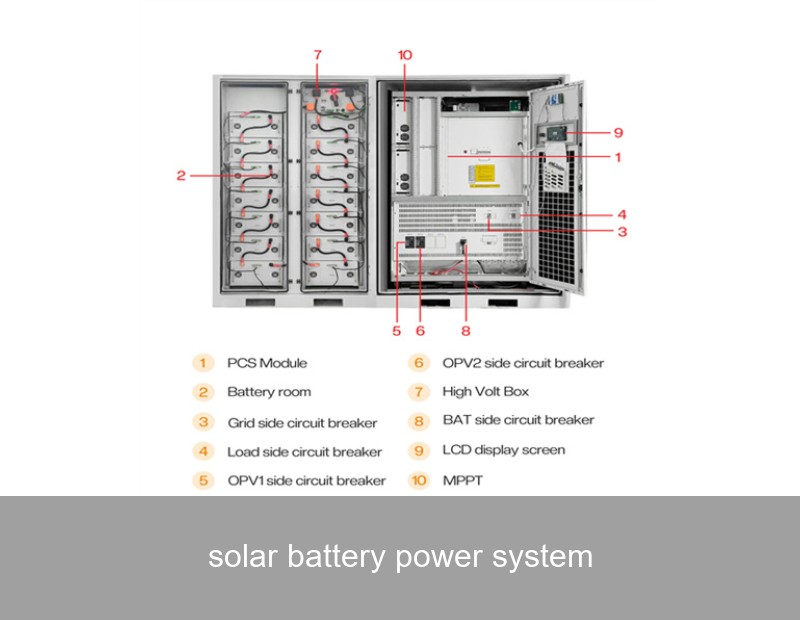
Imagine a world where your home or business isn't just powered by the sun, but is truly resilient against blackouts and soaring energy costs. That's the promise of a modern solar battery power system. For years, solar panels alone were the stars of the renewable energy show. But there was a catch: when the sun went down or the grid faltered, the power stopped. Today, the conversation has decisively shifted. The real game-changer isn't just generating clean energy; it's storing it for when you need it most. This is where intelligent battery storage transforms a solar setup from a contributor into a personal energy fortress.
What Exactly is a Solar Battery Power System?
At its core, a solar battery power system is an integrated setup that captures energy from your solar panels, stores it in high-capacity batteries, and manages its dispatch to power your property. Think of it as a sophisticated energy bank. Your solar panels are the income (generating kilowatt-hours during the day), and the battery is your savings account, allowing you to "spend" that energy in the evening, during peak rate periods, or during a grid outage. The brain of the operation is an inverter/energy management system that seamlessly decides when to charge, store, or discharge power, optimizing for self-consumption, cost, or backup readiness.
The Tipping Point: Why Solar Battery Systems are Booming Now
The surge in demand, particularly across Europe and North America, isn't accidental. It's a perfect storm of compelling factors.
The Phenomenon: Grid Uncertainty and Economic Pressure
From extreme weather events causing prolonged outages in California and Texas to volatile energy markets in Europe following geopolitical shifts, reliance on the traditional grid feels increasingly uncertain and expensive. Homeowners and businesses are seeking control.
The Data: A Market in Hypergrowth
The numbers tell a powerful story. According to the International Energy Agency (IEA), global energy storage capacity is set to multiply exponentially, with solar PV coupled with storage leading the charge in residential and commercial segments. In the U.S. alone, residential battery storage installations saw a year-over-year growth of over 50% in recent quarters, a trend mirrored in Germany, the UK, and Italy.
The Insight: Beyond Backup, It's About Intelligence
The modern solar battery system is not a dumb backup box. Its value is unlocked through intelligent software. Advanced systems can perform "time-of-use optimization," automatically drawing power from the battery when grid electricity is most expensive (like on a hot summer evening) and recharging when it's cheap or from excess solar. This turns a capital expense into a dynamic financial asset, slashing electricity bills with zero change in daily habits.

Image Source: Unsplash - A modern home integrating solar and storage for energy independence.
Key Components of a Robust Solar Battery System
Not all systems are created equal. Understanding the key parts helps you make an informed decision.
- Solar Panels: The primary energy harvesters. Efficiency and durability are key.
- Battery Storage: The heart of the system. Lithium-ion phosphate (LFP) chemistry is now the industry standard for safety, longevity, and performance. Key metrics are usable capacity (kWh), power rating (kW), and cycle life.
- Hybrid Inverter or System Controller: The essential brain. It converts DC from panels and batteries to AC for your home, and manages energy flow. Some systems use a separate inverter and battery-specific controller.
- Energy Management System (EMS): The intelligence. This software platform allows for monitoring, control, and setting preferences (e.g., "maximize self-consumption" or "prioritize backup").
| Component | Primary Role | What to Look For |
|---|---|---|
| Battery | Energy Storage | LFP chemistry, 10+ year warranty, high cycle life, scalable capacity |
| Inverter/Controller | Energy Conversion & Flow | High efficiency (>97%), seamless switch to backup, grid-service capabilities |
| Management Software | Optimization & Control | User-friendly app, customizable modes, integration with smart home |
A Real-World Case Study: Resilience in Action
Let's move beyond theory to a concrete example from the target market.
The Challenge: A medium-sized dairy farm in Bavaria, Germany, with a 100kW rooftop solar array. While solar reduced their daytime grid consumption, they faced two problems: high evening energy costs for milking and cooling equipment, and vulnerability to even brief grid outages that could spoil inventory.
The Solution: The farm installed a solar battery power system with 120 kWh of storage capacity and an intelligent controller. The system was designed to ensure critical farm operations could run for over 24 hours off-grid.
- Energy Self-Consumption: Increased from 35% to over 80%.
- Grid Cost Reduction: Annual electricity bills reduced by an additional 60% on top of solar savings, by avoiding peak tariffs.
- Reliability: The system has seamlessly handled four grid interruptions in the last year, preventing an estimated €15,000 in potential product loss and operational downtime.
This case highlights the dual value proposition: continuous savings and critical risk mitigation.
Choosing the Right System: What to Look For
With many options on the market, focus on these pillars:
1. Safety and Chemistry
Insist on Lithium Iron Phosphate (LFP) batteries. They are inherently more stable and longer-lasting than older NMC chemistries, a non-negotiable point for peace of mind. The U.S. Department of Energy emphasizes safety as a top criterion.
2. Power and Capacity
Distinguish between power (how many appliances you can run at once) and capacity (how long you can run them). A system with a high power rating is crucial for starting motors (like well pumps or AC), while capacity determines backup duration.
3. Intelligence and Integration
The software is your interface with the system. Can you easily set modes? Does it integrate with other smart devices or future grid programs? A system that can't update and adapt is a system that will become obsolete.
4. Scalability and Service
Your needs may grow. Can you easily add more battery modules later? What does the warranty (often 10 years) cover? Is professional monitoring and support available?

Image Source: Unsplash - Modular battery design allows for future expansion.
How Highjoule Powers a Smarter Energy Future
This is where our expertise at Highjoule comes into play. Since 2005, we've been at the forefront of advanced energy storage, designing solutions that embody the principles outlined above. We understand that a solar battery power system is more than hardware; it's the cornerstone of energy resilience.
Our H-Series Home Energy System is engineered for the discerning homeowner. Built with UL-certified LFP battery cells, it offers a modular design that can start at 10 kWh and expand as needs change. Its hybrid inverter manages solar, battery, and grid with 99% efficiency, and the intuitive Highjoule EnergyOS™ platform lets you optimize from your smartphone. For us, the goal is to provide not just backup, but a tool for complete energy management—reducing bills, increasing self-sufficiency, and providing unwavering peace of mind.
For commercial and industrial clients, our C-Series Containerized Storage Solutions provide utility-scale power and capacity. These turnkey systems can manage demand charges, provide uninterrupted power for critical processes, and even participate in grid services, creating a new revenue stream. Whether it's a manufacturing plant, a hospital, or a microgrid for a remote community, Highjoule's technology is designed to deliver intelligent, efficient, and sustainable power precisely when and where it's needed.
Your Energy Independence Journey
The transition to a resilient, cost-effective energy future is no longer a distant dream. The technology is proven, the economics are compelling, and the need for control over one's power has never been clearer. A well-designed solar battery power system is the definitive step on that path.
What would energy security look like for your home or business? Is it eliminating your peak-hour electricity charges, ensuring your operations never go dark, or simply knowing you're prepared for the unexpected? The first step is to define that goal.
 Inquiry
 Online Chat