


Choosing the Right Solar Array Supplier: A Guide to Quality, Reliability, and Value
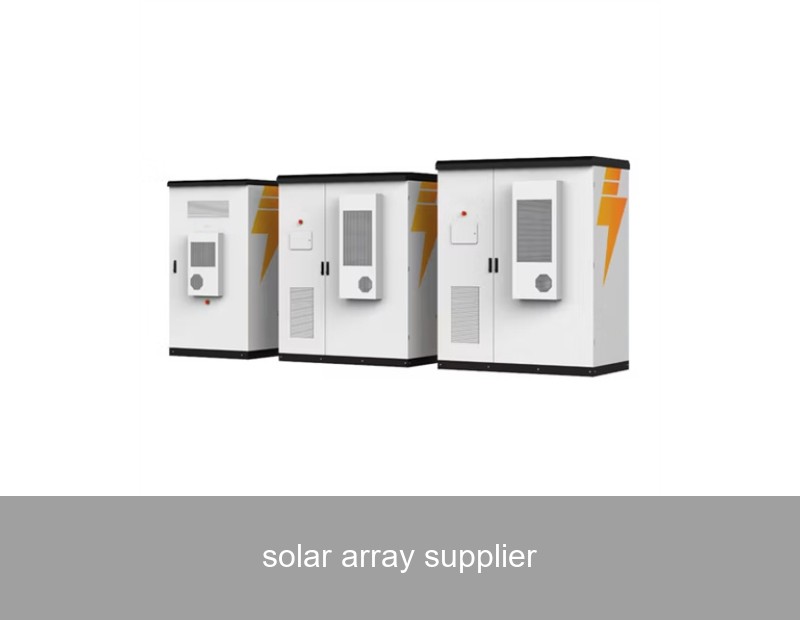
So, you've decided to harness the sun's power. It’s a fantastic decision, both for your energy bills and the planet. But here’s where many projects hit a snag: the sheer number of solar array suppliers can be overwhelming. Is it just about the panels, or is there more to the story? As a leader in advanced energy storage since 2005, Highjoule has seen countless projects succeed—and some stumble—based on this critical choice. This guide will help you cut through the noise and understand what truly matters when selecting your solar array supplier, ensuring your investment delivers maximum returns for decades.
Table of Contents
- Beyond Panels: The Modern Solar Array Supplier's Role
- The Data: Why Component Quality Isn't a Place to Cut Corners
- Case Study: A German Industrial Park's Journey
- The Key Differentiator: Intelligent System Integration
- The Highjoule Approach: Your Partner for Complete Energy Resilience
- What Should You Ask Your Potential Solar Array Supplier?
Beyond Panels: The Modern Solar Array Supplier's Role
Gone are the days when a supplier simply shipped you pallets of photovoltaic modules. Today, a proficient solar array supplier acts as a system architect and a long-term partner. They must provide a cohesive ecosystem where every component—from the panels and inverters to the mounting systems and monitoring software—works in perfect harmony. Think of it like building a high-performance car; you wouldn't source the engine, tires, and electronics from completely unrelated manufacturers with no guarantee they'll work together optimally.
The real challenge in markets like Europe and the U.S. isn't just generating solar energy; it's maximizing its utilization. Without a strategy for the energy you produce, a significant portion can go to waste or fail to offset the most expensive grid power. This is where the conversation must evolve from just "panels" to "intelligent energy systems."
The Data: Why Component Quality Isn't a Place to Cut Corners
Let's talk numbers. The National Renewable Energy Laboratory (NREL) consistently shows that the degradation rate of solar panels is a critical factor in lifetime yield. While a budget panel might degrade at 1% or more per year, a tier-one, high-quality panel often guarantees as low as 0.3-0.5% annual degradation. Over a 25-year lifespan, that difference can mean losing 15-20% more of your system's original output with the cheaper option.

Image: High-quality solar panels with robust framing are essential for long-term performance. Source: Unsplash
But the hardware is only part of the equation. The true performance is managed by the inverter and, increasingly, by the energy management system. A weak link here can cripple an otherwise excellent array.
Key Components Your Supplier Must Get Right:
- Panels: Tier-1 manufacturers with robust warranties, proven low degradation rates, and ethical supply chains.
- Inverters: High efficiency ratings (>98%), grid-support capabilities, and reliable communication protocols.
- Mounting & Racking: Engineered for your specific local climate (snow loads, wind speeds) and roof type.
- Monitoring: A user-friendly, detailed platform that provides real-time and historical data on system health and production.
Case Study: A German Industrial Park's Strategic Shift
Consider the real-world example of a mid-sized manufacturing park in Bavaria, Germany. In 2020, they installed a 500 kWp solar array from a solar array supplier focused primarily on low upfront cost. The system produced energy, but the facility's managers noticed a problem: over 35% of the solar generation was being exported to the grid during midday peaks, only for them to buy back more expensive power in the early evening. Their self-consumption rate was disappointingly low.
In 2022, they partnered with Highjoule to transform their setup. We didn't just look at the panels; we analyzed their load profile. The solution involved integrating a Highjoule H2 Series Commercial Battery Storage System (750 kWh capacity) with the existing array via our Adaptive Energy Operating System (AEOS). The results were transformative:
| Metric | Before Highjoule Integration (2021) | After Highjoule Integration (2023) |
|---|---|---|
| Solar Self-Consumption | ~65% | Increased to 94% |
| Grid Energy Cost Reduction | 22% | 68% |
| Grid Independence During Peak Hours | None | 100% for 6+ hours daily |
This case highlights a crucial insight: the most valuable solar array supplier today is one that thinks beyond the point of generation to the point of consumption.
The Key Differentiator: Intelligent System Integration
This is the heart of modern energy solutions. Your solar array is a source of variable power. To make it a source of reliable, dispatchable power, it needs a brain and a battery. This is where companies like Highjoule redefine the role of a supplier.
Our AEOS software is the intelligence that seamlessly orchestrates solar production, battery storage, grid interaction, and on-site loads. It uses weather forecasting and load prediction to decide in real-time: should solar energy power the building, charge the batteries, or be curtailed? When should the battery discharge to avoid peak demand charges? This level of control is what turns a capital expense into a dynamic financial asset.

Image: Advanced energy management systems are crucial for optimizing solar and storage. Source: Unsplash
The Highjoule Approach: Your Partner for Complete Energy Resilience
At Highjoule, we position ourselves as more than a solar array supplier. We are your provider for end-to-end intelligent power solutions. For clients who are procuring solar, we offer seamless integration with our storage systems. For others, we partner with a network of vetted, high-quality solar installers to deliver a unified, optimized package.
Our core offerings for maximizing your solar investment include:
- H-Series Battery Energy Storage Systems (BESS): Scalable, containerized or modular solutions for commercial, industrial, and microgrid applications, featuring top-tier LiFePO4 battery cells for safety and longevity.
- Adaptive Energy Operating System (AEOS): The cloud-based intelligence platform that maximizes ROI through smart energy arbitrage, peak shaving, and grid services participation.
- Professional Services & Support: From initial energy analysis and system design to commissioning and 24/7 monitoring, we ensure your hybrid system performs as promised for its entire lifecycle.
By integrating Highjoule storage, you effectively turn your solar array into a 24/7 power plant, insulating your operations from volatile energy prices and increasing grid instability, as noted in reports from the International Energy Agency (IEA).
What Should You Ask Your Potential Solar Array Supplier?
To separate the true partners from the mere equipment vendors, here are essential questions to pose:
- Can you provide a detailed analysis of my load profile and projected solar self-consumption without storage?
- How do your proposed components (panels, inverters) communicate with and enable future energy storage integration?
- What is your strategy for maximizing the financial return of my solar investment, not just its kilowatt-hour production?
- Can you show case studies or data from similar projects showcasing long-term performance and self-consumption rates?
- Do you offer a single point of accountability for the entire system's performance, including software and controls?
Your choice of a solar array supplier is the first and most significant step in a decades-long energy journey. It pays to choose a partner who sees the full picture.
As you evaluate proposals, ask yourself this final, pivotal question: Is my goal simply to install solar panels, or is it to achieve genuine energy independence and cost predictability for the next 25 years? The answer will clearly point you toward the need for an integrated, intelligent solution. We invite you to explore what that partnership could look like for your specific site.
 Inquiry
 Online Chat