


Unlocking Energy Independence: The Complete Guide to the Solar All-in-One Energy Storage Cabinet
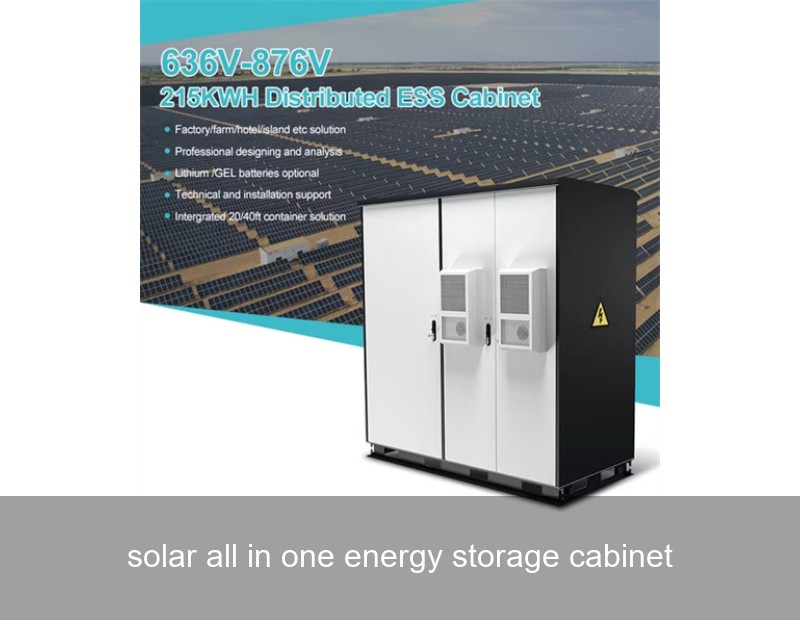
Imagine a single, sleek unit that captures the sun's power, stores it for when you need it most, and intelligently manages your entire home's energy flow. This isn't a vision of the distant future; it's the reality offered by today's solar all-in-one energy storage cabinet. For homeowners and businesses across Europe and the US, this integrated solution is rapidly becoming the cornerstone of a resilient, cost-effective, and sustainable energy strategy. But what exactly makes this technology a game-changer? Let's dive in.
Table of Contents
- The Phenomenon: From Cluttered Setups to Streamlined Power
- By the Numbers: The Data Driving Adoption
- Case Study: A German Household's Journey to Autonomy
- Key Components of a Superior All-in-One Cabinet
- The Highjoule Approach: Engineering for Simplicity & Performance
- Beyond the Home: The All-in-One Cabinet and the Future Grid
The Phenomenon: From Cluttered Setups to Streamlined Power
Traditionally, a full solar and storage system meant a complex assembly: separate inverters, battery packs, charge controllers, and switchgear, often requiring significant space and intricate wiring. The solar all-in-one energy storage cabinet consolidates these critical components into a single, factory-integrated, and tested enclosure. The result? A dramatic reduction in installation time and complexity, a smaller physical footprint, and a system that's inherently designed for optimal communication between its parts. It's the difference between building a computer from individual components and buying a perfectly optimized laptop.

Credit: Unsplash / Photo by Kindel Media
By the Numbers: The Data Driving Adoption
The shift towards integrated storage is backed by compelling market data. According to the International Energy Agency (IEA), global renewable capacity is set to grow by 2,400 GW between 2023-2028, with solar PV accounting for over half. Crucially, behind-the-meter storage, like residential solar all-in-one energy storage cabinets, is a key growth segment. In the US, residential storage installations saw a record year, often paired with solar. Why? Economics. With volatile energy prices—spiking over 40% in some European regions in recent years—and falling solar technology costs, the payback period for a solar-plus-storage system has shrunk significantly. The ability to use more of your self-generated solar power, rather than exporting it at low rates, can increase self-consumption from 30% to 70% or more.
Case Study: A German Household's Journey to Autonomy
Let's look at a real-world example from Bavaria, Germany. The Müller family, living in a detached home, installed a standard solar system in 2020. While it cut their grid imports, they still relied on the grid after sunset. In early 2023, they upgraded to a modern solar all-in-one energy storage cabinet with a 15 kWh battery capacity.
| Metric | Before Storage (2022) | After Storage (2023) | Change |
|---|---|---|---|
| Grid Electricity Import | 3,200 kWh/year | 850 kWh/year | -73% |
| Self-Consumption of Solar Power | 35% | 82% | +134% |
| Monthly Energy Cost (Avg.) | €185 | €42 | -77% |
"The decision was about predictability," says Mr. Müller. "We locked in our energy costs for the critical part of our consumption. The single cabinet unit was installed in one day in our utility room, and the intuitive app lets us control our usage patterns effortlessly." This case highlights the triple win: enhanced energy independence, major cost savings, and seamless integration.
Key Components of a Superior All-in-One Cabinet
Not all integrated solutions are created equal. A high-performance solar all-in-one energy storage cabinet should feature:
- Hybrid Inverter: The brain of the system. It manages DC power from solar panels, converts it to AC for home use, and directs excess to charge the battery. It must be highly efficient (over 97%) and support grid-forming capabilities for backup power.
- Lithium-Ion Battery Module: The heart. Look for Lithium Iron Phosphate (LFP) chemistry for its superior safety, longevity (typically 6,000+ cycles), and stable performance. Modular designs allow for future capacity expansion.
- Integrated Energy Management System (EMS): The nervous system. This smart software learns consumption patterns, optimizes charging/discharging based on time-of-use rates or solar forecast, and provides user-friendly monitoring via a mobile app.
- Safety & Grid Interface: Non-negotiable. Includes built-in circuit protection, thermal management systems, and certified grid-compliance features for safe, reliable operation.
The Highjoule Approach: Engineering for Simplicity & Performance
At Highjoule, with nearly two decades of experience in advanced energy storage, we've engineered our HiveCube™ Solar All-in-One Energy Storage Cabinet to embody these principles. We understand that a truly great product must be powerful yet simple for the end-user.
The HiveCube™ integrates our proprietary, ultra-efficient hybrid inverter with market-leading LFP battery cells into a compact, sound-dampened cabinet. What sets it apart is its intelligent adaptability. Its EMS can be configured for multiple modes: Max-Self-Consumption for everyday savings, Time-of-Use Optimization for regions with variable pricing, and a Backup Power Mode that automatically kicks in during grid outages—a critical feature for areas prone to extreme weather in the US or grid instability.

Credit: Unsplash / Photo by American Public Power Association
For our commercial and industrial clients, Highjoule's solutions scale seamlessly. Our HiveMatrix™ platform can link multiple cabinets to form a large-scale storage system, providing peak shaving, demand charge reduction, and enhanced power quality. Whether it's a single-family home in California, a farm in Italy, or a small factory in Germany, our philosophy is the same: deliver a robust, "plug-and-play" storage experience that removes complexity and maximizes return on investment.
Beyond the Home: The All-in-One Cabinet and the Future Grid
The impact of widespread solar all-in-one energy storage cabinet adoption extends beyond individual bill savings. These aggregated distributed energy resources (DERs) are becoming vital tools for grid stability. Through Virtual Power Plant (VPP) programs, utilities can partner with homeowners to leverage the stored energy in thousands of batteries during periods of peak demand, avoiding the need to fire up polluting peaker plants. This creates a more resilient, decentralized, and green electricity network for everyone.
The technology is here, proven, and economically viable. The question is no longer if integrated solar storage is the logical next step, but how to choose the right system for your specific energy profile and goals. What would energy security and a predictable energy bill mean for your household or business in the coming year?
 Inquiry
 Online Chat