


What is a Solar 1kVA Energy Storage Cabinet and Why Your Home Needs One
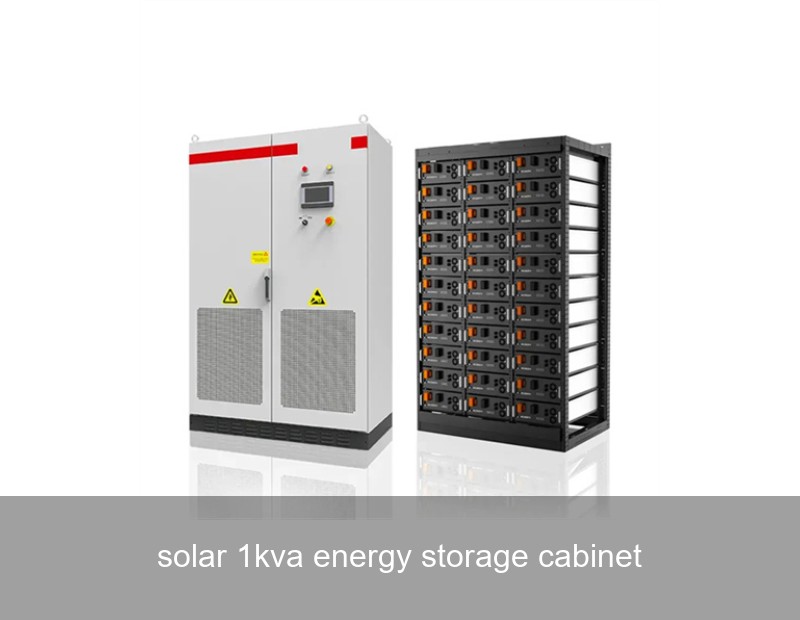
You've likely seen the sleek solar panels adorning rooftops in your neighborhood, silently converting sunlight into clean electricity. But here's a question many homeowners are now asking: "What happens to all that energy when the sun goes down, or during a grid outage?" This is where the game-changing technology of a solar 1kVA energy storage cabinet comes into play. Think of it not just as a battery, but as your personal energy manager—capturing surplus solar power during the day to power your home at night, ensuring resilience and maximizing your energy independence. In this guide, we'll demystify this essential component of a modern solar setup and explore how it can transform your relationship with energy.
Table of Contents
- Understanding the 1kVA Solar Storage Cabinet
- The Phenomenon: Solar Abundance Meets Evening Demand
- The Data: Why Storage is No Longer Optional
- Case in Point: A Real-World Example from California
- Expert Insights: Choosing the Right System
- The Highjoule Difference: Engineered for Intelligence and Durability
- Your Energy Future: A Question to Consider
Understanding the Solar 1kVA Energy Storage Cabinet
Let's break down the name. "Solar" denotes its integration with your photovoltaic (PV) panels. "1kVA" (kilovolt-ampere) is a unit of power, roughly equivalent to 1kW (kilowatt), indicating the rate at which the cabinet can deliver electricity—sufficient to run essential home loads like refrigeration, lighting, internet, and a few outlets simultaneously. The term "energy storage cabinet" describes the complete, all-in-one unit that houses not just lithium-ion battery cells, but also the critical battery management system (BMS), inverter/charger, cooling systems, and safety mechanisms in one robust, often wall-mountable enclosure. Unlike a simple battery pack, this is a sophisticated, grid-interactive appliance.

Image: A modern, compact energy storage system installed in a residential garage. Source: Unsplash
The Phenomenon: Solar Abundance Meets Evening Demand
The classic challenge for solar homeowners is the timing mismatch. Solar production peaks in the middle of the day, often when homes are empty. Meanwhile, energy demand soars in the evening when families return home, cooking dinner, turning on lights and TVs—precisely when solar generation falls to zero. Without storage, excess midday energy is sent back to the grid (often for minimal feed-in tariffs), and you draw expensive power from the utility at night. This seesaw effect limits your savings and self-sufficiency. The solar 1kVA energy storage cabinet solves this by shifting your solar energy in time, making "use your own power" a 24/7 reality.
The Data: Why Storage is No Longer Optional
The trends are unmistakable. According to the International Energy Agency (IEA), global energy storage capacity is set to multiply exponentially this decade, with residential storage leading the charge in markets like the US and Germany. Why the surge?
- Declining Feed-in Tariffs: In many European countries, payments for exported solar power have dropped over 70% in the last decade, making self-consumption far more economical.
- Rising Electricity Prices: Volatile fossil fuel markets and infrastructure costs continue to push retail electricity rates higher.
- Grid Resilience Concerns: With increasing frequency of extreme weather events, as noted by agencies like NOAA, power outages are a growing concern. Storage provides critical backup power.
A 1kVA system, while not designed to power an entire home at full load, provides a strategic, cost-effective buffer. It targets the most critical loads, delivering the highest value per dollar invested in terms of security and bill savings.
Case in Point: A Real-World Example from California
Consider the Johnson family in Sacramento, California. They installed a 6kW solar array in 2020. Despite having solar, they were still paying significant "non-bypassable charges" and facing the threat of Public Safety Power Shutoffs (PSPS) during wildfire season. In 2022, they added a 1kVA-class energy storage cabinet with a usable capacity of 5kWh.
The Results (12-month post-installation):
| Metric | Before Storage | After Storage |
|---|---|---|
| Grid Energy Import (Evening Peak) | 65% of total usage | 15% of total usage |
| Solar Self-Consumption Rate | ~35% | ~85% |
| Outage Protection | None | Essential circuits backed up for 10+ hours |
| Estimated Annual Bill Savings | $1,200 | $1,950 |
The system paid for itself in under 7 years, not even factoring in the intangible value of peace of mind during multiple grid outages. This practical example shows how a moderately sized storage unit can dramatically alter a household's energy profile.
Expert Insights: Choosing the Right System
Not all solar 1kVA energy storage cabinets are created equal. As a product technology expert, I advise focusing on three pillars beyond just the price tag:
- Chemistry & Longevity: Look for Lithium Iron Phosphate (LFP) chemistry. It offers superior safety, a longer cycle life (often 6,000+ cycles), and better thermal stability than older NMC blends.
- Depth of Discharge (DoD): A system that allows a 90-100% DoD means you can use almost all the stored energy without harming the battery, maximizing your usable capacity.
- Software Intelligence: The brain of the system matters most. Can it learn your consumption patterns? Can it be programmed for time-of-use optimization or integrate with future grid services? This software is what transforms hardware into a smart asset.

Image: Lithium Iron Phosphate (LFP) battery cells, known for safety and longevity. Source: Unsplash
The Highjoule Difference: Engineered for Intelligence and Durability
At Highjoule, with nearly two decades of experience since 2005, we've engineered our ResiHub 1.0 energy storage cabinet to excel precisely in these critical areas. Designed for the European and North American markets, the ResiHub 1.0 is more than just a storage device; it's the core of a resilient home energy system.
Our cabinet features market-leading LFP battery cells with a 100% usable depth of discharge and a warranty-backed lifespan that exceeds industry standards. What truly sets it apart is the Highjoule Smart Energy OS. This proprietary platform doesn't just react; it predicts. By analyzing your historical energy data, local weather forecasts, and utility rate schedules, it autonomously optimizes charge and discharge cycles to slash your bill. In backup mode, it provides seamless transition to power your essential circuits in less than 20 milliseconds—you'll never notice the grid went down.
Furthermore, our modular design means you can start with a 1kVA/5kWh unit and easily stack additional battery modules as your needs grow. We provide a complete solution, from initial energy audit and system design to professional installation and remote monitoring via our customer portal, ensuring you have a reliable partner for the long term.
Your Energy Future: A Question to Consider
The transition to renewable energy is not just about generation; it's about control. With electricity markets evolving and climate patterns shifting, the ability to manage, store, and use your own power is becoming a cornerstone of a modern, secure home. So, as you think about your energy future, ask yourself this: When the next outage occurs or the next peak rate period hits, will you be at the mercy of the grid, or will you have your own solar 1kVA energy storage cabinet standing guard, ensuring your lights stay on and your power bill stays low?
 Inquiry
 Online Chat