


Smart Grid Lab: How Much Does Building a Testing Ground for the Future Grid Really Cost?
If you're a utility planner, a city energy manager, or a researcher diving into the future of power, the question "Smart grid lab: how much?" is likely top of mind. It's not just about buying equipment; it's about investing in a controlled environment where tomorrow's grid resilience, renewable integration, and energy independence are forged and tested today. The shift from a centralized, one-way grid to a dynamic, two-way network of producers and consumers—often called "prosumers"—isn't a distant theory. It's happening now, driven by soaring solar adoption, the rise of EVs, and the need for unwavering stability. But before you can deploy solutions across a city, you need to prove them in a realistic, yet safe, setting. That's the essential role of a smart grid laboratory. Let's demystify the investment required and explore how it paves the way for a sustainable energy future.
Breaking Down the Costs: The Key Investment Areas
Think of a smart grid lab not as a single purchase, but as a strategic project. The total cost can range significantly, from a focused $500,000 setup for testing specific components like advanced inverters to a comprehensive, multi-million dollar facility that mimics an entire urban distribution network. The variance hinges on scope, scale, and technological sophistication. Here’s a detailed breakdown of where your investment goes.
Core Hardware & Infrastructure
This is the physical backbone of your lab. Key components include:
- Real-Time Digital Simulators (RTDS) & Hardware-in-the-Loop (HIL) Systems: The heart of any advanced lab, these create a real-time simulated grid environment to test physical devices safely. This can be a major line item, often starting in the high six figures.
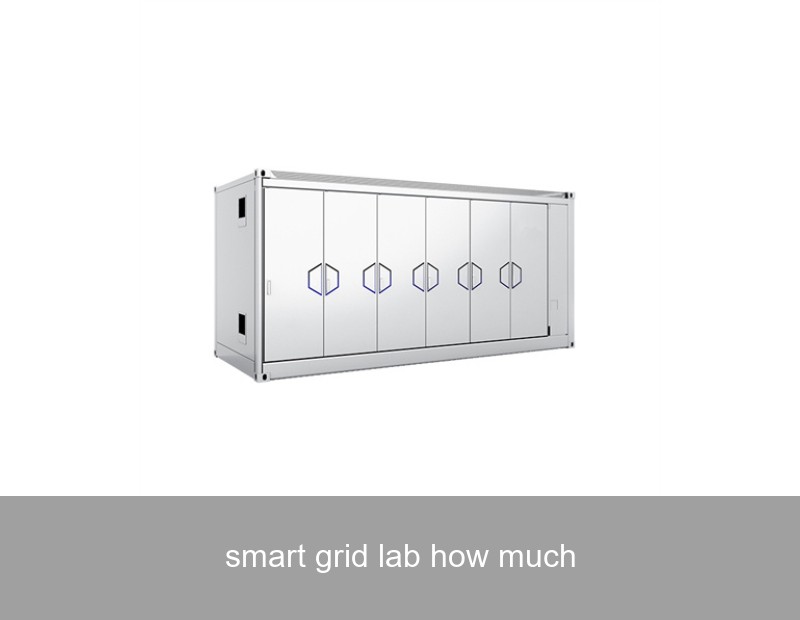
- Energy Storage Systems (ESS): The linchpin for stability. You'll need scalable battery racks, state-of-the-art battery management systems (BMS), and power conversion systems (PCS). This is where partnering with an experienced provider like Highjoule adds immense value. Our H-Series commercial and industrial battery systems are engineered for such rigorous testing environments, offering modular scalability, advanced cycle life, and seamless grid-forming capabilities that are perfect for lab validation.
- Renewable Emulators: Programmable power sources that mimic the variable output of solar PV and wind farms.
- Grid-Forming Inverters & Switchgear: Critical for testing islanding operations and microgrid functionality.
- Load Banks & Programmable Loads: To simulate everything from residential demand to industrial factory loads.

Image: A modern energy systems testing lab requires sophisticated hardware and software integration. (Credit: Unsplash)
The Software "Brain" & Control Systems
Hardware is powerless without intelligence. This layer includes:
- Energy Management System (EMS) & Distributed Energy Resource Management System (DERMS): The core software platforms for monitoring, optimization, and control. Licensing and customization are significant cost factors.
- SCADA & Data Acquisition Systems: For collecting vast streams of performance data.
- Cybersecurity Infrastructure: Non-negotiable for protecting grid-critical test environments. This includes firewalls, intrusion detection, and secure communication protocols.
Integration & Engineering Expertise
Often the most underestimated cost, this is what makes the lab work. It encompasses system design, software-hardware integration, commissioning, and the ongoing need for specialized engineers and grid operators to run complex test scenarios. A well-integrated system from a trusted partner can save substantial long-term costs and headaches.
Real-World Case Study: A European Utility's Pilot
Let's move from theory to practice. A major distribution system operator (DSO) in Northern Europe faced a pressing challenge: their region had rapidly exceeded 40% renewable penetration, leading to voltage fluctuations and frequency instability during peak generation. They needed to test and validate a community-scale virtual power plant (VPP) solution before a wider rollout.
Their investment in a tailored smart grid lab facility totaled approximately €2.1 million. This included a medium-scale RTDS, a 500 kWh containerized battery storage system (they selected Highjoule's H-500 C&I ESS for its proven grid-support functions), solar emulators, and a dedicated DERMS platform. Over an 18-month testing period, the lab enabled them to:
- Successfully demonstrate automatic frequency response, reducing grid instability events by an estimated 92% in simulation.
- Optimize the VPP's market bidding algorithm, projecting a 15% increase in participant revenue.
- Train over 50 grid operators on the new system's behavior in a risk-free environment.
The lab cost was justified as it de-risked a subsequent €50 million regional grid modernization investment. This case underscores that the question isn't just "smart grid lab: how much?" but "how much value does it create and how much risk does it mitigate?" (IEA, Innovation Gaps Report).
How Highjoule's Solutions Fit Into Your Smart Grid Vision
At Highjoule, we understand that your smart grid lab is the prototype for the resilient, efficient grid of the future. Our products and services are designed to integrate seamlessly into these innovation hubs:
- Modular, Test-Ready Storage: Our H-Series battery systems come with open API protocols and built-in grid-forming functionality, making them ideal "plug-and-play" components for testing advanced grid services like black start, voltage support, and peak shaving.
- Highjoule EnergyOS Platform: Beyond hardware, our proprietary energy management software can serve as the core or a comparative EMS in your lab. It's designed for interoperability, allowing you to test how our intelligence stacks up against or integrates with other systems.
- Consulting & Integration Support: With nearly two decades of experience since 2005, our technical experts provide invaluable guidance on lab setup, defining test protocols for frequency regulation or renewable smoothing, and interpreting complex performance data to translate lab results into field-ready strategies.
By incorporating Highjoule's proven technology into your testing environment, you're not just buying equipment; you're leveraging field-tested performance data from thousands of global installations to accelerate your R&D timeline.
Beyond Price: The Long-Term Value Proposition
Focusing solely on the initial capital expenditure (CAPEX) misses the broader picture. A smart grid lab is a value-generation asset:
| Cost Category | Typical Range | Long-Term Value Return |
|---|---|---|
| Hardware (RTDS, Storage, etc.) | $750k - $2M+ | De-risks multi-million dollar grid investments; accelerates product time-to-market. |
| Software & Controls | $300k - $800k | Enables optimization algorithms that maximize asset ROI and grid efficiency. |
| Integration & Expertise | $200k - $500k+ | Builds in-house knowledge capital, reduces future reliance on external consultants. |
It fosters innovation, attracts research funding, and positions your organization as a leader in the energy transition. As noted by the U.S. Department of Energy, testing facilities are crucial for "validating the performance and reliability of new technologies under realistic conditions" before widespread deployment (U.S. Department of Energy).

Image: Smart grid labs enable testing of complex grid visualizations and control strategies. (Credit: Unsplash)
Your Next Step: From Curiosity to Clarity
The journey to answering "smart grid lab: how much?" begins by defining your own "why." What specific grid challenges are you aiming to solve? Is it integrating a fleet of electric vehicle chargers, managing a 50%+ renewable portfolio, or securing critical infrastructure? The scope of your mission directly shapes the investment.
We invite you to consider this: What single grid stability or renewable integration challenge, if solved in a test environment, would deliver the greatest immediate value to your community or customers? Defining that will illuminate the path forward and help frame the necessary investment not as a cost, but as a strategic catalyst for a sustainable and profitable energy future.
 Inquiry
 Online Chat