


How to Set Up a Generator for Home: A Modern Guide to Reliable Power
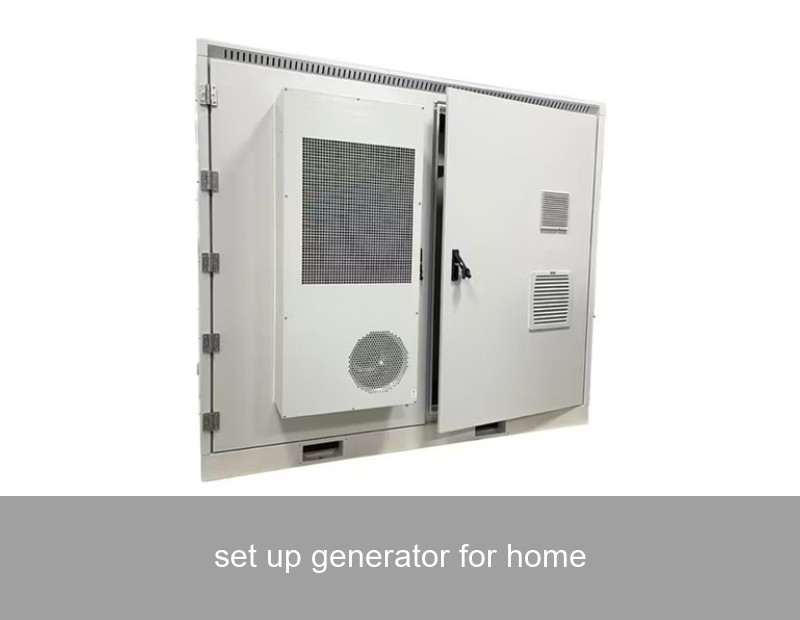
If you've ever been in the middle of a storm-induced blackout, the thought "I need to set up a generator for my home" has likely crossed your mind. Traditionally, this meant a loud, fume-spewing petrol unit wheeled out of the garage. But today, the landscape of home backup power is undergoing a quiet revolution. For homeowners in Europe and the US, the goal isn't just emergency power—it's about achieving energy resilience, independence, and sustainability. This guide will walk you through the modern considerations, moving from the conventional fossil-fuel generator to intelligent, integrated battery storage systems that keep your lights on silently and cleanly.
Table of Contents
- The New Power Outage Reality: More Than Just Storms
- The Setup Showdown: Traditional Generator vs. Modern Battery Storage
- Step-by-Step: Planning Your Modern Home Energy Resilience Setup
- A Real Case Study: The Johnson Family's Silent Transition
- The Highjoule Advantage: Intelligent Power, Designed for Life
- Looking Beyond Backup: Your Home as a Power Hub
The New Power Outage Reality: More Than Just Storms
Gone are the days when power cuts were solely a winter concern. The phenomenon is evolving. In the Western US, Public Safety Power Shutoffs (PSPS) to prevent wildfires have become a seasonal norm, leaving thousands without power for days. In Europe, grid instability due to extreme weather fluctuations—from heatwaves straining cooling demand to storms damaging infrastructure—is increasing. The U.S. Energy Information Administration notes that the average duration of a power interruption for U.S. customers has been trending upwards in recent years. This isn't just an inconvenience; it's a risk to safety, security, and the functionality of our digitally-dependent lives.
The Setup Showdown: Traditional Generator vs. Modern Battery Storage
Let's break down what it truly means to "set up a generator" today by comparing the two main paths.
| Consideration | Traditional Fuel Generator | Modern Battery Storage System (e.g., Highjoule HomePower+) |
|---|---|---|
| Installation & Setup | Often requires a dedicated transfer switch, proper ventilation, fuel storage, and a concrete pad. Can be complex and require multiple contractors. | Wall-mounted or floor-standing indoor/outdoor unit. Clean, integrated electrical connection by a qualified installer. Minimal space needed. |
| Operation & Noise | Loud (70-100 dB), emits fumes. Requires manual start, refueling every 8-12 hours, and cannot be run safely indoors or in enclosed spaces. | Completely silent (0 dB operational noise), zero local emissions. Automatically switches on in milliseconds during an outage—no user intervention needed. |
| Fuel & Maintenance | Ongoing cost and hassle of purchasing, storing, and stabilizing petrol or diesel. Requires regular engine maintenance (oil changes, spark plugs). | "Fueled" by your existing solar panels or the grid. No recurring fuel costs. Virtually maintenance-free with digital monitoring. |
| Integration with Solar | Typically operates independently. Cannot use solar during a blackout unless you have a complex and expensive "islanding" inverter system. | Seamlessly integrates with solar PV. Keeps your solar panels working during an outage, continuously charging the battery with sunlight. |
As you can see, the setup extends far beyond the initial purchase. The modern battery system offers a set-and-forget solution, a stark contrast to the active management required by a traditional generator.

Image Source: Unsplash - A modern home battery setup is clean, quiet, and space-efficient.
Step-by-Step: Planning Your Modern Home Energy Resilience Setup
Choosing a battery backup system is a strategic decision. Here’s your logical planning ladder:
Step 1: Assess Your Critical Loads (The "What Needs to Stay On?" Phase)
Not everything needs backup power. List your essentials: refrigeration, heating/cooling system controls, medical equipment, key lighting, internet/router, and a few outlets. Calculate their total wattage and, more importantly, their daily watt-hour (Wh) consumption. This number is the cornerstone of sizing your system. A professional energy audit or monitoring device can provide precise data.
Step 2: Determine Your Runtime Goals (The "For How Long?" Phase)
Is your primary concern short-duration grid flickers, or multi-day outage events? Your answer dictates battery capacity. For example, covering 5 kWh of critical load per day for two days requires at least a 10 kWh usable capacity battery system. Companies like Highjoule design modular systems, allowing their HomePower+ units to be stacked for increased capacity, ensuring your setup can grow with your needs.
Step 3: Professional Site Assessment & Integration
This is where expertise is non-negotiable. A certified installer will evaluate your home's electrical panel, assess optimal placement for the battery unit (considering temperature and accessibility), and plan the integration with your solar panels, if you have them. They handle all permits and ensure the system meets local electrical codes—a critical step often overlooked in DIY generator setups.
A Real Case Study: The Johnson Family's Silent Transition
Let's look at a concrete example from California, USA. The Johnson family in Sonoma County relied on a petrol generator for years during PSPS events. The process was stressful: storing fuel, braving the noise and fumes to refill it, and worrying about carbon monoxide.
In 2023, they decided to change their approach. They already had a 8 kW solar array. Their installer integrated a Highjoule HomePower+ 15 (a 15 kWh system) with their existing setup. The results were transformative:
- Outage Coverage: During a 36-hour PSPS event in October 2023, the system automatically took over. It powered all critical loads, including their well pump and a ductless mini-split for one room.
- Solar Self-Consumption: Their solar panels continued to produce, charging the battery during the day. Data from their Highjoule app showed they were 100% self-powered for the entire outage, never touching the fuel-dependent generator.
- Financial Benefit: Beyond peace of mind, the system's software (Highjoule EnergyOS) optimizes for time-of-use rates, storing cheap off-peak grid power or solar to use during expensive peak hours, saving them an estimated $40-60 monthly on their electricity bill even when the grid is up.
The Johnsons' case illustrates the shift from a reactive, noisy "generator setup" to a proactive, intelligent home energy management system. You can read more about grid resilience challenges from authoritative sources like the International Energy Agency.
The Highjoule Advantage: Intelligent Power, Designed for Life
As a global leader in advanced energy storage since 2005, Highjoule understands that setting up reliable home power is about more than just hardware. Our HomePower+ series is engineered for the demands of European and American homes. What sets it apart is the intelligence within. The proprietary EnergyOS platform doesn't just react to outages; it learns your home's energy patterns and the local utility's pricing signals. It automatically makes decisions to maximize your comfort, savings, and energy independence.
For homeowners looking to set up a truly future-proof generator alternative, Highjoule systems offer:
- Seamless Solar Integration: Full hybrid capability, allowing you to use solar during a blackout—a feature many standard inverters lack.
- Scalable Capacity: Start with what you need and add more battery modules later without replacing the core system.
- Professional Network: Access to our certified, vetted installer network across the US and Europe, ensuring your setup is safe, compliant, and optimized.
- Grid Services Ready: In some regions, systems like ours can participate in virtual power plant (VPP) programs, where you can earn money by allowing the utility to use a small portion of your stored energy for grid stability—turning your backup system into a community asset. Learn about the potential of VPPs from the National Renewable Energy Laboratory.

Image Source: Unsplash - Modern systems offer app-based control and visibility over your home's energy flow.
Looking Beyond Backup: Your Home as a Power Hub
The ultimate goal of setting up a modern power system is to stop thinking of your home as a passive consumer at the end of a fragile wire. With a solution like Highjoule's, your home becomes an active energy hub. It generates (with solar), stores, manages, and consumes power on your terms. This isn't just about surviving the next storm; it's about taking control of your energy costs, reducing your carbon footprint, and contributing to a more stable grid for everyone.
So, the next time you consider how to "set up a generator for your home," ask yourself this open question: Are you looking for a temporary, noisy fix for a symptom, or are you ready to invest in a permanent, intelligent solution for total home energy resilience?
 Inquiry
 Online Chat