


Safe Lithium Battery Storage: The Cornerstone of a Reliable Energy Future
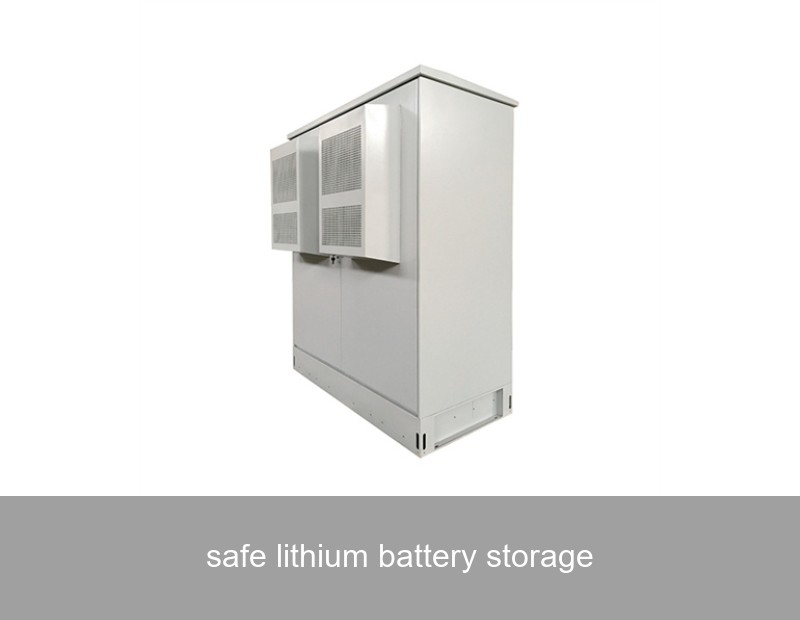
As homes and businesses across Europe and America increasingly turn to solar panels and wind turbines, a critical question emerges: where do we put all that clean energy when the sun isn't shining or the wind isn't blowing? The answer, for millions, is lithium-ion battery storage. But with this rapid adoption comes a heightened focus on one non-negotiable aspect: safe lithium battery storage. It's not just about having power on demand; it's about ensuring that the system powering your home or business is fundamentally secure, stable, and built to last.
Table of Contents
- The Phenomenon: From Power Source to Power Security
- The Data: Understanding the Real Risks and Protections
- A Case Study in Safe Commercial Storage
- The Architecture of Safety: Beyond the Battery Cell
- The Highjoule Approach: Engineering Safety into Every Layer
- Future Horizons for Safety and Performance
The Phenomenon: From Power Source to Power Security
Think of your energy system like a car. The solar panels are the engine, generating the power. But the battery? That's the fuel tank, the brakes, and the airbag system all in one. Early adopters were rightly excited about energy independence, but the industry's collective learning curve highlighted that not all storage solutions are created equal. Highly publicized incidents, though statistically rare, shifted the conversation. Today, savvy consumers and business owners aren't just asking, "How many kilowatt-hours?" They're asking, "How is this system designed for safe lithium battery storage from the ground up?" The goal has evolved from simply storing energy to managing it intelligently and containing it securely.
The Data: Understanding the Real Risks and Protections
Let's talk numbers. A 2023 review by the National Fire Protection Association (NFPA) noted that while fire events in energy storage systems are low in frequency, their potential impact demands rigorous safety standards. The root causes often trace back to thermal runaway—a chain reaction within a battery cell that can lead to overheating and fire. This isn't a lithium-specific problem, but its high energy density requires specific engineering controls.
What does effective prevention look like? It's a multi-layered shield:
- Cell-Level Safety: Using lithium iron phosphate (LFP) chemistry, which is inherently more stable and less prone to thermal runaway than other lithium-ion types.
- System-Level Design: Robust battery management systems (BMS) that monitor voltage, temperature, and state of charge for every cell, not just the whole pack.
- Physical Protection: Fire-resistant enclosures, automatic suppression systems, and proper spacing for thermal management.
- Installation & Compliance: Adherence to strict codes like UL 9540 (Standard for Energy Storage Systems and Equipment) and NFPA 855, which govern installation, spacing, and hazard mitigation.

Image: A professionally installed residential storage system emphasizes clean installation and clear safety spacing. Source: Unsplash
A Case Study in Safe Commercial Storage: A German Logistics Hub
Consider the challenge faced by a mid-sized logistics company outside Frankfurt. Their new 500 kW solar carport generated ample daytime energy, but their nightly operations—charging electric forklifts and running high-bay lighting—relied on the expensive grid. They needed a large-scale storage solution, but the local fire safety authority had stringent concerns due to the building's proximity to other structures.
The solution, deployed in 2023, centered on a safe lithium battery storage system with a clear safety pedigree. The installation featured:
- A 372 kWh capacity using modular, UL 9540-certified LFP battery cabinets.
- Each cabinet with its own, independent climate control and internal fire suppression cartridge.
- A master BMS providing 24/7 monitoring with automatic grid isolation in case of anomaly.
- A clear, compliant 3-foot safety perimeter and thermal imaging cameras as per the authority's request.
The result? The system now shaves over 40% off their peak grid demand, with a full return on investment projected in under 7 years. More crucially, it passed the fire safety inspection on the first review. The facility manager noted, "The transparency on the safety features and certifications turned a regulatory hurdle into a non-issue. We sleep better knowing the system protects itself."
The Architecture of Safety: Beyond the Battery Cell
True safety is an architecture, not an add-on. It starts with chemistry selection—like the inherently stable LFP chemistry used in Highjoule's H-Series residential and MegaCell commercial systems—and builds outward. The Battery Management System is the brain, constantly balancing cells to prevent stress. The power conversion system must respond to faults in milliseconds. Even the software plays a role, with predictive algorithms that analyze performance trends to flag potential issues long before they become problems.
This is where the expertise of a seasoned provider becomes invaluable. A company like Highjoule, with nearly two decades in the field, doesn't just assemble components. We engineer integrated systems where safety is the first parameter in every design decision, from the cell to the cloud interface.
The Highjoule Approach: Engineering Safety into Every Layer
At Highjoule, our philosophy is that safety and performance are two sides of the same coin. You cannot have a high-performing, reliable energy asset without a foundational commitment to safety. This philosophy is embedded in our product development lifecycle and our customer solutions.
For the homeowner, our H-Series Home Battery leverages LFP chemistry and features a patented "CoolStack" thermal management system that maintains optimal temperature without noisy fans. Its enclosure is rated for outdoor installation, resisting dust and moisture, and includes a factory-integrated emergency disconnect.
For commercial and industrial clients, our MegaCell Industrial ESS takes it further. It's a containerized, turnkey solution. Each unit is a self-contained fortress of safety:
- Multi-zone gas-based fire suppression that triggers upon both heat and smoke detection.
- Reinforced isolation transformers for galvanic separation from the grid.
- 24/7 remote monitoring from Highjoule's Network Operations Center, which can proactively initiate safety protocols or dispatch service.
Our services extend beyond the hardware. We provide comprehensive site assessments, ensuring compliance with local codes like NFPA 855 in the US or the upcoming IEC 62933 standards in Europe. Our installation partners are rigorously trained, and our monitoring service acts as a perpetual safety sentinel.

Image: A technician performs routine diagnostics on a large-scale battery storage unit. Source: Unsplash
Future Horizons for Safety and Performance
The journey toward even safer energy storage continues. We're actively involved in research on solid-state batteries and advanced electrolyte formulations that could further reduce risks. Simultaneously, artificial intelligence is revolutionizing predictive maintenance. Imagine a system that analyzes subtle voltage drifts across thousands of cells, predicting a potential weak point months in advance and scheduling pre-emptive maintenance—this is the direction of true pro-active safety.
Furthermore, integration with microgrid controllers allows storage systems to act as grid stabilizers, preventing faults from cascading. This isn't just about protecting the battery; it's about the battery enhancing the safety and resilience of the entire local energy network.
Your Role in the Safety Equation
As an energy consumer or business owner, your due diligence is the final layer of safety. Ask your provider pointed questions: What is the battery chemistry (LFP is a strong indicator of stability)? Is the entire system UL 9540 or equivalent certified? What does the BMS monitor, and how quickly can it react? Who provides ongoing monitoring and what are the response protocols? The answers will tell you everything you need to know about a provider's commitment to safe lithium battery storage.
So, as you contemplate taking control of your energy future, what specific safety feature would give you the utmost confidence in bringing a battery storage system onto your property or into your business?
 Inquiry
 Online Chat