


Retrofit Battery to Solar: Unlocking the Full Potential of Your Existing Solar Investment
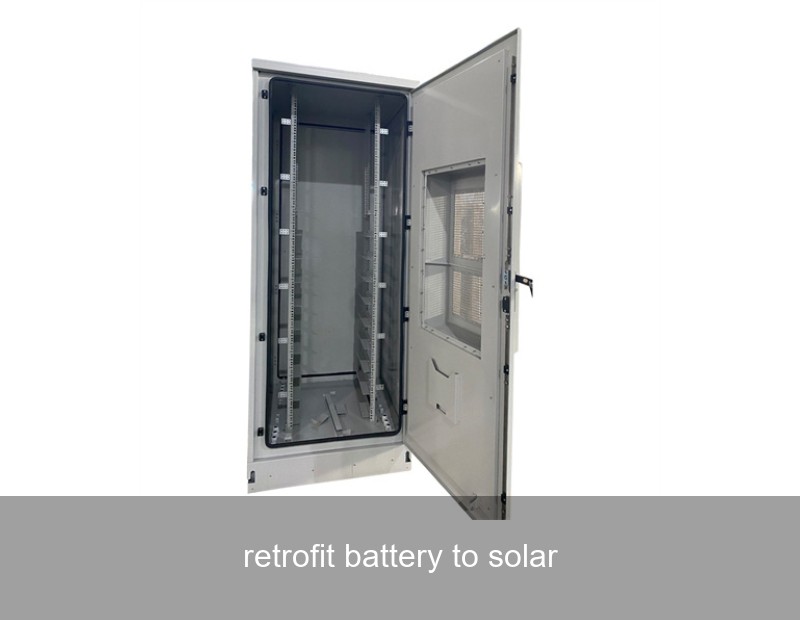
You made a smart decision investing in solar panels. Your electricity bills dropped, and you've been doing your part for the planet. But if you're like many solar owners in Europe and the US, you've probably noticed a frustrating pattern: you export a surplus of energy back to the grid in the sunny afternoon, only to buy expensive power back in the evening. What if you could capture that excess energy and use it on your own terms? This is where the powerful strategy to retrofit battery to solar comes in. It's the logical next step to transform your solar array from a cost-saver into a truly resilient and independent energy asset. As a global leader in advanced energy storage, Highjoule has been at the forefront of this retrofit revolution since 2005, empowering homeowners and businesses to maximize their renewable energy investments.
Table of Contents
- The Challenge: Your Solar System's Untapped Potential
- The Solution: What Does It Mean to Retrofit a Battery?
- The Tangible Benefits: More Than Just Backup Power
- The Retrofit Process: Is It Complicated?
- A Real-World Case Study: From Grid Dependency to Energy Independence
- Choosing the Right Retrofit Battery System
- Making Your Energy Future-Ready
The Challenge: Your Solar System's Untapped Potential
Let's face the data. According to the U.S. Department of Energy, solar generation often peaks in the middle of the day when household demand is relatively low. In many regions with net metering, the credit you receive for exported energy is significantly lower than the retail rate you pay to import it later. This mismatch is a growing economic pain point.
The Phenomenon: You see your meter spin backwards at noon, but spin forwards rapidly during the evening "peak demand" hours when utility rates skyrocket.
The Data: In some parts of California and Europe, the difference between peak and off-peak electricity prices can be as high as 200-300%. Your solar system, without storage, is forced to operate within this inefficient paradigm.
The Insight: Your existing solar panels are an energy-producing asset, but without a "bank" to store their output, a substantial portion of their financial and practical value is left on the table. This is the core problem a retrofit battery system solves.
The Solution: What Does It Mean to Retrofit a Battery?
To retrofit battery to solar means to integrate a new battery energy storage system (BESS) with your already operational solar photovoltaic (PV) installation. It doesn't require removing your existing panels. Instead, a skilled installer integrates the battery system into your home's electrical infrastructure, often at the main service panel. The system includes the battery modules, a hybrid inverter or a dedicated battery inverter, and an intelligent energy management system.
Highjoule's Eclipse Home Retrofit Series is specifically engineered for this purpose. These systems feature adaptive power electronics that seamlessly communicate with most existing solar inverters, minimizing installation complexity. Our smart energy gateway then takes over, learning your consumption patterns and automatically deciding when to store solar energy, power your home, or—if beneficial—sell to the grid.

Image source: Unsplash (Representative image of a home energy storage installation)
The Tangible Benefits: More Than Just Backup Power
Adding a battery transforms your solar system's role. Here’s how:
- Maximize Self-Consumption: Use your own solar energy day and night, sometimes increasing the direct usage of your solar production from 30-40% to over 80%.
- Reduce Peak Demand Charges (Crucial for Businesses): For commercial and industrial users, demand charges can constitute up to 50% of the electricity bill. A retrofit battery can discharge during short periods of high usage to "shave" these costly peaks.
- Enhanced Resilience: Power outages are increasing in frequency and duration. A retrofit system like Highjoule's Eclipse can provide critical backup power to keep lights, refrigeration, and essential circuits running.
- Future-Proofing: As utilities move towards less favorable net metering policies and time-of-use rates become standard, a battery provides control and protects your investment.
| Scenario | Solar Only | Solar + Battery Retrofit |
|---|---|---|
| Evening Energy Use | Purchased from grid at high rate | Powered by stored solar energy |
| During a Grid Outage | System shuts down (no power) | Essential loads remain powered |
| Financial Return | Limited by net metering value | Optimized via arbitrage & self-use |
The Retrofit Process: Is It Complicated?
Many homeowners worry about disruption. With a qualified installer and a designed-for-retrofit product, the process is remarkably streamlined. A Highjoule-certified partner will typically:
- Conduct a Site Assessment: Evaluate your existing solar system, electrical panel, and energy goals.
- Design the System: Recommend the optimal battery capacity (e.g., our modular 10kWh or 15kWh Eclipse units) and configuration.
- Secure Permits: Handle all local utility and building permit requirements.
- Installation: The physical installation often takes 1-3 days, with minimal interruption to your power supply.
- Commissioning & Monitoring: Once online, you can monitor your energy production, consumption, and storage in real-time via the Highjoule app.
A Real-World Case Study: From Grid Dependency to Energy Independence
Let's look at a concrete example from Bavaria, Germany. The Müller family installed a 8kW solar PV system on their detached home in 2018. Despite good solar resources, they only consumed about 35% of their generated electricity directly.
The Retrofit: In early 2023, they decided to retrofit battery to solar with a Highjoule Eclipse 12.8kWh system.
The Data-Driven Results (12-month post-installation):
- Self-Consumption Rate: Increased from 35% to 88%.
- Grid Electricity Purchases: Reduced by an additional 68% compared to solar-only operation.
- ROI Timeline: With Germany's high electricity prices and a state subsidy for storage, their projected payback period is under 7 years.
- Resilience: The system has provided seamless backup during three brief grid outages, powering the home's critical infrastructure.
This case, mirrored by thousands across our key markets, demonstrates that retrofitting isn't just a technical upgrade—it's a strategic financial decision. The Fraunhofer Institute for Solar Energy Systems has consistently highlighted the growing economic viability of pairing PV with storage, especially for existing installations.
Choosing the Right Retrofit Battery System: Key Considerations
Not all batteries are created equal, especially for retrofit scenarios. Here’s what to look for:
- AC-Coupled vs. DC-Coupled: AC-coupled systems (like most Highjoule retrofit solutions) are generally the best fit for existing solar, as they connect independently to your home's AC wiring, avoiding costly modifications to your existing solar inverter setup.
- Scalability: Can you add more capacity later? Highjoule's modular design allows for future expansion.
- Depth of Discharge & Warranty: Look for a battery that allows deep cycling without degrading. Highjoule's lithium iron phosphate (LFP) batteries offer a 10-year warranty with guaranteed end-of-warranty capacity.
- Smart Management: The brain of the system is crucial. It should optimize for economics, resilience, and your personal preferences.

Image source: Unsplash (Representative image of a technician setting up a battery system)
Making Your Energy Future-Ready
The energy landscape is shifting rapidly. Policies like the U.S. Inflation Reduction Act offer significant tax credits for standalone storage, making a retrofit more affordable than ever. In Europe, the push for energy sovereignty is accelerating adoption. By choosing to retrofit battery to solar, you're not just upgrading your home; you're taking definitive control of your energy costs and contributing to a more stable, decentralized grid.
Highjoule is committed to this vision. Our solutions for commercial, industrial, and residential applications are built on nearly two decades of innovation, ensuring reliability, safety, and intelligence. We partner with a network of certified installers across Europe and North America to ensure a seamless experience from consultation to commissioning.
So, here's a question to ponder: When you look at your next electricity bill and see those high evening usage charges, what could you power with the clean energy your panels already produced but couldn't save?
 Inquiry
 Online Chat