


Navigating the Future: A Comprehensive Guide to Renewable Energy Services
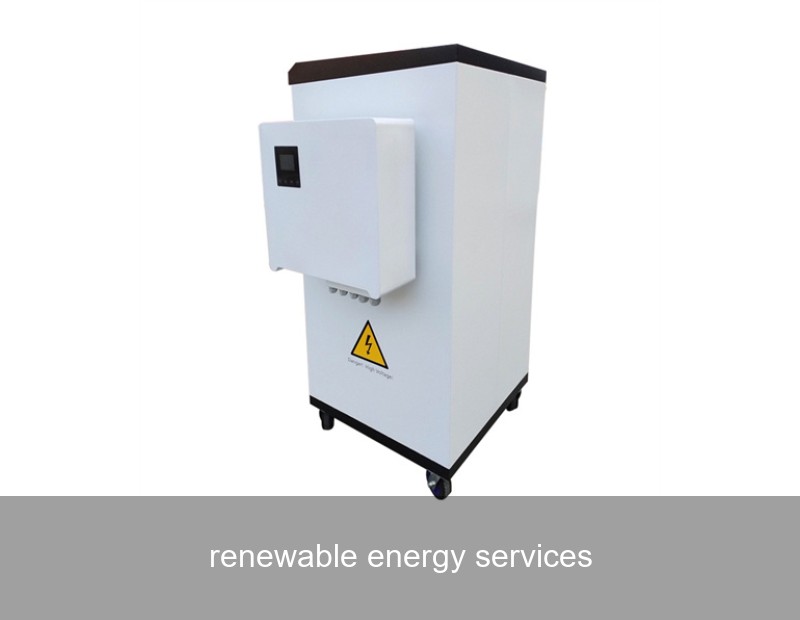
You've likely noticed the shift. From the solar panels sprouting on neighborhood roofs to the wind turbines dotting the countryside, the move towards clean power is undeniable. But for many homeowners and businesses, the journey from interest to implementation can feel complex. This is where modern renewable energy services step in, transforming a simple installation into a smart, integrated, and economically viable energy ecosystem. Let's demystify what these services truly entail and how they are powering a more resilient and independent energy future.
Table of Contents
The Phenomenon: More Than Just Panels on a Roof
Gone are the days when adopting renewable energy simply meant purchasing a set of solar panels. Today, it's a holistic service. Homeowners and business managers aren't just looking for equipment; they're seeking a reliable partner to handle energy generation, storage, management, and optimization. The real pain point? Solar panels produce abundant energy during the day, but what happens when the sun sets, or during a grid outage? This gap between generation and consumption is the critical challenge modern services aim to solve.

Image Source: Unsplash (Representative image of a residential renewable energy system)
The Data: Why Integration is the Key to Value
The numbers speak volumes. According to the International Energy Agency (IEA), global renewable capacity is set to grow by 2,400 GW between 2023-2028. However, the true value is unlocked when generation is paired with storage. A study by NREL indicates that combining solar with battery storage can increase the value of solar by 20-40% for homeowners, primarily by enabling time-of-use bill management and backup power. This synergy is the heart of contemporary renewable energy services.
A Case Study in Action: The German Bakery's Recipe for Resilience
Consider "Brot & Mehr," a mid-sized artisan bakery in Bavaria, Germany. Their challenges were classic: high, fluctuating energy costs, a critical need for refrigeration continuity, and a desire to reduce their carbon footprint. Simply installing a solar array would have covered only ~30% of their needs, leaving them exposed to peak evening electricity rates when ovens were still running.
Their solution involved a comprehensive service package:
- Custom Design: A 50 kWp solar PV system tailored to their roof space and load profile.
- Integrated Storage: A 40 kWh commercial battery energy storage system (BESS) to store midday surplus.
- Smart Energy Management: An AI-driven controller that prioritizes using stored energy during high-cost evening hours and ensures the refrigeration circuit remains powered during any grid interruption.
| Metric | Before Installation | After 12 Months |
|---|---|---|
| Grid Electricity Consumption | 100% | 42% |
| Energy Cost Savings | Baseline | €8,400 annually |
| Self-Consumption of Solar Power | N/A | 78% |
| Backup Power for Critical Loads | None | Up to 14 hours |
The result? Enhanced profitability, guaranteed production during a local grid upgrade blackout, and a tangible marketing story about sustainable baking. This is the power of integrated services.
Core Components of Modern Renewable Energy Services
So, what should you expect from a full-scope provider? Look for these pillars:
1. Consultation & Custom System Design
It starts with understanding your energy DNA—your consumption patterns, physical site, and financial goals. A proper service uses advanced modeling tools to design a system that maximizes ROI, not just kilowatt production.
2. Technology Integration
This is the hardware heart. The best services offer seamless integration between:
- Photovoltaic (PV) Generation: High-efficiency solar panels.
- Battery Energy Storage Systems (BESS): The linchpin for independence, storing excess energy.
- Energy Management Systems (EMS): The brain that intelligently directs energy flow.
- EV Charging Integration: Future-proofing your system for electric vehicles.
3. Smart Monitoring & Optimization
Post-installation, a user-friendly portal and app should provide real-time insights into your energy production, consumption, and savings, often with predictive analytics to further optimize usage.
4. Financing, Incentive Navigation & Maintenance
A true service partner guides you through available tax credits (like the U.S. ITC), local rebates, and financing options. They also offer long-term maintenance plans to ensure system health and performance over its 20+ year lifespan.
The Highjoule Approach: Intelligent Integration
This is where a provider's expertise becomes critical. At Highjoule, with nearly two decades of experience since 2005, we view our role not just as equipment suppliers, but as architects of energy resilience. Our renewable energy services are built on the principle of intelligent integration.
For our residential and commercial clients across Europe and North America, we provide the Highjoule Harmony Ecosystem. This includes our high-density lithium-ion battery storage systems, which are compatible with leading solar inverters, and are governed by our proprietary AI-powered energy management platform. This platform doesn't just react; it learns your patterns and weather forecasts to make pre-emptive decisions—like storing extra energy before a predicted cloudy day or automatically participating in grid flexibility programs where available, creating an additional revenue stream for our clients.

Image Source: Unsplash (Representative image of a commercial battery storage installation)
For larger-scale microgrid applications, such as remote communities or industrial campuses, Highjoule's services expand to include full engineering, procurement, and construction (EPC) management, ensuring a turnkey solution that delivers energy security and operational cost certainty.
The Future of Your Energy Independence
The transition to renewables is no longer a question of "if" but "how effectively." The landscape of renewable energy services has matured to offer a path that is not only environmentally sound but also financially astute and operationally robust. It's about taking control, building resilience against volatile prices and grid instability, and actively participating in the new energy paradigm.
What is the first step you could take this year to understand your own potential for energy independence? Could an audit of your last 12 months of electricity bills reveal a pattern that a smart, integrated system could optimize?
 Inquiry
 Online Chat