


Navigating the Future: The Critical Role of the Renewable Energy Integration Project
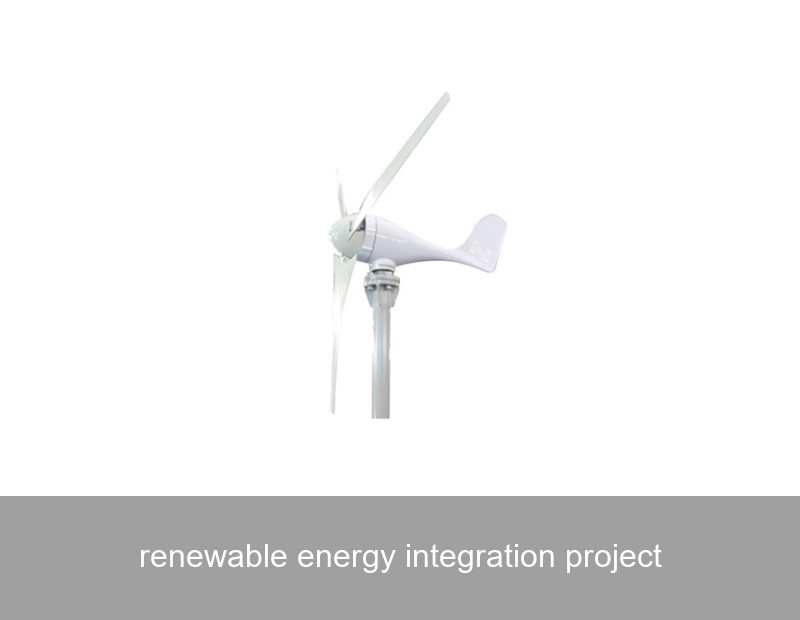
Imagine a world where the sun always powers our homes and the wind reliably fuels our industries. The vision is clear, but the path is paved with a fundamental challenge: intermittency. This is where the modern renewable energy integration project becomes the cornerstone of our clean energy future. It's no longer just about installing solar panels or wind turbines; it's about weaving these variable resources seamlessly, reliably, and efficiently into the existing grid. For businesses, communities, and nations across Europe and the US, mastering this integration is the key to unlocking true energy independence, cost savings, and sustainability. As a leader in advanced energy storage, Highjoule has been at the forefront of this transformation since 2005, providing the intelligent hardware and software that make these complex projects not just feasible, but highly profitable and resilient.
Table of Contents
- The Grid Challenge: Why Integration Isn't Simple
- The Storage Solution: More Than Just a Battery
- Case Study: Taming the Texas Sun with Intelligent Storage
- Key Components of a Successful Integration Project
- Highjoule's Role: From Hardware to Grid Intelligence
- Future Horizons: The Integrated Grid Ecosystem
The Grid Challenge: Why Integration Isn't Simple
Our traditional power grid is a masterpiece of real-time engineering, built on a simple principle: supply must instantly match demand. For over a century, this was managed by ramping fossil fuel plants up or down. Enter wind and solar. Their output depends on the weather, not on grid dispatcher commands. A passing cloud can cause a solar farm's output to plummet; a calm day leaves wind turbines idle. This variability creates a phenomenon grid operators call "duck curve"—a deep midday dip in net demand when solar is abundant, followed by a steep evening ramp as the sun sets and demand peaks. Managing this curve requires unprecedented flexibility.
The data is compelling. According to the International Energy Agency (IEA), to meet global climate targets, the world needs to add about 80 GW of grid-scale storage capacity annually by 2030. In the US alone, the Department of Energy's Grid Deployment Office highlights that hundreds of gigawatts of storage are needed to support the path to a fully clean grid. This isn't a minor upgrade; it's a fundamental re-architecting of our energy infrastructure.

Image Source: Unsplash - A visual representation of utility-scale solar generation.
The Storage Solution: More Than Just a Battery
This is where advanced Battery Energy Storage Systems (BESS) enter the stage. Think of them as the "shock absorbers" and "time machines" for the grid. They don't just store energy; they provide a suite of critical grid services that make renewable integration smooth and stable. A modern BESS in a renewable energy integration project can perform multiple functions simultaneously:
- Energy Time-Shifting (Arbitrage): Store cheap, abundant solar power at noon and discharge it during expensive peak hours in the evening.
- Frequency Regulation: Respond in milliseconds to tiny fluctuations in grid frequency, a service traditionally provided by spinning turbines in power plants.
- Ramp Rate Control: Smooth out sudden increases or decreases in renewable output, like when the wind suddenly picks up or dies down.
- Voltage Support: Maintain stable voltage levels on local distribution lines, especially important with high penetrations of distributed solar.
At Highjoule, we engineer our IntelliBESS platform with this multi-service capability at its core. Our systems are built with high-cycle life lithium-ion battery technology, coupled with our proprietary GridSynergy AI controller. This software is the true brain, deciding in real-time whether to sell power, stabilize the grid, or store it for later—maximizing the asset's value and grid support.
Case Study: Taming the Texas Sun with Intelligent Storage
Let's look at a real-world example. In West Texas, a major independent power producer (IPP) was facing significant curtailment of its 150 MW solar farm. The local grid infrastructure couldn't always absorb the full midday output, forcing them to waste perfectly good solar energy. Their goal was clear: reduce curtailment, increase revenue, and provide grid reliability.
They partnered with Highjoule on a renewable energy integration project to deploy a 50 MW / 100 MWh IntelliBESS system at the solar farm's point of interconnection. Here's what the project achieved in its first year of operation:
| Metric | Result | Impact |
|---|---|---|
| Curtailment Reduction | Over 92% | Nearly all generated solar power was utilized. |
| Revenue Streams Generated | 3 (Energy Arbitrage, Frequency Response, Ancillary Services) | Diversified income beyond simple solar PPA. |
| Grid Service Response Time | < 500 milliseconds | Provided critical fast-frequency response to ERCOT grid. |
| ROI Acceleration | Projected payback period reduced by 30% | Enhanced project economics through stacked value streams. |
This project exemplifies the modern integration playbook. It wasn't just about adding storage; it was about deploying an intelligent asset that solves an economic problem (curtailment) while becoming a new revenue center and a pillar of local grid reliability. The Highjoule team managed the full turnkey solution, from system design and grid compliance to commissioning and ongoing performance optimization.
Key Components of a Successful Integration Project
A successful renewable energy integration project is a symphony of technology, economics, and regulation. Missing one piece can lead to underperformance. Here are the essential components:
- Advanced Technology Stack: High-efficiency, durable battery cells, a bi-directional inverter (PCS), and a top-tier Energy Management System (EMS) for forecasting and dispatch.
- Value Stacking Business Model: The project's financial viability hinges on accessing multiple revenue streams—energy markets, capacity markets, and grid service contracts.
- Regulatory and Grid Compliance: Navigating interconnection queues, meeting grid codes for voltage and frequency ride-through, and securing permits.
- Lifecycle Expertise: Partners who understand the project from feasibility study and financial modeling to long-term operations and maintenance (O&M).

Image Source: Unsplash - Technician performing checks on a grid-scale battery storage system.
Highjoule's Role: From Hardware to Grid Intelligence
This is where Highjoule's nearly two decades of experience becomes invaluable. We don't just sell battery containers; we deliver guaranteed outcomes for integration projects. Our approach is holistic:
- For Commercial & Industrial (C&I) Sites: Our CommERCIAL BESS solutions help businesses with on-site solar to maximize self-consumption, reduce demand charges, and provide backup power. We manage the complexity so you simply see lower bills and a smaller carbon footprint.
- For Utilities and IPPs: Our utility-scale IntelliBESS platform, as seen in the Texas case, is engineered for grid-edge and transmission-level applications. It comes with performance guarantees and can be coupled with our VPP (Virtual Power Plant) software to aggregate distributed assets for grid services.
- For Microgrids: From remote communities to critical infrastructure, Highjoule designs resilient microgrids that combine solar, wind, and storage with advanced controls to operate independently or in connection with the main grid.
Our GridSynergy AI software is the unifying thread. It uses machine learning to predict renewable generation and load patterns, then optimizes the battery's dispatch to capture the highest possible value from energy markets and grid service opportunities every single day.
Future Horizons: The Integrated Grid Ecosystem
The future of the renewable energy integration project is moving beyond single assets to interconnected ecosystems. Imagine fleets of EV chargers, home batteries, commercial storage systems, and utility-scale plants all communicating and responding to grid needs as a single, coordinated virtual power plant. This creates a hyper-resilient, efficient, and democratic energy network.
Technologies like green hydrogen and long-duration storage will play a role for seasonal shifting. However, for the critical day-to-day and minute-to-minute balancing that underpins grid stability, intelligent lithium-ion-based BESS will remain the workhorse. The focus will shift even more towards software, market access, and the seamless interoperability of millions of distributed energy resources.
Is your organization looking at a new solar or wind farm and wondering how to mitigate curtailment risk? Or are you an industrial energy user seeking to shield your operations from volatile power prices while contributing to grid stability? The conversation starts with a single question: What specific energy challenge are you looking to solve, and how can a strategically designed storage integration project turn that challenge into an opportunity?
 Inquiry
 Online Chat