


Harnessing the Sun: The Rise of Renewable Energy in Malaysia
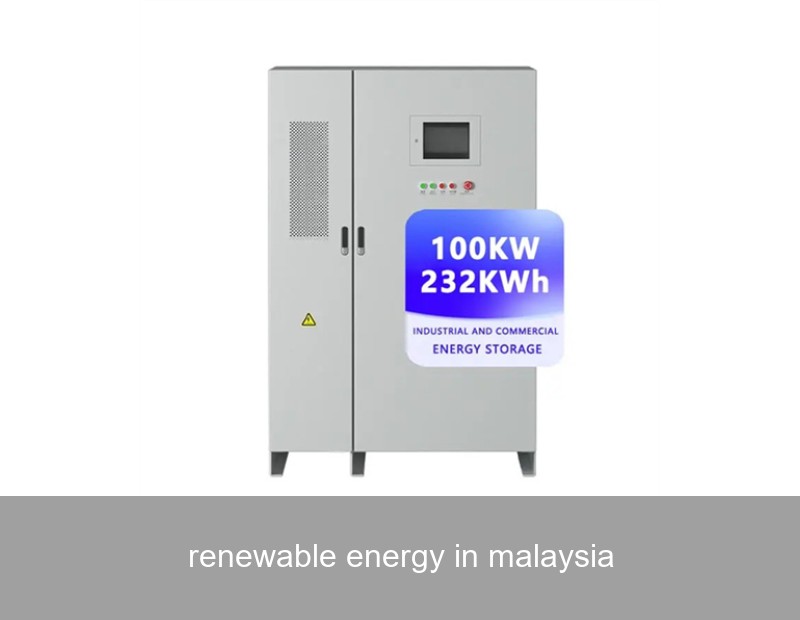
When we think of global renewable energy leaders, countries like Germany or the United States often come to mind. But look towards Southeast Asia, and you'll find a nation making remarkable strides: Malaysia. The story of renewable energy in Malaysia is one of tropical potential meeting ambitious national vision. Blessed with abundant sunshine and a growing commitment to sustainability, Malaysia is rapidly transforming its energy landscape. This shift isn't just about large-scale solar farms; it's about empowering businesses, industries, and communities with reliable, clean power. As a global leader in advanced energy storage, Highjoule is deeply engaged in this transition, providing the intelligent battery systems that make solar and other renewables truly dependable around the clock.
Table of Contents
- The Phenomenon: Malaysia's Renewable Energy Surge
- The Data: Ambition Meets Reality
- The Core Challenge: Intermittency and Grid Stability
- The Solution: Energy Storage as the Game-Changer
- Highjoule's Role in Malaysia's Clean Energy Future
- Case Study: Stabilizing an Industrial Facility in Selangor
- The Future Path for Malaysia's Energy Transition
The Phenomenon: Malaysia's Renewable Energy Surge
For decades, Malaysia's energy security was firmly rooted in fossil fuels. However, the increasing global focus on climate change, coupled with the nation's own economic and environmental goals, has catalyzed a significant pivot. The government's ambitious targets, outlined in plans like the National Energy Transition Roadmap (NETR) and the earlier Renewable Energy Act, have created a powerful policy framework. This has led to a boom in solar photovoltaic (PV) installations, from massive solar parks to commercial rooftop systems. But here's the catch many are now realizing: solar panels only generate power when the sun shines. What happens during the monsoon season's cloudy days or at night when energy demand remains high? This question lies at the heart of the next phase for renewable energy in Malaysia.

Image: Solar panels are becoming a common sight on commercial buildings. Source: Unsplash.
The Data: Ambition Meets Reality
Let's look at the numbers that define this transition. Malaysia aims to increase its renewable energy capacity to 31% of the total installed capacity by 2025 and 40% by 2035. The nation has already surpassed 4 gigawatts (GW) of installed renewable capacity, with solar PV leading the charge. The Large Scale Solar (LSS) auction programs have been instrumental, driving down costs and accelerating deployment. According to the International Energy Agency (IEA), Malaysia's solar potential is vast, with average daily solar irradiation of 4.7-5.2 kWh/m² – comparable to many sun-rich European nations. However, integrating this variable power into the national grid, operated by Tenaga Nasional Berhad (TNB), presents complex technical challenges. Grid stability becomes paramount, and that's where the conversation must evolve from generation alone to generation plus storage.
The Core Challenge: Intermittency and Grid Stability
Imagine the national grid as a precisely balanced scale. Traditional power plants provide a steady, predictable weight (baseload power). Now, add large amounts of solar power—its weight fluctuates dramatically with the weather. This imbalance can cause frequency deviations, voltage instability, and even localized blackouts. For a commercial factory or a data center, such instability is not an option. This intermittency is the single biggest barrier to higher renewable penetration, not just in Malaysia, but globally. The solution isn't to generate less solar power; it's to store the excess energy generated during peak sun hours and dispatch it intelligently when needed. This turns variable renewable energy into a firm, dispatchable power source.
The Solution: Energy Storage as the Game-Changer
Advanced Battery Energy Storage Systems (BESS) are the critical missing link. Think of them as a "power bank" for the grid, a factory, or even a home. They perform several vital functions:
- Energy Time-Shifting: Storing solar energy during the day for use at night.
- Frequency Regulation: Instantly injecting or absorbing power to keep the grid's frequency stable.
- Peak Shaving: Reducing power drawn from the grid during expensive peak tariff periods, slashing electricity bills.
- Backup Power: Providing seamless, uninterrupted power during grid outages.
For businesses in Malaysia, this translates directly to enhanced operational resilience, significant cost savings, and a demonstrable reduction in carbon footprint. It's the key to unlocking the full economic and environmental promise of their solar investments.
Highjoule's Role in Malaysia's Clean Energy Future
At Highjoule, we've been at the forefront of this storage revolution since 2005. Our expertise lies in designing and deploying intelligent, high-efficiency BESS solutions tailored for diverse applications. For the Malaysian market, with its specific climate and grid requirements, our systems offer distinct advantages. Our H-Series Commercial & Industrial (C&I) ESS is a prime example. It's built with liquid-cooled lithium-iron-phosphate (LFP) battery technology, which offers superior safety, longer lifespan, and excellent performance in Malaysia's warm climate. Integrated with our proprietary Energy Management System (EMS), the system autonomously optimizes energy flow—maximizing self-consumption of solar power, managing grid interactions, and ensuring the battery's health for years to come.

Image: Modern battery storage systems require intelligent control. Source: Unsplash.
Whether it's for a manufacturing plant in Penang looking to cut energy costs, a resort in Langkawi seeking energy independence, or a utility-scale solar farm in Kedah needing grid compliance, Highjoule provides the turnkey storage solution. We don't just sell hardware; we deliver a guaranteed performance outcome—reliable, sustainable, and intelligent power.
Case Study: Stabilizing an Industrial Facility in Selangor
Let's make this concrete with a real-world application. A major food processing plant in Selangor had invested heavily in a 2 MW rooftop solar array. While it reduced their daytime grid consumption, they faced two persistent problems: 1) They were still exposed to high evening peak tariffs, and 2) voltage sags from the grid occasionally disrupted sensitive refrigeration equipment, risking product spoilage.
Highjoule deployed a 1 MWh containerized BESS alongside their existing solar infrastructure. The system was configured for dual purposes: peak shaving and voltage support.
| Metric | Before Highjoule BESS | After Highjoule BESS |
|---|---|---|
| Evening Peak Grid Draw | 1.5 MW | 0.3 MW |
| Monthly Demand Charge Savings | - | ~28% |
| Solar Self-Consumption Rate | 65% | 92% |
| Grid Disturbance Events Causing Downtime | 3-5 per year | 0 |
The results were transformative. The plant now runs its critical cooling loads primarily on stored solar energy during peak hours, dramatically cutting costs. More importantly, the BESS provides instantaneous voltage support, acting as a buffer against grid irregularities. This has ensured uninterrupted production, safeguarding both quality and revenue. This case, documented in part with data from the Sustainable Energy Development Authority (SEDA) Malaysia, exemplifies how storage completes the renewable energy equation.
The Future Path for Malaysia's Energy Transition
The journey for renewable energy in Malaysia is accelerating beyond large-scale solar. We're seeing growing interest in floating solar, bioenergy, and even exploring hydrogen. The common denominator for all these pathways will be the need for flexible, reliable storage. Furthermore, the rise of electric vehicles (EVs) will add new layers of demand and opportunity for vehicle-to-grid (V2G) technologies. The future grid will be a decentralized, digital, and dynamic network.
For international investors and partners looking at the Malaysian market, understanding this integrated approach—generation + storage + smart management—is crucial. It's no longer a question of *if* storage is needed, but *when* and *how* to integrate it for maximum return on investment and operational resilience.
A Question for Your Business
As Malaysia continues its bold energy transition, how is your organization planning to not just participate in, but thrive in, this new energy landscape? Are you prepared to turn your renewable investments into a truly resilient and cost-optimized power system?
 Inquiry
 Online Chat