


Reliance Renewable Energy: A Guide to Secure, Sustainable Power
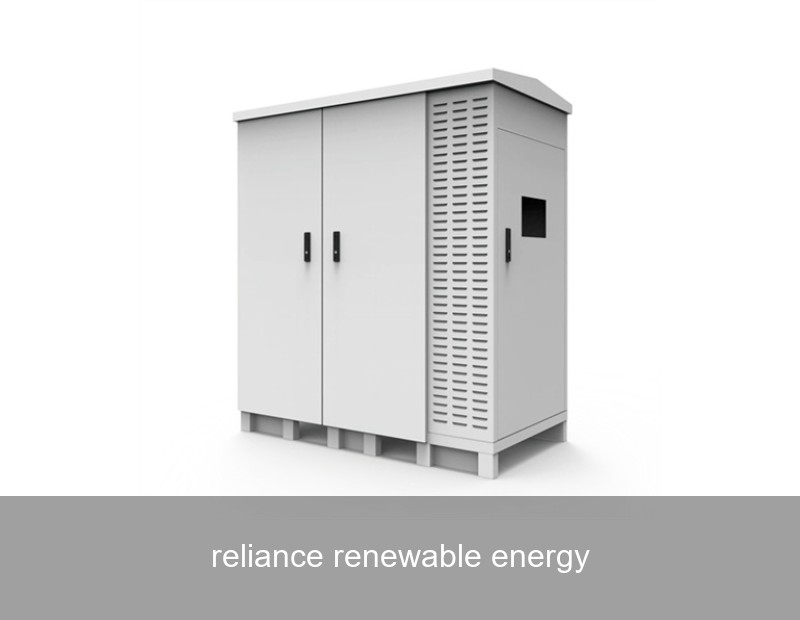
Have you ever wondered what happens when the sun stops shining on a vast solar farm, or the wind suddenly calms? For businesses and communities increasingly reliant on renewable energy, this question isn't just theoretical—it's a critical operational challenge. The transition to clean power is undeniable, but true energy security and independence require more than just generation. It demands intelligent storage. This is where advanced Battery Energy Storage Systems (BESS) become the indispensable backbone, transforming intermittent supply into a reliable, resilient power source. Let's explore how modern energy storage solutions are making a reliance on renewable energy not just possible, but profoundly advantageous.
Table of Contents
The Reliability Gap in Green Power
The promise of renewables is clear: clean, abundant, and increasingly cost-effective power. However, solar and wind are inherently variable. This variability creates a "reliability gap" between when energy is produced and when it is most needed. Without a bridge across this gap, grid operators must rely on fossil-fuel-powered "peaker plants" to meet demand, undermining the environmental and economic benefits of renewables. The solution lies not in generating more, but in storing intelligently and releasing strategically.
The Data: Why Storage is No Longer Optional
The numbers speak volumes. According to the International Energy Agency (IEA), the world needs to add nearly 600 GW of energy storage capacity by 2030 to meet climate goals—a staggering 15-fold increase from 2021 levels. In the U.S., the Inflation Reduction Act has turbocharged storage investments, while in Europe, the REPowerEU plan explicitly links energy independence to storage deployment. For a commercial entity, this translates to tangible risks and opportunities. Energy price volatility can devastate operating margins. Conversely, the ability to store cheap solar power at noon and use it during expensive evening peak hours offers direct, substantial savings and budget predictability.

Image: Utility-scale solar paired with battery storage is key to reliable renewable power. Source: Unsplash.
Case Study: A European Industrial Park's Journey to Resilience
Consider the real-world example of "Mitteldeutscher IndustriePark" in Germany. This park, home to several medium-sized manufacturing firms, had a 5 MW rooftop solar installation. Despite this, they faced two major issues: 1) They were still exporting most of their solar power at low midday prices and buying it back at high rates in the morning/evening, and 2) Grid instability threatened costly production halts.
Their solution was a integrated 4 MWh battery storage system. Here's the impact after one year of operation:
| Metric | Before BESS | After BESS |
|---|---|---|
| On-Site Renewable Consumption | 35% | 85% |
| Energy Cost Volatility | High | Reduced by 60% |
| Grid Dependency During Peak | 100% | 20% |
| CO2 Footprint Reduction (Beyond Solar Alone) | -- | Additional 220 tons/year |
The park manager noted, "The storage system transformed our solar panels from a passive income stream into the core of our active energy management strategy. Our reliance on renewable energy is now a competitive advantage, not a operational risk."
The Intelligent BESS: More Than Just a Battery
A modern BESS is a sophisticated cyber-physical system. It's not a simple "bank" of batteries. Think of it as the brain and heart of your energy ecosystem.
- Power Conversion System (PCS): The heart, managing AC/DC conversion with high efficiency.
- Battery Management System (BMS): The guardian, ensuring cell-level safety, health, and longevity.
- Energy Management System (EMS): The brain, using AI and forecasting to make real-time decisions on when to charge, discharge, or hold based on weather, price signals, and consumption patterns.
- Thermal Management: Critical for safety and performance, especially in diverse climates from Scandinavia to Southern California.
How Highjoule Enables True Renewable Reliance
At Highjoule, with nearly two decades of experience since 2005, we engineer storage solutions that bridge the reliability gap. Our systems are designed for the specific demands of commercial, industrial, and microgrid applications.
Our flagship product, the Highjoule HPS Series, is a containerized, all-in-one solution that exemplifies this approach. It features:
- Grid-Forming Inverter Technology: This allows the BESS to "black start" and stabilize the grid independently—a crucial feature for maintaining operations during grid outages.
- Adaptive EMS Platform: Our proprietary software integrates real-time data from renewables, the facility, and utility markets to autonomously optimize for cost, carbon, or resilience.
- Modular & Scalable Design: Start with what you need and expand seamlessly as your reliance on renewable energy grows.
For a large agricultural cooperative in California, Highjoule deployed a 10 MWh system paired with existing solar. The system not only manages time-of-use arbitrage but also provides "soft" grid services, creating a new revenue stream by supporting local grid frequency. This dual-purpose approach maximizes ROI and underscores how intelligent storage multiplies the value of renewable assets.

Image: Advanced control systems are vital for managing complex energy flows. Source: Unsplash.
The Future Grid: Decentralized, Democratic, and Reliant on Renewables
The end game is a decentralized energy network. Imagine neighborhoods with shared solar and storage, forming resilient microgrids. Industrial facilities acting as virtual power plants, selling flexibility back to the grid. This future, outlined by research from institutions like The National Renewable Energy Laboratory (NREL), reduces strain on transmission lines, democratizes energy access, and builds unparalleled resilience against both climate and geopolitical shocks. The foundational technology enabling this shift is advanced, software-driven energy storage.
What's Your Energy Resilience Score?
As you consider your organization's path to sustainability and cost control, ask yourself: How would a 4-hour grid outage impact your operations? What percentage of your renewable generation are you truly using on-site? The journey to a secure reliance on renewable energy begins with understanding your current position. What is the first step you need to take to turn your clean energy investments into a pillar of unwavering resilience?
 Inquiry
 Online Chat