


The Redback Smart Energy Storage Cabinet: Your Key to Energy Resilience and Savings
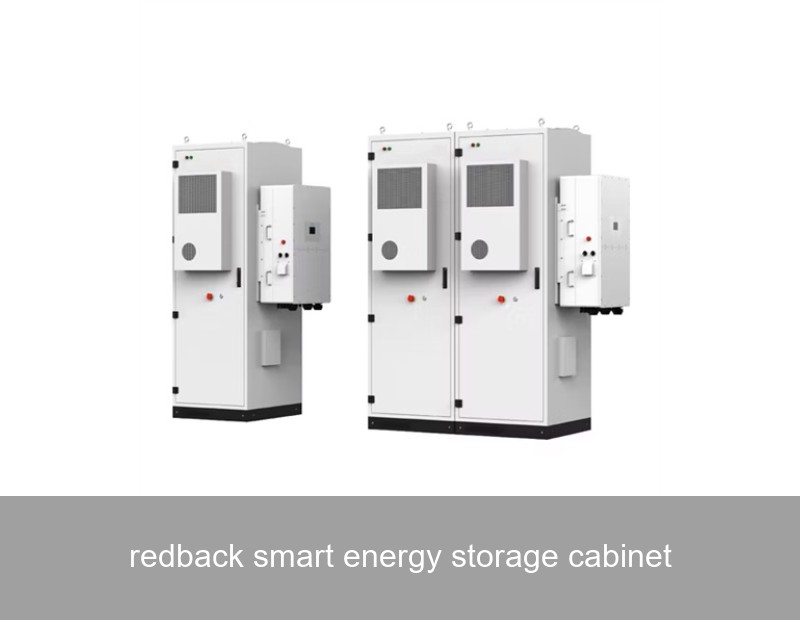
Imagine a device in your home or business that doesn't just store electricity, but actively thinks, learns, and optimizes your power usage 24/7. This isn't science fiction; it's the reality brought to you by advanced smart energy storage systems. At the forefront of this revolution is technology like the Redback smart energy storage cabinet, a sophisticated solution designed to tackle modern energy challenges head-on. For homeowners and businesses across Europe and the US grappling with rising utility costs, grid instability, and a desire for true energy independence, understanding this technology is the first step toward taking control.
The Phenomenon: Grid Strain and the Quest for Energy Independence
You've likely seen the headlines: "Heatwave Sparks Rolling Blackouts" or "Energy Prices Hit Record High." This is the new normal. Our aging electrical grids, built for a different century, are buckling under the pressure of extreme weather, increased electrification, and the intermittent nature of renewable sources like solar. The result? Unpredictable bills and vulnerable power supplies. The U.S. Energy Information Administration (EIA) notes that the frequency and duration of power outages are concerns for utilities and consumers alike. Meanwhile, in Europe, energy security has become a top geopolitical and economic priority. This phenomenon has created a powerful demand for solutions that provide not just backup power, but intelligent energy management.
The Core Solution: What is a Smart Energy Storage Cabinet?
Think of a smart energy storage cabinet as the brain and battery bank of your personal energy ecosystem. Unlike a simple battery backup, it's an integrated system comprising high-density battery modules, advanced power conversion systems, and sophisticated software. Its primary job is to store energy (often from solar panels) when it's cheap or abundant, and release it when you need it most—during peak rate hours or a grid outage. The "smart" component is crucial: it uses real-time data, weather forecasts, and your usage patterns to make autonomous decisions, maximizing your financial savings and energy efficiency without you lifting a finger.

Image Source: Unsplash - A modern home energy system integrating solar and storage.
Breaking Down the Redback Smart Energy Storage Cabinet
Let's delve into what makes a system like the Redback cabinet stand out. It's engineered to be more than just hardware; it's a comprehensive energy management platform.
Modular & Scalable Design for Evolving Needs
One size does not fit all in energy storage. A key feature is its modular architecture. Starting with a base capacity, you can easily add more battery modules as your energy needs grow—whether you're expanding your business, adding an electric vehicle, or simply want longer backup runtime. This future-proofs your investment and provides incredible flexibility.
The AI-Powered Energy Brain
The true genius lies in the software. Advanced systems utilize machine learning algorithms to analyze your consumption. They can:
- Predict Solar Production: By integrating weather forecasts, the system knows how much sun to expect tomorrow and plans charging cycles accordingly.
- Master Time-of-Use Arbitrage: It automatically charges from the grid or solar when rates are low and powers your home when rates are high, slashing your bill.
- Provide Seamless Backup: In the event of a blackout, the transition to battery power is instantaneous—less than 20 milliseconds—so your lights don't even flicker.
Uncompromising Safety and Durability
Safety is non-negotiable. Premium cabinets like those developed by Highjoule feature built-in, multi-layered protection. This includes active thermal management systems to keep cells at an optimal temperature, advanced battery management systems (BMS) for cell-level monitoring, and robust enclosures rated for outdoor installation to withstand harsh weather. This ensures a long, safe, and reliable service life of 10+ years.
| Feature | Basic Battery Backup | Smart Energy Storage Cabinet (e.g., Redback) |
|---|---|---|
| Primary Function | Emergency backup only | Backup + Daily energy cost optimization |
| Intelligence | Minimal or none | AI-driven, learns usage patterns |
| Grid Interaction | Off-grid during outage only | Continuous grid interaction for savings |
| Scalability | Fixed capacity | Easily expandable with modules |
| Return on Investment | Low (only used during outages) | High (daily savings + backup) |
Case in Point: A California Winery's Success Story
Let's look at a real-world application. A mid-sized winery in Sonoma County, California, faced two major issues: crippling peak demand charges from their utility and the constant threat of wildfires leading to preemptive power shutoffs (PSPS). Their production refrigeration and tasting room operations were at risk.
The Solution: They installed a 100 kWh smart energy storage cabinet system, integrated with their existing solar array. The system was programmed to prioritize "peak shaving"—discharging the battery during the utility's 4-9 pm peak window to avoid high tariffs.
The Data-Driven Results (12-month period):
- Demand Charge Reduction: Cut peak demand by 75%, saving over $1,800 per month.
- Energy Bill Savings: Reduced overall electricity costs by 40% through time-based control.
- Resilience: Provided 18+ hours of critical backup power during PSPS events, saving thousands in potential spoiled inventory.
- ROI: Achieved a full return on investment in under 5 years, with over a decade of additional savings and protection ahead.

Image Source: Unsplash - Renewable energy solutions in agricultural settings.
Market Insight: Why This Technology is a Game-Changer
The winery case exemplifies a broader trend. For commercial and industrial users, demand charges can constitute up to 50% of their electricity bill. A smart storage system directly targets this cost center. For homeowners, especially in markets like California, Texas, or Germany with high penetration of renewables and dynamic pricing, the technology transforms a solar system from a daytime saver to a 24/7 energy asset. It also plays a vital role in grid stabilization, potentially allowing users to participate in utility virtual power plant (VPP) programs for additional revenue.
Highjoule's Role: Engineering a Sustainable Future
As a global leader in advanced energy storage since 2005, Highjoule is at the cutting edge of this smart energy transition. We understand that every application—from a family home in Florida to a manufacturing plant in Bavaria—has unique needs. Our product suite, which includes solutions like the Redback smart energy storage cabinet, is built on three pillars: Intelligence, Integration, and Resilience.
Highjoule systems are designed for seamless integration with both new and existing solar installations. Our proprietary energy management platform provides users with an intuitive dashboard to monitor performance, savings, and environmental impact in real-time. For businesses and microgrids, we offer customized, utility-scale solutions that ensure operational continuity and significant cost reductions. Our nearly two decades of experience across four continents mean we deliver not just a product, but a proven, reliable partnership for your energy journey.
Looking Ahead: Your Energy, Your Control
The energy landscape is shifting from a one-way, centralized model to a dynamic, decentralized network. Technologies like the Redback smart energy storage cabinet are the building blocks of this new paradigm. They empower you to become an active manager and consumer of energy—a "prosumer."
So, we leave you with this question to ponder: As electricity markets evolve and climate pressures increase, what will the cost of *not* taking control of your energy future be for your home or business? The tools for resilience, savings, and sustainability are here today. What step will you take to explore them?
 Inquiry
 Online Chat