


How a Modern Rectifier in Telecommunication Powers Our Connected World
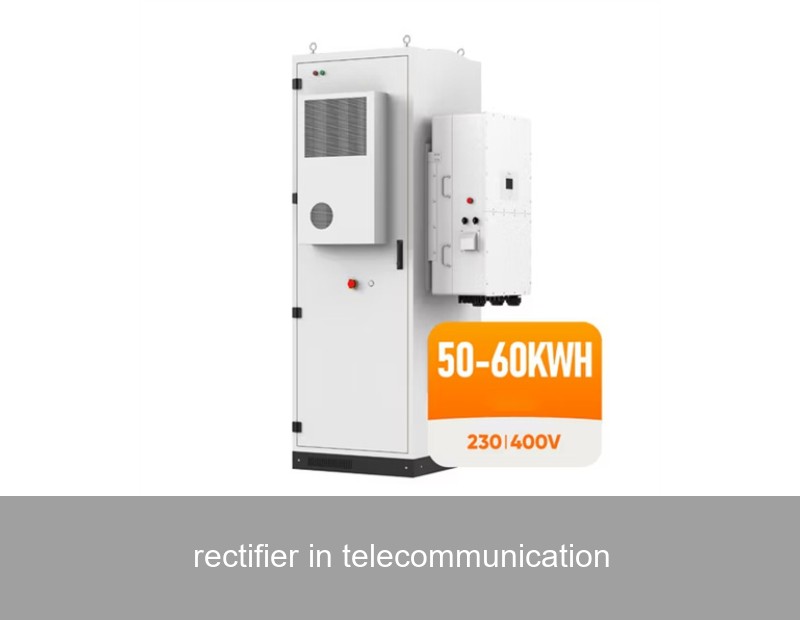
Think about the last time you made a video call, streamed a movie, or sent a critical business file. That seamless flow of data depends on a hidden network of telecommunication facilities—cell towers, data centers, and switching stations. And at the very heart of these facilities lies a critical, often overlooked component: the rectifier in telecommunication. This unsung hero is the gatekeeper of power reliability, converting incoming AC power to the precise DC power that telecom equipment craves. In an era where a millisecond of downtime can mean massive financial loss or a critical service disruption, the efficiency and intelligence of your rectifier system are not just an engineering detail; they are a core business imperative. This article dives into why modern rectifier technology is pivotal for the telecom sector's future, especially as it embraces renewable energy and stringent efficiency demands.
Table of Contents
- The Silent Backbone: What a Telecom Rectifier Really Does
- The Efficiency Imperative: From Cost to Carbon Footprint
- Case Study: A European Telco's Green Transition
- Beyond Conversion: The Smart, Integrated Power System
- Future-Proofing Networks with Advanced Energy Storage
- What's the Next Step for Your Network's Power Resilience?
The Silent Backbone: What a Telecom Rectifier Really Does
Let's break it down simply. The electrical grid delivers Alternating Current (AC) power. However, the sensitive electronics in routers, servers, and transmission equipment in telecom shelters and data centers require stable, low-voltage Direct Current (DC) power. A rectifier in telecommunication performs this essential AC-to-DC conversion. But its role has evolved far beyond that basic function.
Think of a modern rectifier system as a sophisticated power manager. It doesn't just convert power; it conditions it, ensuring voltage and current are perfectly regulated to protect multi-million dollar equipment from surges, sags, and noise. Furthermore, it works in tandem with battery banks. When grid power is flawless, the rectifier powers the load and simultaneously charges the batteries. When a grid outage occurs—whether due to a storm, an accident, or routine maintenance—the system instantly and seamlessly switches to battery power without a flicker. This ensures what the industry calls "five-nines" (99.999%) availability.
The performance metrics here are crucial: conversion efficiency, power density (how much power fits in a rack unit), heat dissipation, and granular monitoring capabilities. An older rectifier might operate at 90% efficiency, meaning 10% of the power is wasted as heat, increasing cooling costs and energy bills. A modern, high-efficiency rectifier can operate at 97-98% efficiency, a seemingly small jump that translates to massive operational savings and a smaller carbon footprint at scale.
The Efficiency Imperative: From Cost to Carbon Footprint
The telecom industry is a colossal energy consumer. According to the International Energy Agency (IEA), data centers and telecommunication networks accounted for about 1-1.5% of global electricity use in recent years, with demand steadily rising. For network operators, energy is often the second-largest operational expense after labor. This is where the rectifier in telecommunication becomes a strategic asset.
Every percentage point gain in rectifier efficiency directly reduces energy waste, cooling requirements, and operational costs. But the drive for efficiency is no longer just economic; it's environmental and regulatory. Across Europe and North America, strict corporate sustainability goals and emerging regulations are pushing telecoms to decarbonize their operations. This means integrating renewable energy sources like solar PV directly into telecom site power systems. A traditional rectifier isn't designed for this. It expects a stable grid AC input. A next-generation system, however, must be capable of managing multiple DC inputs—from the grid, from on-site solar panels, and from advanced battery storage—intelligently prioritizing the cleanest and most cost-effective source.
This is precisely where companies like Highjoule are redefining the landscape. With nearly two decades of expertise in advanced energy storage and power conversion, Highjoule develops intelligent, integrated power solutions that go far beyond standalone rectifiers. Our systems are designed for a multi-source reality, seamlessly blending grid power, on-site generation, and storage to create resilient, efficient, and sustainable telecom power hubs.
The Data Doesn't Lie: A Simple Efficiency Comparison
| Parameter | Legacy Rectifier System | Modern High-Efficiency System (e.g., Highjoule) |
|---|---|---|
| Typical Conversion Efficiency | 90% - 92% | 97% - 98% |
| Annual Energy Loss per 10kW load* | ~7,000 - 8,800 kWh | ~1,750 - 3,150 kWh |
| Heat Dissipation (Waste Heat) | High (800-1000W) | Low (200-300W) |
| Compatibility with Renewable DC Input | Limited or None | Fully Integrated |
*Calculation based on 8,760 hours/year operation. Illustrative purposes.
Case Study: A European Telco's Green Transition
Let's look at a real-world application. A major telecommunications provider in Germany embarked on a mission to reduce the carbon footprint of its thousands of cell tower sites. Their challenge was twofold: improve the abysmal efficiency of aging power systems at remote sites and integrate newly installed solar arrays to offset diesel generator use.
Image: Solar integration at telecom sites is key for decarbonization. (Photo by American Public Power Association on Unsplash)

The solution involved deploying Highjoule's integrated power management systems, which feature high-efficiency rectifier modules (operating at 97.5% efficiency) coupled with advanced lithium-ion battery storage and a smart controller that could manage AC grid, DC solar, and battery power as a single, optimized system.
The Results After One Year at Pilot Sites:
- Energy Cost Reduction: A 31% decrease in grid energy consumption at equipped sites.
- Diesel Displacement: Diesel generator runtime was reduced by over 90%, as solar + storage covered most grid outages.
- OPEX Savings: Combined savings from energy, fuel, and reduced maintenance totaled approximately €4,200 per site annually.
- Emission Cuts: Achieved a reduction of 12.5 tonnes of CO2 equivalent per site per year.
This case demonstrates that upgrading the core rectifier in telecommunication to an intelligent, multi-source system is not just an equipment swap—it's a fundamental upgrade to site resilience and sustainability, with a compelling and rapid return on investment.
Beyond Conversion: The Smart, Integrated Power System
So, what does a modern solution like Highjoule's actually look like? It moves from being a simple rectifier to becoming a site's Digital Energy Manager.
- High-Efficiency, Modular Rectifiers: Our systems use scalable, hot-swappable rectifier modules. If one module needs service or a site's power demand grows, you can adjust without taking the whole system offline.
- Native DC-Coupling for Renewables: Unlike systems that require separate solar inverters (which convert DC solar to AC, only for the rectifier to convert it back to DC), our platform can accept DC input directly from solar panels. This "DC-coupling" eliminates a conversion step, boosting overall system efficiency by another 3-8%.
- Advanced Battery Management (BMS): Integrated lithium-ion phosphate (LiFePO4) batteries, managed by a sophisticated BMS, provide longer lifespan, safer operation, and deeper, more reliable cycling than traditional lead-acid batteries.
- Cloud-Based Monitoring & Analytics: The true power lies in data. Our systems provide real-time visibility into energy consumption, source mix (grid vs. solar), battery health, and efficiency metrics. This allows for predictive maintenance and optimal energy budgeting.
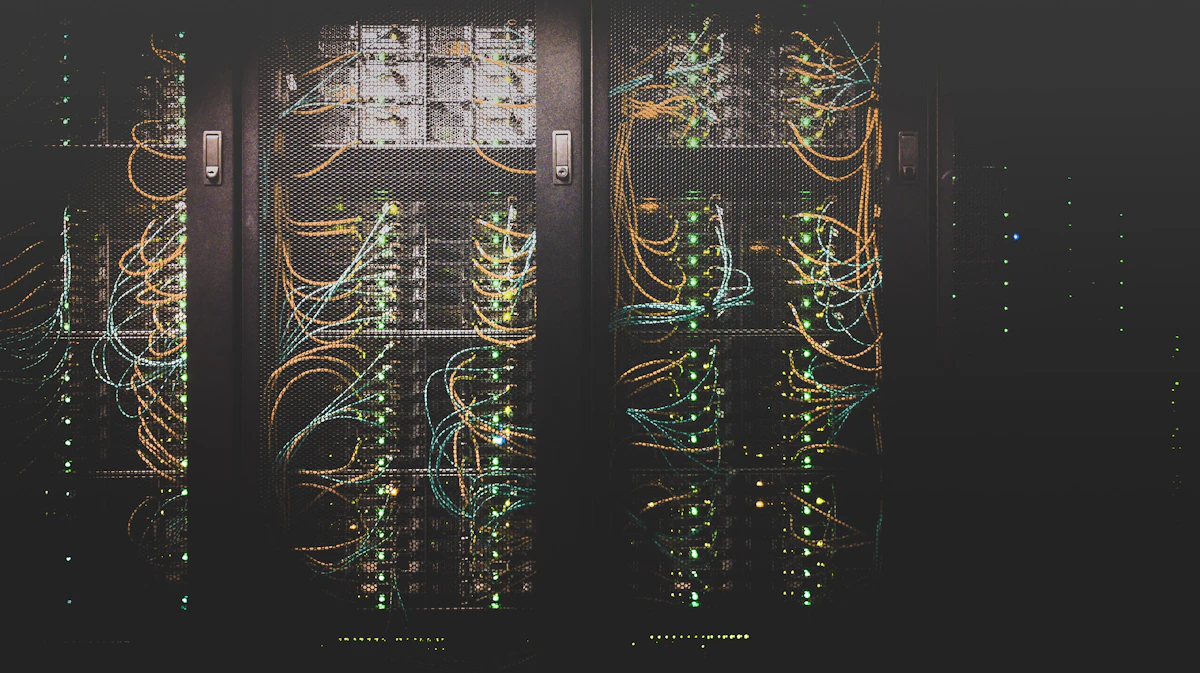
Image: Modern, modular power systems ensure reliability for critical infrastructure. (Photo by Taylor Vick on Unsplash)
Future-Proofing Networks with Advanced Energy Storage
The evolution of the rectifier in telecommunication is inextricably linked to the rise of advanced energy storage. Batteries are no longer just a backup asset; they are a strategic grid resource. With intelligent systems, telecom sites can participate in demand response programs, storing energy when grid electricity is cheap and green, and using it during expensive peak periods. This turns a cost center into a potential revenue stream and further stabilizes the broader grid—a concept known as Vehicle-to-Grid (V2G) but applied to telecom infrastructure.
Highjoule's expertise in battery energy storage systems (BESS) for commercial and microgrid applications directly informs our telecom solutions. We understand battery chemistry, lifecycle management, and safety at a fundamental level. This ensures that the storage component of your power system is not an afterthought, but a core, optimized element designed for daily cycling and long-term durability, perfectly matched with our high-efficiency power conversion platforms.
What's the Next Step for Your Network's Power Resilience?
The question for telecom operators, network engineers, and sustainability officers is no longer if you should upgrade your power infrastructure, but how and when. As you plan for 5G densification, edge computing, and net-zero commitments, can you afford to have your network's heartbeat—its power system—relying on outdated, inefficient, and single-source technology? The modern rectifier in telecommunication has evolved into the brain of a resilient, efficient, and sustainable power ecosystem. Is your network ready to power the future, or is it being held back by the power systems of the past?
 Inquiry
 Online Chat