


Your Guide to Choosing the Right Rechargeable Solar Battery Kit for Energy Independence
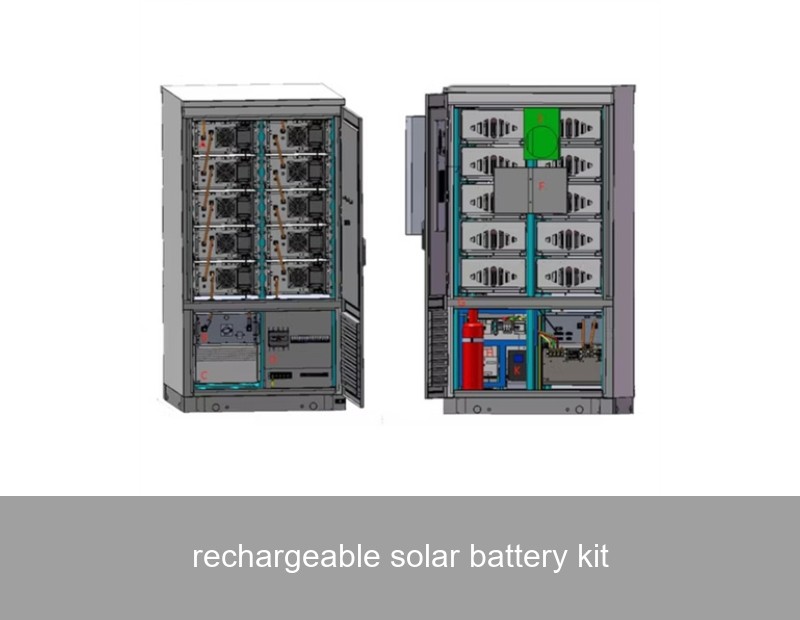
Have you ever watched your electricity bill climb with the summer heat or winter chill and wished for a way to take control? You're not alone. Across homes in Europe and the US, a quiet revolution is happening. Homeowners are looking beyond the grid, turning their rooftops into personal power stations. But the real magic happens when the sun goes down. That's where a rechargeable solar battery kit becomes the cornerstone of a truly resilient and efficient home energy system. It's not just about generating solar power; it's about capturing it, storing it, and using it on your terms.
Table of Contents
- The Problem: Solar Power's Missing Half
- The Solution: Integrated Solar Battery Kits
- Case Study: A Real-World Look at Savings in Bavaria
- Choosing the Right Kit: Key Considerations
- The Highjoule Approach: Intelligence Meets Storage
- Is Your Home Ready for the Next Step?
The Problem: Solar Power's Missing Half
Let's face it: the sun keeps inconvenient hours. Most households consume the most energy in the early morning and evening—precisely when solar panels are least productive. Without storage, excess solar energy generated at midday is often sent back to the grid for minimal compensation (through mechanisms like net metering, which is becoming less lucrative in many regions). You're essentially giving away your premium, self-generated power only to buy it back at a higher price later. This mismatch is the fundamental limitation of solar-only systems.

Image Source: Unsplash
The Solution: Integrated Solar Battery Kits
Enter the integrated rechargeable solar battery kit. Think of it as a sophisticated energy bank for your home. These systems combine high-efficiency battery storage with intelligent energy management. By storing surplus solar energy, you can power your home during peak tariff periods, maintain essential functions during grid outages, and dramatically increase your consumption of your own clean energy—often from 30-40% without a battery to 70% or more with one.
Anatomy of a Modern Rechargeable Solar Battery Kit
A quality kit is more than just a battery. It's a seamless ecosystem of components designed to work in harmony:
- Lithium-Ion Battery Modules: The heart of the system. Modern lithium iron phosphate (LFP) chemistry is the industry benchmark for safety, longevity (typically over 6,000 cycles), and stable performance.
- Hybrid or AC-Coupled Inverter: The brain. This device manages energy flow—converting DC from solar panels and batteries to AC for your home, and vice-versa for charging. A hybrid inverter can integrate new solar and storage, while an AC-coupled solution is perfect for retrofitting batteries to existing solar arrays.
- Energy Management System (EMS): The nervous system. This smart software learns your consumption patterns, weather forecasts, and electricity tariffs to autonomously optimize when to charge, store, or discharge the battery, maximizing your economic return and convenience.
- Safety & Monitoring Hardware: Includes breakers, disconnects, and thermal management systems. A user-friendly monitoring app is essential, giving you real-time and historical insights into your energy production, consumption, and savings from anywhere.
| Aspect | Solar-Only System | System with Rechargeable Solar Battery Kit |
|---|---|---|
| Self-Consumption | Typically 30-40% | 70-90% or more |
| Grid Independence During Outage | No (most systems shut down) | Yes, for essential or whole-home loads |
| Use of Midday Solar Peak | Exported to grid | Stored for personal use |
| Bill Protection from Peak Rates | Minimal | High (can avoid drawing grid power at costly times) |
Case Study: A Real-World Look at Savings in Bavaria
Let's move from theory to practice. Consider the Müller family home in southern Germany, a region with decent but not exceptional sunshine. In 2022, they retrofitted a 10 kWh rechargeable solar battery kit to their existing 8 kW solar array.
- Goal: Increase self-consumption and insulate against volatile energy prices.
- System: AC-coupled battery system with intelligent energy management.
- Result: Their self-consumption rate jumped from 35% to 82%. By using stored solar power during the high-price evening hours, they reduced their grid electricity purchases by an additional 65%.
- Financial Impact: Combined with their solar generation, the battery helped them slash their annual electricity bill by over €1,700. Based on current tariffs and the Fraunhofer ISE energy cost models, they are on track to achieve a return on investment in under 8 years, with well over a decade of additional savings from the system's lifespan.
This case highlights a critical point: the value of a battery isn't just in backup power; it's in daily financial optimization, especially in markets with time-of-use rates or high grid electricity costs.
Choosing the Right Kit: Key Considerations
Selecting a system isn't one-size-fits-all. Here’s a logical ladder to climb when making your decision:
- Assess Your Energy Profile: Look at your utility bill. What's your average daily consumption (kWh)? What is your highest hourly demand (kW)? This determines the necessary battery capacity and power rating.
- Define Your Primary Goal: Is it bill savings, backup for outages, or maximizing green energy use? Your goal prioritizes certain features.
- Evaluate Battery Chemistry & Warranty: LFP is the recommended standard for home use. Pay close attention to the warranty—look for a 10-year guarantee that covers both a high retained capacity (e.g., 70% after 10 years) and throughput.
- Scalability Matters: Can you easily add more battery modules later if your needs change (e.g., buying an EV)? A modular design protects your investment.
- Software Intelligence: The hardware stores energy, but the software creates value. Ensure the EMS can adapt to complex tariff structures and future energy market changes.
The Highjoule Approach: Intelligence Meets Storage
At Highjoule, with nearly two decades of experience in advanced energy storage, we've seen the industry evolve. We believe a rechargeable solar battery kit should be an intelligent asset, not just a simple battery. Our ResiCore series for residential applications embodies this philosophy.
Our kits are built around our proprietary LFP battery modules, known for their exceptional cycle life and safe operation. They seamlessly integrate with both new and existing solar installations. What truly differentiates the ResiCore system is Adaptive Energy OS, our advanced EMS platform. It doesn't just react; it predicts. By analyzing weather data from sources like the European Centre for Medium-Range Weather Forecasts (ECMWF), local utility rates, and your historical usage, it creates a daily and weekly plan to optimize every kilowatt-hour.

Image Source: Unsplash
For our commercial and industrial clients, our GridMax solutions provide scalable, containerized storage that manages demand charges, provides grid services, and ensures operational continuity. Across all our solutions—from residential to microgrids—our global service network provides the peace of mind that comes with expert support.
Why Highjoule's Kit is a Strategic Fit for Europe and the US
- Grid-Aware: Our systems are pre-configured for the specific grid codes and market incentives of regions from California to Germany, ensuring compliance and maximizing value.
- Retrofit-Ready: A significant portion of our installations are additions to existing solar panels. Our engineering teams specialize in seamless, worry-free integration.
- Future-Proof Design: The modular architecture allows for capacity expansion, and our software receives over-the-air updates to harness new energy market opportunities.
Is Your Home Ready for the Next Step?
The journey to energy independence starts with a clear understanding of your own home's energy heartbeat. With the right rechargeable solar battery kit, you're not just buying a product; you're investing in a more predictable energy cost, a more resilient household, and a tangible step towards a sustainable lifestyle. The technology is proven, the economics are increasingly compelling, and the control is waiting to be reclaimed.
What would you power first during an outage, and how much would it mean to you to know that your lights, your internet, and your refrigerator will stay on, powered by the sun you captured yesterday?
 Inquiry
 Online Chat