


Rechargeable Lithium Ion Batteries: The Silent Engine of Our Clean Energy Future
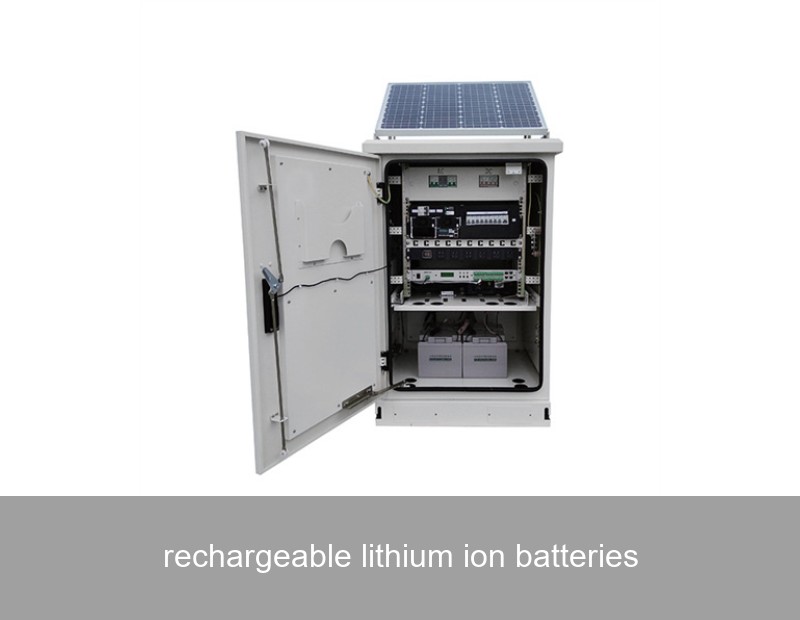
Think about the last time you worried about your phone dying during a busy day. Now, imagine scaling that same anxiety to power an entire factory, a hospital, or your home during a grid outage. The tiny, high-performance rechargeable lithium ion batteries in your pocket are cousins to the sophisticated energy storage systems revolutionizing how we generate, store, and use power globally. For businesses and homeowners in Europe and the US, understanding this technology isn't just about gadgets—it's about gaining control over energy costs, ensuring resilience, and actively participating in a sustainable future.
The Power Behind the Plug: Why Rechargeable Lithium-Ion Batteries Dominate
You might be surprised to learn that the fundamental chemistry powering your laptop is also at the heart of multi-megawatt installations stabilizing national grids. The migration of rechargeable lithium ion batteries from consumer electronics to large-scale energy storage is one of the most significant energy transitions of our time. Their unique combination of high energy density, long cycle life, and decreasing cost has made them the undisputed champion for applications ranging from residential solar storage to industrial load-shifting and frequency regulation services for utilities.
From Phones to Power Grids: The Unstoppable Rise of a Technology
The journey began in the 1990s, but the last decade has seen an explosion. Driven by the electric vehicle (EV) industry, manufacturing scale has caused prices to plummet by over 90% since 2010. This isn't just an economic story; it's a practical one. As renewable energy sources like solar and wind—which are inherently intermittent—comprise a larger share of the grid (reaching over 40% in some European markets), the need for efficient storage has become critical. Rechargeable lithium ion batteries provide the perfect "buffer," storing excess green energy when the sun shines or the wind blows, and releasing it when demand peaks or generation drops.

Large-scale battery energy storage systems (BESS) are becoming a common sight alongside solar and wind farms. Credit: Unsplash.
Science Made Simple: How Do Rechargeable Lithium-Ion Batteries Work?
Let's break down the magic. At its core, a lithium-ion battery cell consists of three key parts:
- The Anode (Negative Electrode): Typically made of graphite, it stores lithium ions when the battery is charged.
- The Cathode (Positive Electrode): Made of a lithium metal oxide (like NMC or LFP), it is the source of lithium ions.
- The Electrolyte: A liquid or gel that allows lithium ions to move between the anode and cathode.
During discharging (powering your home), lithium ions flow from the anode, through the electrolyte, to the cathode, releasing electrons that create the electric current we use. During charging (from solar panels or the grid), an external power source pushes the ions back to the anode, ready for the next cycle. This reversible "shuttle" of ions is what makes them rechargeable thousands of times.
Beyond the Hype: Key Advantages for Modern Energy Needs
So, why have lithium-ion batteries become the go-to for serious energy storage projects? The benefits are tangible:
| Advantage | Impact for Business & Homeowners |
|---|---|
| High Energy Density | More energy stored in a smaller, lighter footprint—crucial for space-constrained sites. |
| Long Cycle Life & Durability | Modern systems like Highjoule's H-Series Commercial BESS offer thousands of cycles, ensuring a 10-15 year operational life with minimal degradation. |
| High Round-Trip Efficiency (~95%) | For every 100 kWh of solar energy you put in, you get ~95 kWh out—minimizing energy waste and maximizing ROI. |
| Rapid Response & Scalability | They can discharge from 0 to full power in milliseconds for backup and scale from kilowatt-hour residential units to megawatt-hour containerized systems. |
It's this blend of performance and economics that enables companies like Highjoule to build integrated solutions. For instance, our Home Energy Vault pairs seamlessly with residential solar, using advanced lithium iron phosphate (LFP) chemistry—known for its exceptional safety and longevity—to allow homeowners to maximize self-consumption of solar energy and protect against blackouts.
Real-World Impact: A Case Study in Commercial Energy Independence
Let's move from theory to a concrete example. Consider a mid-sized dairy processing plant in Bavaria, Germany. Their challenges were twofold: volatile energy prices squeezing margins and a need for uninterrupted power for refrigeration processes.
- Phenomenon: High daytime energy costs and grid instability during peak periods.
- Data & Solution: Highjoule deployed a 500 kWh / 250 kW containerized H-Series BESS, integrated with their existing rooftop solar array. The system was programmed for intelligent load-shifting and peak shaving.
- Case Outcome: The battery stores cheap solar energy and off-peak grid power, then discharges it during expensive peak hours (typically 8 AM - 8 PM). It also provides seamless backup power for critical loads during grid outages.
- Insight & Results: Within the first year, the plant achieved:
- A 35% reduction in peak demand charges.
- An increase in solar self-consumption from 50% to over 85%.
- A projected payback period of under 6 years, not including the value of backup power protection.
This case, mirrored by thousands of installations across the US and Europe, shows that rechargeable lithium ion batteries are not a future concept but a present-day tool for financial and operational resilience.
Choosing the Right System: What to Look For in a Commercial or Residential Solution
Not all battery systems are created equal. When evaluating a solution, key considerations include:
- Battery Chemistry: LFP (Lithium Iron Phosphate) is increasingly favored for stationary storage due to its thermal stability, safety, and long cycle life—a chemistry Highjoule prioritizes across its product lines.
- System Intelligence: The battery hardware is only as good as its brain. Look for systems with sophisticated Energy Management Software (EMS) that can automate strategies based on weather, tariffs, and consumption patterns.
- Integration Capability: The system should be an open platform, easily integrating with existing solar inverters, generators, and building management systems.
- Service & Warranty: Partner with a provider with a proven track record. Highjoule, for example, offers comprehensive 10-year performance warranties and remote monitoring services, ensuring your investment is protected long-term.

Professional installation and integrated monitoring are key to a safe, high-performing home battery system. Credit: Unsplash.
The Future is Modular and Intelligent
The evolution of rechargeable lithium ion batteries is now focused on smarter, more modular, and even more sustainable designs. Think of modular systems where you can start with a 10 kWh unit for your home and seamlessly add more capacity as your needs grow (like adding an EV charger). For microgrids in remote communities or industrial parks, this modularity, combined with AI-driven energy forecasting, allows for the creation of truly self-sufficient energy networks.
Highjoule is at the forefront of this trend with our Microgrid Controller Platform, which can orchestrate a mix of solar, wind, lithium-ion battery storage, and traditional generators as a single, resilient entity. This isn't just backup power; it's a reimagining of local energy infrastructure.
As you look at your own energy bills, sustainability goals, or concerns about grid reliability, ask yourself: What could you power, protect, or transform if you had a reliable, intelligent reservoir of electricity right on your premises? The technology is here, proven, and more accessible than ever.
 Inquiry
 Online Chat