


Rechargeable Li-Ion Battery Packs: The Powerhouse Behind Modern Energy Independence
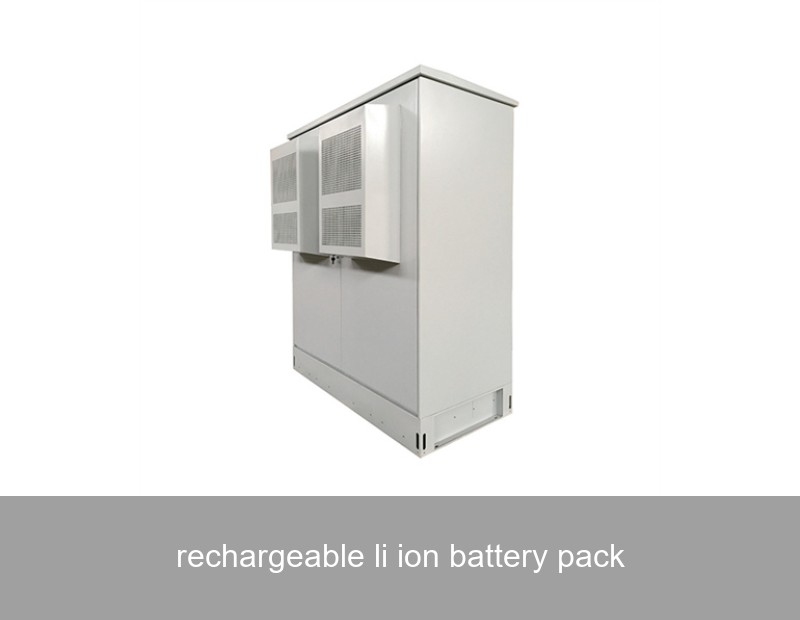
You've likely heard the buzz about energy storage, but have you ever stopped to think about the core technology making it all possible? At the heart of this quiet revolution lies the rechargeable li ion battery pack. More than just a simple battery, it's a sophisticated, integrated system that is fundamentally changing how we generate, store, and use electricity—from powering our homes to stabilizing national grids. For businesses and homeowners in Europe and the US facing rising energy costs and grid instability, understanding this technology is the first step toward true energy resilience. As a leader in advanced energy storage, Highjoule has been engineering intelligent rechargeable li ion battery pack solutions since 2005, turning this powerful technology into reliable, everyday power for commercial, industrial, and residential applications.
Table of Contents
- Beyond the Cell: What Makes a Modern Battery Pack?
- The Grid Under Pressure: Why We Need Smarter Storage Now
- A Real-World Case: Peak Shaving for a German Manufacturing Plant
- Choosing the Right Pack: Key Considerations for Your Project
- Highjoule's Approach: Engineered for Intelligence and Longevity
- The Future is Modular and Adaptive
Beyond the Cell: What Makes a Modern Battery Pack?
It's a common misconception: a rechargeable li ion battery pack is just a collection of cells, like the ones in your laptop. In reality, it's a complex, engineered system. Think of it as the difference between a single muscle fiber and a complete, coordinated musculoskeletal system. The lithium-ion cells are the core, but their performance, safety, and lifespan are governed by several critical components:
- Battery Management System (BMS): The "brain" of the pack. It continuously monitors voltage, temperature, and current for each cell group, ensuring balanced charging, preventing dangerous conditions, and maximizing cycle life.
- Thermal Management: Lithium-ion cells perform best within a specific temperature range. Advanced packs use liquid cooling or precision air systems to maintain optimal temperature, crucial for both safety and performance in extreme climates.
- Power Conversion System (PCS): This inverter/charger is the translator between the battery's direct current (DC) and your home or business's alternating current (AC). Its efficiency directly impacts how much stored energy you can actually use.
- Robust Enclosure & Safety Systems: This includes physical protection, fire suppression materials, and secure disconnects designed to meet stringent international safety standards like UL 9540 in the US and IEC 62619 in Europe.

Image Source: Unsplash - A modern battery pack is an integrated system of cells, management, and cooling.
The Grid Under Pressure: Why We Need Smarter Storage Now
The phenomenon is clear across both Europe and North America: our century-old electrical grids are struggling. The rapid integration of intermittent renewable sources like solar and wind, coupled with increasing demand from electrification and extreme weather events, creates a volatility that traditional grids weren't built for.
Let's look at the data. According to the International Energy Agency (IEA), global grid-scale battery storage capacity needs to expand by over 35% annually to meet climate goals. In the US, the Department of Energy's "Long-Duration Storage Shot" aims to reduce costs by 90% for systems that deliver 10+ hours of storage, highlighting the scale of the challenge. Meanwhile, in Europe, the REPowerEU plan explicitly identifies energy storage as a key pillar for energy security and independence.
This is where distributed, intelligent rechargeable li ion battery packs become more than just backup power. They are active grid assets. They can perform "peak shaving" (reducing draw from the grid during expensive peak times), provide frequency regulation services, and enable self-consumption of rooftop solar—turning consumers into proactive "prosumers."
A Real-World Case: Peak Shaving for a German Manufacturing Plant
Let's move from theory to a tangible example. A mid-sized automotive parts manufacturer in Bavaria, Germany, faced a significant financial pain point: exorbitant peak demand charges from their utility. These charges are based on the highest 15-minute power draw each month, and they can constitute up to 30-50% of a commercial electricity bill.
The Challenge: The plant's operations, especially its high-power stamping presses, created short, sharp spikes in energy demand, leading to punitive peak charges.
The Solution: Highjoule engineers designed and deployed a containerized, turnkey battery energy storage system (BESS) centered on high-cycle life rechargeable li ion battery packs. The system's intelligent controller was integrated with the plant's energy meter.
The Data-Driven Outcome: The system was programmed to discharge power from the battery packs precisely during those short periods of peak demand, smoothing out the plant's grid draw. The results were impressive:
- A 22% reduction in monthly peak demand charges within the first billing cycle.
- Annual electricity cost savings of approximately €85,000.
- An estimated project payback period of under 5 years.
- Additional benefit: The system now provides backup power for critical safety systems, enhancing operational resilience.
This case isn't just about savings; it's about strategic energy management. The battery packs act as a "buffer," allowing the business to operate efficiently while protecting itself from grid volatility and high costs.
Choosing the Right Pack: Key Considerations for Your Project
Not all rechargeable li ion battery packs are created equal. Selecting a system is about matching technology to your specific energy profile and goals. Here are the critical factors to evaluate:
| Factor | What It Means | Key Question to Ask |
|---|---|---|
| Chemistry | The type of lithium-ion cell (e.g., LFP, NMC). LFP (Lithium Iron Phosphate) is known for superior safety and longevity, while NMC may offer higher energy density. | Does the provider use LFP chemistry for enhanced thermal stability and cycle life? |
| Cycle Life & Warranty | The number of full charge/discharge cycles the pack is guaranteed for before significant capacity degradation (e.g., 80% of original capacity). | What is the warranted cycle life and duration (e.g., 10 years, 6,000 cycles)? |
| Depth of Discharge (DoD) | The percentage of the battery's capacity that can be safely used. A higher usable DoD means more of your stored energy is available. | What is the recommended daily Depth of Discharge for optimal lifespan? |
| Scalability & Modularity | The ability to start with a smaller system and easily add more battery modules as your needs grow. | Can I expand my storage capacity in the future without replacing the entire system? |
| Grid Services & Software | The intelligence of the system's software to automate operations for savings, backup, or even revenue generation. | Can the system software be updated to participate in new grid service programs as they emerge? |
Highjoule's Approach: Engineered for Intelligence and Longevity
At Highjoule, we view a rechargeable li ion battery pack as the foundation of a broader energy ecosystem. Our products, like the Highjoule H-Series Commercial BESS and the ResiCore Home Energy System, are built from the ground up with the principles of safety, adaptability, and intelligence.
Our packs exclusively utilize premium LFP chemistry, a conscious choice for its inherent safety and exceptional cycle life—directly addressing longevity concerns. But the real differentiator is our Adaptive Core BMS. This proprietary system doesn't just monitor; it learns and predicts. By analyzing historical usage patterns, local weather forecasts, and real-time grid conditions, it autonomously optimizes charge/discharge cycles. This isn't just about set-it-and-forget-it; it's about a system that actively maximizes your financial return and energy independence over its entire 15+ year lifespan.
For our commercial and microgrid clients, this intelligence extends to grid interaction. Highjoule systems are designed to be "grid-aware," capable of providing services like frequency response when permitted, creating a potential revenue stream while contributing to overall network stability.

Image Source: Unsplash - Integrated home energy systems with solar and storage are becoming mainstream.
The Future is Modular and Adaptive
The next evolution of the rechargeable li ion battery pack is already underway. We're moving towards even more modular, plug-and-play architectures where individual battery modules can be serviced or upgraded without taking the entire system offline. Furthermore, the integration of Artificial Intelligence for predictive maintenance and energy arbitrage will make these systems even more valuable.
The question is no longer if battery storage will become a standard part of our energy infrastructure, but how quickly and how seamlessly it will happen. The technology has proven itself. The economic case is strengthening every day. The missing piece for many is a trusted partner to navigate the transition.
Is your business or community simply reacting to the next utility bill or grid alert, or are you building a proactive, resilient, and cost-effective energy strategy for the next decade? What would a 20% reduction in your peak energy costs enable you to do?
 Inquiry
 Online Chat