


How Much is a Solar Panel? Unpacking the True Cost of Solar Energy
If you've ever found yourself asking, "How much is a solar panel?" you're not alone. It's the most common starting point for anyone considering renewable energy. However, the price tag of a single panel is just one piece of a much larger puzzle. The real question is: what is the total investment for a system that can meaningfully power your home or business, and what value does that investment deliver over time? As energy prices remain volatile and sustainability becomes a priority, understanding the full scope of solar power costs is crucial. This article will guide you through the factors that influence the price, from equipment and installation to the long-term savings and environmental benefits, helping you make an informed decision for your energy future.
Table of Contents
- Breaking Down the Cost: More Than Just a Panel
- Key Factors Influencing Your Solar Investment
- Beyond the Panels: The Critical Role of Energy Storage
- A Real-World Case Study: Solar + Storage in Action
- Highjoule's Integrated Solutions: Maximizing Your Return
- Making the Decision: Is Solar Right for You?
Breaking Down the Cost: More Than Just a Panel
Let's address the initial question directly. As of 2024, a single premium solar panel typically ranges from $250 to $400, depending on its efficiency, brand, and technology. But here's the critical insight: you cannot power a home with one panel. A typical residential system in the U.S. or Europe requires 15 to 25 panels, with commercial installations needing hundreds. Therefore, we must shift from thinking about panel price to thinking about system cost.
The total cost of a solar photovoltaic (PV) system includes:
- Hardware: Solar panels, inverters (which convert DC solar power to AC for your home), mounting racks, and wiring.
- Soft Costs: Installation labor, permits, inspections, and system design.
- Additional Components: This is where modern energy systems truly evolve. Increasingly, a battery energy storage system (BESS) is becoming a standard component, not an luxury.
According to data from the Solar Energy Industries Association (SEIA), the average cost per watt for a residential solar system in the U.S. is around $2.70-$3.50, leading to an average gross price of $20,000 to $30,000 before incentives. In Europe, prices vary by country but follow a similar range. However, these figures are only the beginning of the financial story.
Key Factors Influencing Your Solar Investment
Why is there such a range in system prices? Several variables are at play:
| Factor | Impact on Cost & Outcome |
|---|---|
| System Size & Energy Needs | Larger systems cost more upfront but generate more savings. A detailed energy audit is essential. |
| Panel Efficiency & Type | High-efficiency monocrystalline panels cost more per panel but require less roof space for the same output. |
| Inverter Technology | Micro-inverters or power optimizers (vs. string inverters) add cost but improve performance in shaded conditions and provide panel-level monitoring. |
| Roof Complexity & Location | Steep pitches, multiple angles, or difficult access can increase installation labor costs. |
| Local Incentives & Regulations | Tax credits (like the U.S. ITC), rebates, and net metering policies can reduce net cost by 30-50%. |
It's clear that the question "how much is a solar panel?" transforms into "what is the optimal system for my specific situation?" This is where partnering with an experienced provider makes all the difference.
Beyond the Panels: The Critical Role of Energy Storage
Imagine this: your solar panels produce a surplus of energy at midday when you're at work. Without storage, this excess is fed back to the grid, often at a lower rate than what you pay to buy power back in the evening. This is the solar dilemma. The true modern solution pairs generation with storage.
Integrating a battery system allows you to:
- Maximize Self-Consumption: Store your excess solar energy for use at night, dramatically increasing your energy independence.
- Provide Backup Power: Keep essential loads running during grid outages—a feature whose value is immeasurable during severe weather events.
- Improve Grid Stability: For commercial applications, storage can participate in demand charge reduction and grid services.
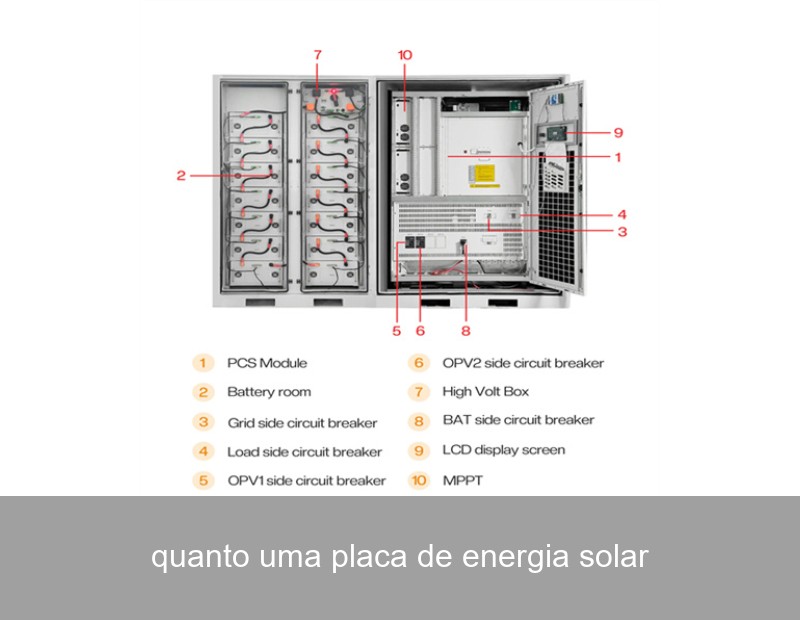
This is the core of Highjoule's expertise. While the solar panels capture the energy, it's the intelligent storage system that unlocks its full potential. Highjoule's H-Series Commercial & Industrial (C&I) and H-Residential battery systems are designed to seamlessly integrate with new or existing solar arrays. Our systems use advanced lithium iron phosphate (LFP) battery chemistry, known for its safety, longevity, and performance, managed by proprietary software that optimizes energy flow based on your usage patterns and electricity rates.

Image Source: Unsplash (Representative image of a home with solar and storage)
A Real-World Case Study: Solar + Storage in Action
Let's move from theory to practice with a concrete example. Consider a medium-sized winery in Northern California, a region with high electricity costs and a growing risk of public safety power shutoffs (PSPS) due to wildfire risk.
The Challenge: The winery faced monthly demand charges exceeding $4,000, volatile time-of-use rates, and needed reliable backup for critical refrigeration and processing equipment.
The Solution: In 2023, they installed a 250 kW solar PV system coupled with a Highjoule H-500 C&I储能系统 with a capacity of 500 kWh. The system was designed to perform peak shaving—discharging the battery during periods of highest grid demand to avoid costly demand charges—and provide full facility backup for up to 8 hours.
The Results (Data after 12 months):
- Energy Cost Reduction: Overall electricity costs slashed by 68%.
- Demand Charge Savings: Monthly demand charges reduced by an average of 92%.
- ROI Timeline: Projected return on investment achieved in under 5 years, factoring in available incentives.
- Resilience: Successfully rode through three multi-day grid outages, preventing spoilage of inventory worth tens of thousands of dollars.
This case, documented in part with data from the California Public Utilities Commission self-generation incentive program, illustrates that the value of "solar" is now intrinsically linked with intelligent storage. The initial investment is higher, but the financial and operational returns are transformative.
Highjoule's Integrated Solutions: Maximizing Your Return
Founded in 2005, Highjoule has evolved from a component supplier to a global provider of complete, smart energy solutions. We understand that the cost of a solar panel is just the entry point. Our approach is to design systems that deliver the highest lifetime value.
For residential clients across Europe and the U.S., our H-Residential All-in-One ESS offers a compact, scalable, and simple-to-install solution. It comes with user-friendly monitoring software that allows homeowners to track production, consumption, and storage in real-time, and even set preferences for backup priority or cost-saving modes.
For our commercial and industrial partners, Highjoule provides customized microgrid and large-scale BESS solutions. These systems not only provide backup power and demand charge management but can also be configured to participate in utility virtual power plant (VPP) programs, creating an additional revenue stream. Our energy management system (EMS) acts as the brain, making autonomous decisions to optimize for economics or resilience based on the owner's goals.

Image Source: Unsplash (Representative image of energy system monitoring)
Making the Decision: Is Solar Right for You?
So, how much is a solar panel? We now know it's the wrong question. The right questions are: What is my energy consumption profile? What are my goals—pure savings, backup power, sustainability, or all three? What incentives are available in my region? What is the total cost of a system that meets those goals, and what is its 25-year value?
The journey begins with a professional assessment. Reputable providers will analyze your past utility bills, evaluate your site, and model different system configurations (with and without storage) to show you a clear financial picture. Remember to consult authoritative, unbiased resources like the U.S. Department of Energy's guide to solar during your research.
As you contemplate this significant step towards energy independence, we leave you with this: In an era of increasing climate uncertainty and energy price fluctuations, what is the cost of *not* taking control of your power?
 Inquiry
 Online Chat