


How Many Solar Panels Do You Need to Generate 300 kWh? A Practical Guide
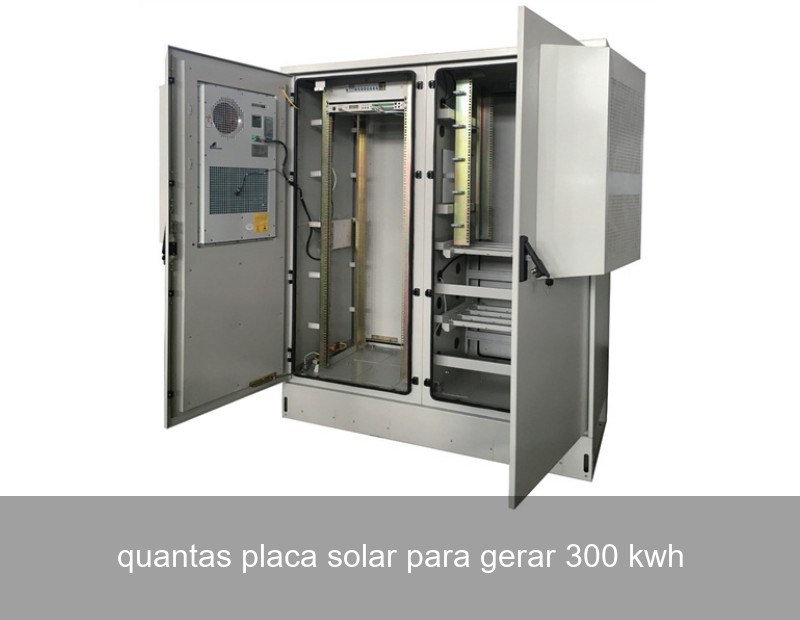
So, you're looking to harness the sun's power and have a specific goal in mind: generating 300 kilowatt-hours (kWh) of solar energy. Whether you're a homeowner aiming for energy independence, a business manager targeting cost reduction, or a project developer planning a clean energy installation, this is a smart and impactful target. But the immediate question is: quantas placa solar para gerar 300 kwh? How many solar panels are actually required? The answer isn't a single number, but a fascinating equation that blends technology, geography, and smart design. In this guide, we'll demystify the calculations, explore the key factors at play, and show you how modern energy storage systems, like those from Highjoule, can transform that solar generation into reliable, round-the-clock power.
Table of Contents
The Core Question: It's More Than Just a Number
Let's address the heart of the matter directly. To find out how many solar panels you need to generate 300 kWh, we must first understand over what period. The most common benchmark is daily generation. Therefore, our target becomes: How many panels to generate 300 kWh per day?
The basic formula involves three primary variables:
- Daily Energy Goal: 300 kWh
- Panel Wattage: The power rating of an individual panel (e.g., 400W, 550W).
- Peak Sun Hours: The equivalent number of hours per day when sunlight intensity averages 1000W/m² (this varies massively by location).
The Simplified Calculation: Number of Panels = Daily Energy Goal (kWh) / (Panel Power (kW) × Peak Sun Hours)
Running the Numbers with Examples
Let's assume we're using high-efficiency 550W (0.55 kW) panels, which are common in commercial and premium residential installations today.
| Location (Approx. Peak Sun Hours) | Calculation for 300 kWh/day | Estimated Number of 550W Panels |
|---|---|---|
| Southern Europe (e.g., Spain, 5 hours) | 300 / (0.55 × 5) = 300 / 2.75 | ~109 panels |
| Northern Europe (e.g., Germany, 3 hours) | 300 / (0.55 × 3) = 300 / 1.65 | ~182 panels |
| Sunny US Region (e.g., California, 5.5 hours) | 300 / (0.55 × 5.5) = 300 / 3.025 | ~99 panels |
As you can see, the geographic phenomenon of available sunlight creates a dramatic difference—nearly double the panels are needed in a less sunny climate for the same output. This is why a site-specific assessment is non-negotiable.

Image Source: Unsplash - A typical commercial-scale solar installation.
Key Factors That Determine Your Solar Panel Count
Beyond the basic math, several technical and environmental factors fine-tune the final number. Ignoring these can lead to an underperforming system.
- System Losses (The "Reality Check"): No system is 100% efficient. We must account for:
- Inverter efficiency (typically 96-98%)
- DC/AC wiring losses (1-3%)
- Soiling (dirt, dust on panels: 2-5%)
- Temperature-induced losses (panels lose efficiency as they heat up)
- Panel Orientation and Tilt: South-facing (in the Northern Hemisphere) panels at an optimal angle maximize yield. East/West splits can flatten the production curve but may require slightly more capacity.
- Seasonal Variation: Your 300 kWh/day average might be 450 kWh in July and 150 kWh in December. Do you size for annual average, summer surplus, or winter deficit? This is where data meets strategy.
A Real-World Case Study: From Theory to Practice
Let's look at a concrete case from the target market. A medium-sized dairy processing plant in Bavaria, Germany, wanted to offset its base load consumption with solar, targeting an average of 300 kWh per day of self-consumption.
Challenge: Limited rooftop space and significant energy usage in the early morning and evening (outside peak sun hours).
Solution & Data:
- They installed 195 bifacial 545W panels (total ~106 kWp).
- Location: ~3.2 average daily peak sun hours.
- Theoretical Daily Yield: 106 kWp * 3.2 h = ~339 kWh.
- Actual Monitored Average (with losses): ~295 kWh/day annually.
This real data shows how the theoretical calculation closely aligns with reality when properly engineered. However, the plant's managers noticed a problem: over 60% of this solar energy was being exported to the grid during midday (receiving a low feed-in tariff) while they still bought expensive grid power at night. Simply generating 300 kWh wasn't enough; they needed to control it.
Beyond Generation: The Critical Role of Energy Storage
This brings us to the pivotal insight: In today's energy landscape, the question isn't just "how many panels to generate 300 kWh?" but "how can I best utilize every kilowatt-hour I generate?" This is the essence of modern energy resilience and economics.
An integrated Battery Energy Storage System (BESS) allows you to:
- Maximize Self-Consumption: Store excess midday solar for use in the evening, dramatically reducing grid purchases.
- Provide Backup Power: Maintain critical operations during grid outages.
- Participate in Grid Services: In some markets, you can earn revenue by providing frequency regulation.
Sizing a battery system for our 300 kWh/day scenario involves analyzing your load profile. You might need a battery with 40-60 kWh of usable capacity to shift a significant portion of your solar energy, not 300 kWh—because the storage cycles daily.

Image Source: Unsplash - A modular battery storage installation.
Highjoule Solutions: Integrating Intelligence with Storage
This is where Highjoule, as a global leader in advanced energy storage systems since 2005, provides transformative solutions. We don't just sell batteries; we provide intelligent, integrated power ecosystems.
For a project targeting 300 kWh of daily solar generation, Highjoule's HPS Series (Hybrid Power System) would be an ideal core. It's a modular, containerized solution that combines:
- High-density, liquid-cooled lithium-ion battery racks.
- Integrated bi-directional inverters with high round-trip efficiency.
- Advanced Energy Management System (EMS) software – the true brain of the operation.
Our EMS uses AI-driven forecasting to optimize the charge/discharge cycles of your battery. It knows when your 300 kWh of solar is coming, understands your facility's load patterns, and can even factor in weather forecasts and electricity price signals. This ensures every kilowatt-hour you generate with those solar panels is used in the most financially and operationally optimal way.
For commercial and industrial applications, like the dairy plant in our case study, retrofitting a Highjoule HPS system solved their energy shifting challenge. They now consume over 85% of their solar generation on-site, reducing their grid dependence by 70% during peak tariff periods. The system paid for itself in under 5 years through savings alone.
For residential and microgrid applications, our HES (Home Energy System) offers similar intelligence at a smaller scale, allowing homeowners to achieve true energy independence. The U.S. Department of Energy outlines the benefits of pairing solar with storage.
The Highjoule Advantage
- Safety & Longevity: Our proprietary thermal management and cell-balancing technology extend battery life and ensure safe operation under all conditions.
- Scalability: Start with what you need and add capacity as your energy demands grow.
- Global Support: With a presence in Europe and North America, we provide local service and expertise.
Your Solar Journey: Next Steps
So, back to your original question: quantas placa solar para gerar 300 kwh? You now know it's a starting point, not the finish line. The journey involves precise site analysis, understanding your consumption patterns, and making a strategic decision about energy storage to unlock the full value of your solar investment.
Are you ready to move beyond just counting panels and start designing a resilient, cost-saving energy system tailored precisely to your daily 300 kWh goal? What would being able to store and use 80% more of your solar energy do for your operational costs or home energy bills this year?
 Inquiry
 Online Chat