


What Does Solar Energy Do? Powering a Sustainable Future
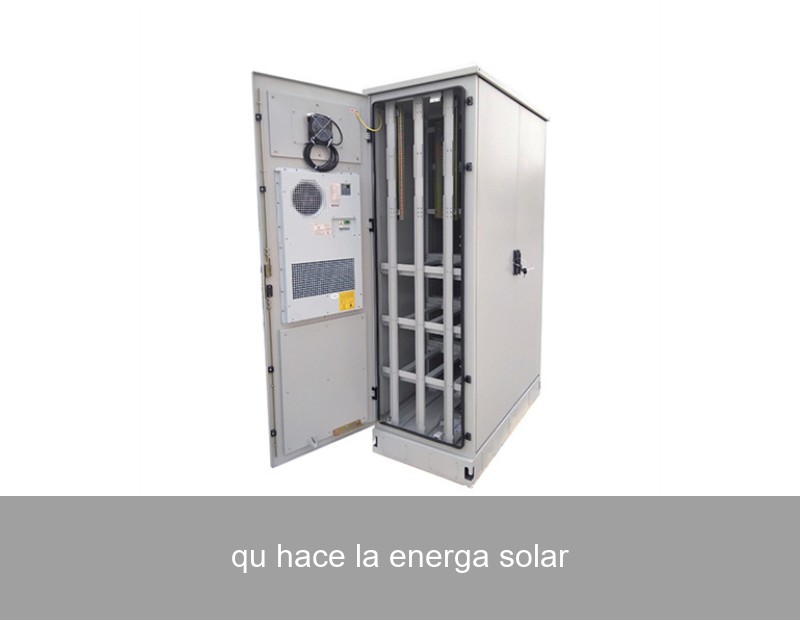
Have you ever looked at your electricity bill on a sunny day and wondered, "What if I could use all that free sunshine instead?" You're not alone. Across Europe and the US, homes and businesses are asking a fundamental question: qué hace la energía solar—what does solar energy actually *do*? Beyond the familiar panels on rooftops, solar energy is undergoing a transformative shift. It's no longer just about generating clean electricity; it's about intelligently managing, storing, and deploying that power to create resilient, independent, and cost-effective energy systems. This is where the true potential of the sun is unlocked.
Table of Contents
- The Phenomenon: From Simple Generation to Intelligent Energy Management
- The Data: Why Storage is the Missing Piece of the Solar Puzzle
- A Real-World Case: Solar + Storage in Action in California
- The Expert Insight: Maximizing What Solar Energy Can Do
- Highjoule's Role: Advanced Systems for Intelligent Solar Power
- The Future of Solar: What's Next for Your Energy Independence?
The Phenomenon: From Simple Generation to Intelligent Energy Management
Traditionally, the answer to "what does solar energy do?" was straightforward: photovoltaic (PV) panels convert sunlight into direct current (DC) electricity, an inverter changes it to alternating current (AC), and it powers your home or feeds back into the grid. This is a fantastic first step. However, it leaves a critical challenge unaddressed: the sun doesn't shine on demand. Energy production peaks at midday, while demand often peaks in the early evening. Without a way to capture the surplus, this clean energy is often exported to the grid at low value, leaving you reliant on the grid (and its prices) when the sun sets.
This mismatch is the single biggest limitation of a solar-only setup. The modern, complete answer to what solar energy can do involves a seamless integration with advanced battery energy storage systems (BESS). Think of it this way: solar panels are the source—the "paycheck." A battery storage system is the savings account, allowing you to bank that energy for when you really need it, ensuring your solar power works for you 24/7.
Image Source: Unsplash - A modern home utilizing solar energy.
The Data: Why Storage is the Missing Piece of the Solar Puzzle
The numbers make a compelling case for pairing solar with storage. Let's look at the dynamics:
| Scenario | Solar Only (Typical) | Solar + Storage (Optimized) |
|---|---|---|
| Self-Consumption | 30-50% of solar energy used directly on-site. | 60-90% or more of solar energy used on-site. |
| Grid Dependence at Peak | High reliance during evening peak, purchasing expensive grid power. | Minimal to zero reliance; powered by stored solar energy. |
| Impact During Grid Outage | System shuts off (unless special islanding hardware exists). | Seamless backup power for critical loads or whole home. |
| Financial ROI | Reliant on net metering policies, which are changing in many regions (SEIA, Net Metering). | Enhanced by avoiding peak charges, providing backup value, and future-proofing against rate changes. |
As feed-in tariffs decline and time-of-use rates become standard, the economic rationale for storing your solar energy, rather than selling it cheaply, becomes undeniable. This is especially true in markets like California, Germany, and parts of the US Northeast with high electricity costs and progressive energy policies.
A Real-World Case: Solar + Storage in Action in California
Let's move beyond theory. Consider a mid-sized commercial warehouse in Fresno, California. The facility installed a 250 kW solar array, significantly cutting daytime energy costs. However, they were still hit with high "demand charges"—fees based on their highest 15-minute power draw from the grid each month—often occurring in the late afternoon when solar production waned but operations continued.
Their solution? Integrating a 300 kWh / 150 kW battery storage system. Here’s what solar energy *did* for them after this integration:
- Demand Charge Reduction: The system is programmed to discharge the stored solar energy during predictable peak windows. This shaved their peak grid draw by over 40%, translating to monthly savings of thousands of dollars on demand charges alone.
- Backup Resilience: During planned Public Safety Power Shutoffs (PSPS) due to wildfire risk, the facility maintained critical refrigeration and lighting for 8+ hours, preventing inventory loss.
- Increased Self-Consumption: They now consume over 85% of the solar energy they produce on-site, maximizing their investment in the PV panels.
This tangible example shows that qué hace la energía solar evolves from simple cost reduction to active financial management and operational resilience. The solar generation is the fuel, but the intelligent storage system is the strategic brain that decides when and how to use it for maximum benefit.
The Expert Insight: Maximizing What Solar Energy Can Do
As a product technology expert at Highjoule, I see the key to unlocking solar's full potential lying in system intelligence and integration. It's not just about having a battery; it's about having a system that can:
- Predict and Optimize: Use weather forecasts and load history to pre-charge batteries before a cloudy day or a predicted grid event.
- Prioritize and Protect: Automatically manage energy flow to ensure your most critical circuits (medical equipment, servers, refrigeration) stay online longest during an outage.
- Adapt to Markets: In regions with dynamic pricing, automatically dispatch stored energy when grid prices are highest, creating an additional revenue stream or savings.
This level of sophistication requires robust power conversion systems (PCS), sophisticated energy management software (EMS), and batteries engineered for daily cycling and long-term reliability. It's the difference between a basic energy accessory and a true smart energy asset.

Image Source: Unsplash - Engineer monitoring a commercial battery storage system.
Highjoule's Role: Advanced Systems for Intelligent Solar Power
At Highjoule, we've been at the forefront of this evolution since 2005. We understand that the question "what does solar energy do?" has a different answer for every customer. That's why we design our integrated storage solutions to be the perfect partner for solar installations, transforming them into comprehensive energy platforms.
Our H-Stack commercial and industrial battery systems are built with this intelligent integration in mind. They feature:
- High-Density, LFP Battery Technology: Safe, long-lasting chemistry perfect for daily solar cycling.
- Advanced Hybrid Inverters: Seamlessly manage energy flow between solar, battery, grid, and loads.
- AI-Powered Energy Management System (EMS): The brain of the operation, optimizing for self-consumption, cost savings, and backup readiness based on real-time data and forecasts.
For residential and smaller commercial applications, our HomePower and BusinessPower series bring this same intelligence to a compact, scalable format. Whether it's a family looking for energy security in Texas or a small business in Spain wanting to lock in energy costs, our systems are designed to ensure that every kilowatt-hour of solar energy produced is used as effectively as possible.
Our services extend beyond hardware. We provide comprehensive energy audits, system design, and ongoing performance monitoring, ensuring our clients' solar-plus-storage systems deliver on their promise for decades.
The Future of Solar: What's Next for Your Energy Independence?
The journey of solar energy is one of increasing intelligence and autonomy. We're moving towards ecosystems where solar, storage, electric vehicle charging, and smart home devices all communicate, creating a self-optimizing microgrid for your property. The question is no longer just "what does solar energy do?" but rather, "what do I want my energy system to do for me?"
Is it to achieve near-total energy independence? To create a resilient community hub during climate-related outages? To future-proof your business against volatile energy markets? The technology to achieve these goals exists today.
What is the first step you would take to ensure your solar investment works harder for you, day and night?
 Inquiry
 Online Chat