


Unlocking Energy Independence: Your Guide to the Right Program for Solar Panels
So, you're thinking about solar panels. That's fantastic! You've likely seen them gleaming on rooftops in your neighborhood and heard about the benefits: lower bills, a smaller carbon footprint, and energy independence. But where do you actually start? The journey begins with understanding the available program for solar panels. This isn't just about buying hardware; it's about choosing a comprehensive energy strategy that includes financing, installation, and—most critically—how you'll manage and store that precious solar power. Let's demystify the process.
The Data Behind the Boom: Why Solar Programs Are in High Demand
The shift to solar isn't just a trend; it's a fundamental transformation of our energy landscape. The numbers tell a compelling story. In the United States, the solar industry is expected to install nearly 500 gigawatts (GW) of capacity over the next decade, enough to power millions of homes. Similarly, Europe continues its strong push, with solar PV generation seeing record growth year after year. What's driving this? A combination of supportive government policies, decreasing technology costs, and a growing public desire for clean, self-generated power.
But here's the phenomenon many new solar adopters encounter: your panels produce the most energy in the middle of the day when you might not be home. Without a way to capture that surplus, it's fed back to the grid, often for a modest credit. Then, in the evening when demand peaks, you draw expensive power back. This mismatch is the key challenge a modern solar panel program must solve.
Image Source: Unsplash - A modern home solar installation.
From Sun to Socket: The Storage Imperative
This is where the conversation evolves from a simple solar installation to a complete energy management program. Think of your solar panels as a fantastic rain catchment system. A battery storage system is the water tank that lets you use that resource on your terms, day or night. Adding storage transforms a one-way solar setup into a personal, resilient microgrid.
Consider these benefits of a solar-plus-storage program:
- Maximized Self-Consumption: Use 70-80% or more of the solar energy you produce, drastically reducing grid dependence.
- Backup Power: Keep your lights on during grid outages, a feature becoming increasingly valuable.
- Energy Bill Optimization: Avoid drawing power during expensive peak-rate hours by using your stored energy.
- Grid Support: Advanced systems can even provide services to stabilize the community grid.
Highjoule: Your Intelligent Energy Partner in a Comprehensive Solar Program
This is precisely the gap that Highjoule, a global leader in advanced energy storage since 2005, was founded to address. We don't just sell batteries; we provide intelligent, integrated storage systems that are the core of a high-performance program for solar panels. Our solutions are designed to seamlessly connect with your new or existing solar array, creating a unified and smart energy ecosystem.
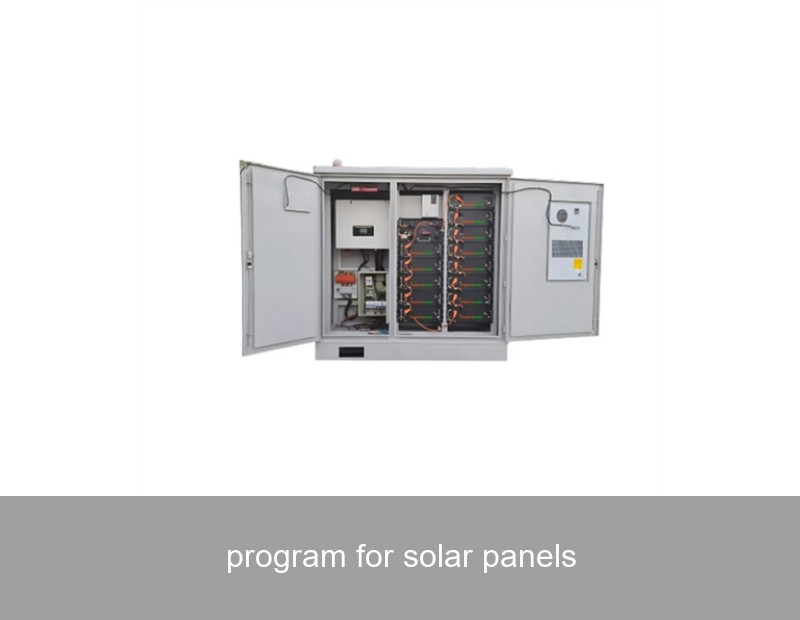
For homeowners, our Residential Energy Hub is more than a battery. It's an all-in-one unit that combines a high-efficiency inverter, scalable lithium-iron-phosphate (LFP) battery modules, and intelligent energy management software. It learns your household's patterns and automatically optimizes when to store solar energy, power your home, or even sell back to the grid at the most advantageous times.
For businesses and industrial applications, Highjoule's Commercial & Industrial (C&I) Storage Systems offer scalable, robust solutions that manage demand charges, provide uninterrupted power for critical operations, and enable participation in grid service programs. Our Microgrid Controllers can orchestrate solar, storage, and backup generators into a reliable, independent power source for campuses, communities, or remote facilities.
Case Study: Powering a California Community Through the Night
Let's look at a real-world example from California, USA. A mid-sized winery in Napa Valley faced two major challenges: extremely high demand charges from their utility and the risk of wine spoilage during frequent Public Safety Power Shutoffs (PSPS) due to wildfire risk.
Their previous solar panel program was underperforming because over 60% of their solar generation was being exported to the grid in the afternoon, while they faced crippling peak charges in the early evening during processing hours.
The Solution & Data: Highjoule implemented a 250 kWh battery storage system integrated with their existing 150 kW solar array. The system was programmed for peak shaving and backup power.
| Metric | Before Highjoule System | After Highjoule System |
|---|---|---|
| Monthly Demand Charge Savings | Baseline | 92% reduction |
| Solar Self-Consumption | ~35% | ~89% |
| Backup Power During Outages | None (Generator only) | Critical loads supported for 10+ hours |
| Simple Payback Period | N/A | 4.2 years |
The system paid for itself in just over four years through demand charge savings alone, not counting the value of avoided spoilage and operational continuity. This case perfectly illustrates how the right storage-integrated program turns solar from a simple bill reducer into a strategic business asset. You can read more about the importance of storage for grid resilience from the National Renewable Energy Laboratory (NREL).

Image Source: Unsplash - A commercial-scale battery storage system.
Choosing the Right Program for Your Needs
With the "why" of storage clear, how do you choose the right program for solar panels? Here’s a practical checklist:
- Look for Integration, Not Just Installation: Ensure your provider offers a single point of responsibility for both solar and storage system design, compatibility, and software.
- Prioritize Safety and Chemistry: Ask about battery chemistry. Highjoule uses stable, long-life LFP chemistry, which is renowned for its safety and durability compared to other types.
- Demand Smart Software: The hardware stores energy, but the intelligence manages it. Your system should have software that can adapt to time-of-use rates, weather forecasts, and your usage patterns.
- Understand Financing and Incentives: A good provider will guide you through available incentives, like the U.S. Residential Clean Energy Credit or similar European grants, which can significantly offset the cost of a solar-plus-storage program.
- Plan for the Future: Can the system be easily expanded if your energy needs grow? Highjoule's modular designs are built with this scalability in mind.
The Future is Managed, Not Just Generated
The most forward-thinking solar panel programs today are those that view the home or business as an active node in the energy network. With technologies like Highjoule's systems, you're not just a consumer—you're a "prosumer," intelligently producing, storing, and managing energy. This shift is crucial for building the resilient, decentralized, and clean grid of the future, a topic explored by leading research bodies like the International Energy Agency (IEA).
So, as you explore your solar options, we leave you with this question: Is your goal simply to install solar panels, or is it to truly achieve energy independence and maximize the value of every sunbeam that hits your roof? The answer will define the program you choose.
 Inquiry
 Online Chat