


Navigating the Power Landscape: Beyond the Price of a 10kVA Generator in Nigeria
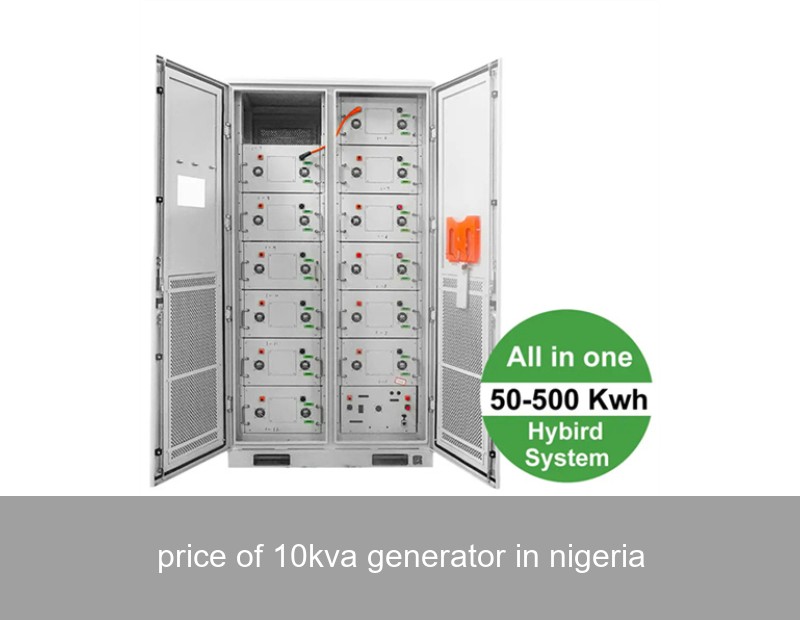
When businesses and communities in Nigeria face unreliable grid power, the immediate solution often involves asking: "What is the price of a 10kVA generator in Nigeria?" This is a logical first question. However, focusing solely on the upfront diesel generator cost can lead to a much more expensive long-term journey. For our European and American readers, this scenario offers critical insights into resilient power solutions that apply globally. This article explores why the total cost of ownership, operational headaches, and environmental impact are shifting the focus from traditional generators to advanced, sustainable battery energy storage systems (BESS).
Table of Contents
- The True Cost: More Than a Price Tag
- Data vs. Diesel: The Operational Reality
- Case Study: A Lagos Business's Pivot to Resilience
- The Modern Solution: Solar-Integrated Battery Storage
- Highjoule's Role in Reliable, Clean Power Transition
- Your Power, Your Future: A Call for Informed Decisions
The True Cost: More Than a Price Tag
The initial price of a 10kVA diesel generator in Nigeria can range from ₦1.5 million to ₦3 million+ (approx. $1,000-$2,000 USD), depending on brand and quality. But this is merely the entry fee. The real financial burden unfolds over time through a relentless cycle of fuel, maintenance, and repairs. Think of it like buying a car: the sticker price is one thing, but the constant need for petrol, oil changes, and part replacements is where the true expense lies. For a business, this translates to unpredictable operational costs that directly eat into profitability.
Furthermore, generators create noise pollution, emit harmful fumes, and contribute significantly to carbon emissions. In an era where corporate sustainability and environmental, social, and governance (ESG) goals are paramount for global companies—including those operating in Europe, the US, and Africa—relying on diesel is increasingly seen as a reputational and regulatory risk.
Data vs. Diesel: The Operational Reality
Let's break down the numbers. A 10kVA diesel generator running 12 hours a day can consume roughly 3-4 liters of fuel per hour. With fluctuating diesel prices, the daily fuel cost alone is substantial. Over a year, fuel expenses can easily surpass the generator's initial purchase price two or three times over.
| Cost Component | Diesel Generator (Estimated Annual) | Solar + Battery Storage (Estimated Annual) |
|---|---|---|
| Fuel | ₦2.5M - ₦4M+ ($1,600-$2,600 USD) | ₦0 (Sun is free) |
| Routine Maintenance & Parts | ₦300,000 - ₦500,000 ($200-$330 USD) | ₦50,000 - ₦100,000 ($30-$65 USD) |
| Noise & Air Pollution | High | None |
| Carbon Footprint | High (~10 tons CO2/year*) | Minimal to Zero |
*Estimate based on EPA emissions calculations.
The operational disruption is another hidden cost. Generator breakdowns during critical operations can lead to lost revenue, data corruption, and stalled productivity. This vulnerability is what forward-thinking businesses are now aiming to eliminate.

Credit: Photo by American Public Power Association on Unsplash - A modern commercial solar and storage installation.
Case Study: A Lagos Business's Pivot to Resilience
Consider a real-world example: a medium-sized Lagos-based food processing company. They relied on two 10kVA diesel generators, alternating 24/7 to power refrigeration and production lines. Their annual spend on diesel and maintenance exceeded ₦7 million (approx. $4,500 USD), not counting downtime during repairs.
In 2023, they decided to transition. They installed a 15kW solar PV array coupled with a 30kWh lithium-ion battery storage system. The system was designed to power their critical loads seamlessly, with the generator now only as a rare backup. The results after one year:
- Fuel Savings: ₦6.2 million (~$4,000 USD) saved.
- ROI: Projected payback period of 4-5 years on the capital investment.
- Uptime: 99.9% power availability for sensitive cold storage.
- Noise & Fumes: Eliminated, improving working conditions and community relations.
This case mirrors a global trend where businesses are investing in energy independence, not just backup power. The calculus moves from "cost" to "value."
The Modern Solution: Solar-Integrated Battery Storage
This is where the conversation evolves from the price of a 10kVA generator in Nigeria to the value of a smart, integrated energy system. Battery Energy Storage Systems (BESS) charged by solar photovoltaic (PV) panels offer a transformative alternative.
How does it work? Solar panels capture sunlight during the day, converting it to electricity. Excess energy not used immediately charges the high-capacity battery system. When the sun sets or the grid fails, the stored energy silently powers the facility. For locations with less sun, BESS can also be charged during off-peak grid hours when electricity is cheaper, providing cost savings—a strategy applicable in Europe and the US.
The benefits are clear:
- Zero Fuel Cost: Sunlight is free and abundant.
- Low Maintenance: Lithium-ion batteries require minimal upkeep.
- Silent & Clean Operation: Ideal for urban and residential areas.
- Energy Arbitrage: Store cheap energy, use it during expensive peak times.
- Grid Support: Advanced systems can provide grid services, potentially creating revenue.
Highjoule's Role in Reliable, Clean Power Transition
As a global leader founded in 2005, Highjoule specializes in precisely these smart, efficient, and sustainable power solutions. We understand that the need for reliable power in Nigeria, a resilient microgrid in the US, or a commercial solar-plus-storage system in Europe shares a common thread: the need for intelligent control and robust hardware.
For the Nigerian market and beyond, Highjoule's H-IQ Energy Management System is a game-changer. It acts as the brain of a hybrid power setup, intelligently orchestrating between solar PV, battery storage, the grid, and yes, even an existing generator, to ensure optimal efficiency and uptime. Our H-Cube containerized BESS solutions offer scalable, plug-and-play power for industrial and microgrid applications, providing a cleaner, quieter alternative to diesel farms.
Our residential and commercial H-PowerStack battery systems are designed for seamless integration with solar inverters, offering homeowners and businesses true energy independence. By focusing on system intelligence and durability, Highjoule helps customers move beyond the cycle of fuel dependency, turning a recurring cost center into a stable, predictable, and clean asset.

Credit: Photo by Science in HD on Unsplash - A technician inspecting a modern battery storage system.
Your Power, Your Future: A Call for Informed Decisions
The initial question about generator price is a starting point, but the more profound question is: What is the true cost of your power reliability over the next decade? The global energy landscape is shifting towards decentralization and decarbonization. Technologies like battery storage, supported by companies with deep expertise like Highjoule, are at the forefront.
We encourage you to look at the total cost of ownership. What could your business save, not just in fuel, but in operational risk and carbon liabilities? How could silent, clean power improve your community standing or corporate sustainability profile?
Is your organization ready to calculate your own energy transition ROI and explore how intelligent storage can future-proof your operations against both power outages and volatile fuel prices?
 Inquiry
 Online Chat