


Power Your Home: How Much Energy Do You Really Need?
Have you ever stared at your electricity bill, wondering exactly how much power your home consumes and, more importantly, how much you could save or even generate yourself? You're not alone. As energy prices remain volatile and climate consciousness grows, homeowners across Europe and the US are asking this fundamental question. The answer isn't a single number; it's the first step towards energy independence. Understanding your home's unique energy profile is key to making informed decisions about solar panels, battery storage, and ultimately taking control of your power. This guide will break down the "how much" and explore how modern solutions can transform your relationship with energy.
Table of Contents
The Phenomenon: Rising Bills & Energy Anxiety
Let's face it: opening the monthly utility bill can feel like a gamble. In Europe, the energy crisis exacerbated by geopolitical events caused household electricity prices to soar, with some countries seeing increases of over 50% in a single year. In the US, while prices are more stable regionally, extreme weather events from heatwaves to cold snaps strain the grid and lead to peak pricing. This volatility creates "energy anxiety" – a feeling of helplessness about costs and supply reliability. The dream isn't just lower bills; it's predictability and resilience. This is where the question shifts from "how much does it cost?" to "how much power does my home need, and can I produce it myself?"
The Data: What Does an Average Home Consume?
To understand how much you need, let's look at benchmarks. Consumption varies wildly based on location, home size, appliances, and habits.
| Region | Average Annual Household Consumption | Key Drivers |
|---|---|---|
| United States | ~10,500 kWh | Space heating/cooling (HVAC), water heating, larger homes. |
| Germany | ~3,500 kWh | Energy-efficient appliances, smaller average home size, less reliance on electric heating. |
| United Kingdom | ~3,800 kWh | Similar to Germany, with weather being a significant factor for heating. |
But averages are just a starting point. Your true "how much" is determined by a detailed audit. For instance, running an air conditioner (3.5 kW) for 4 hours a day adds ~14 kWh to your daily use. An electric vehicle charger can add 10-30 kWh per charge. The goal is to move from national averages to your personal energy fingerprint.

Image: A modern energy-independent home. Source: Unsplash
The Case Study: A German Family's Journey to 80% Self-Sufficiency
Let's make this real with data from the field. The Schmidt family (name changed for privacy) lives in a 180 sqm detached home near Munich. In 2021, their annual consumption was 5,200 kWh, and their annual bill was approximately €1,800. Facing rising tariffs, they partnered with a Highjoule-certified installer to find a solution.
The Problem: High grid dependency, no solar, vulnerability to price hikes.
The Goal: Maximize self-consumption of solar energy, reduce grid draw, ensure backup power.
The Highjoule Solution: A 8.2 kWp rooftop solar array paired with a Highjoule HOMe-10 battery storage system (10 kWh usable capacity). The system's brain, Highjoule's EnergyOS™ platform, intelligently manages when to store solar energy, when to power the home, and when to draw from the grid.
- Total Solar Generation: 7,850 kWh
- Self-Consumption Rate: 78% (they used 6,123 kWh of their own solar power directly)
- Grid Import Reduction: 82%
- Estimated Annual Savings: €1,450
- Backup Power: Essential circuits remain powered for up to 24 hours during an outage.
The Schmidts now answer "how much power does your home need?" with confidence: "Most of it comes from our roof, and our battery handles the nights." Their system paid for itself in under 7 years, and they've insulated themselves from future price spikes.
The Solution: Sizing Your System for Your Life
So, how do you translate the Schmidt's success to your home? Sizing a solar-plus-storage system isn't one-size-fits-all. It's a three-step process:
- Audit & Analyze: Review 12 months of utility bills to find your baseline. Identify high-load appliances (EV, heat pump, pool pump).
- Define Your Goals: Do you want to slash bills, achieve backup power, or go fully off-grid? Each goal requires a different system size. For most, a 70-90% self-sufficiency target is the most cost-effective.
- Future-Proof: Are you planning an EV or a heat pump? Your future "how much" will grow. A scalable system is crucial.
A common rule of thumb is that a solar array should be sized to cover 80-100% of your annual consumption, while the battery is sized to cover your evening and nighttime load. For a US home using 30 kWh per day, a 10-15 kW solar system paired with a 15-20 kWh battery might be ideal. For a European home using 15 kWh daily, a 6-9 kW solar system with a 8-12 kWh battery could be perfect.
How Highjoule's Smart Systems Provide the Answer
This is where expertise and technology converge. At Highjoule, we don't just sell batteries; we provide intelligent energy ecosystems. Our systems are designed to answer the "how much" question dynamically, every minute of every day.
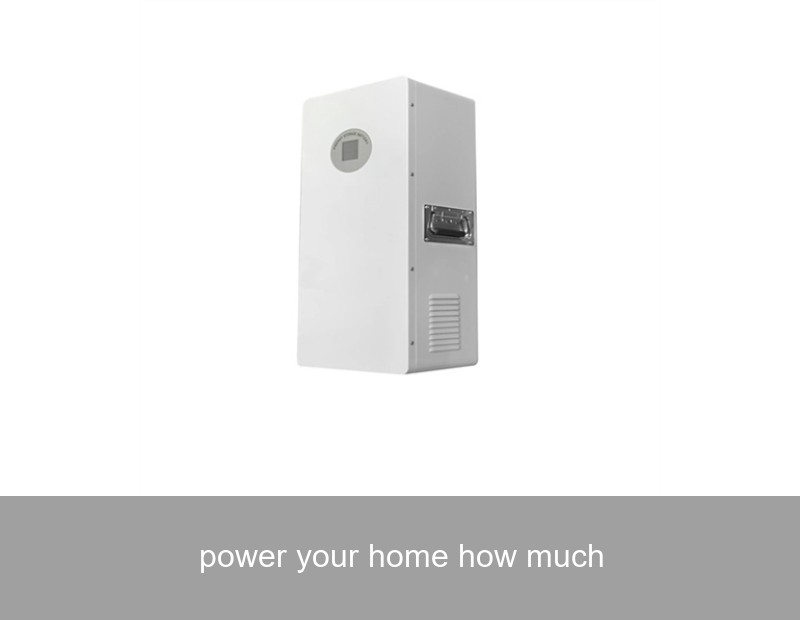
For residential clients, our HOMe Series battery systems (ranging from 5 to 20 kWh modular units) are the cornerstone. They integrate seamlessly with any solar inverter. What sets them apart is the EnergyOS™ software. Think of it as the conductor of your home's energy orchestra. It uses weather forecasting, electricity tariff data (in deregulated markets), and your usage patterns to make real-time decisions:
- Should it store excess solar now because clouds are coming later?
- Should it power the home from the battery during peak grid rates (4-9 pm) and recharge from the grid during off-peak, low-cost hours?
- How can it ensure enough reserve is always available for a potential outage?
For larger needs—like a microgrid for a community or a commercial/industrial facility—Highjoule's GRID Series offers containerized, utility-scale storage solutions. These systems manage "how much" on a macro level, providing grid services, demand charge reduction, and renewable energy firming.

Image: Advanced battery storage system monitoring. Source: Unsplash
Your Next Step Towards Energy Clarity
The journey to answering "how much power does your home need" begins with a single step: knowledge. You don't need to be an expert, but you do need the right partner. Start by downloading your last year's electricity bills and simply adding up the total kilowatt-hours. That number is your key. Then, ask yourself: What is my primary driver—financial savings, energy security, or environmental impact?
Highjoule works with a network of certified, vetted installers across Europe and North America. These professionals can provide a detailed analysis, using tools that simulate solar production on your specific roof and model battery performance against your usage patterns. They can show you, with clear data, the potential savings and resilience a tailored system can bring.
So, we leave you with this open question: If you could lock in a significant portion of your electricity at a predictable, low cost for the next 20+ years while adding a layer of protection against blackouts, what's stopping you from exploring your home's true potential?
 Inquiry
 Online Chat