


Power Wall Battery Backup: Your Ultimate Guide to Energy Independence
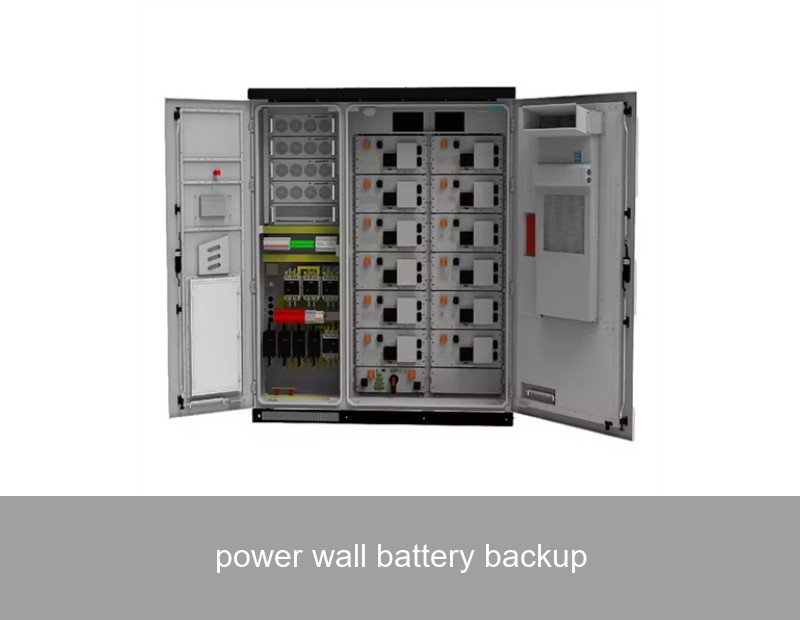
Imagine this: a fierce storm rolls through your neighborhood, the lights flicker and go out. But in your home, the refrigerator hums, the Wi-Fi stays on, and life continues, uninterrupted. This isn't magic; it's the modern reality made possible by a power wall battery backup system. For homeowners across Europe and the US, these sleek units are transforming from a niche luxury to a central pillar of household energy strategy. They're not just about backup power; they're about taking control, maximizing the use of your solar panels, and building a more resilient and cost-effective energy future. As a leader in this space since 2005, Highjoule has been at the forefront, designing intelligent battery storage solutions that empower this very independence.
Table of Contents
- What is a Power Wall Battery Backup?
- The Surge: Why Home Battery Backup is Exploding Now
- Beyond Blackouts: Key Benefits of a Home Battery System
- Choosing the Right System: Capacity, Power, and Intelligence
- A Real-World Case: The Johnson Family in California
- The Future is Integrated and Intelligent
What Exactly is a Power Wall Battery Backup System?
Let's break it down simply. A power wall battery backup is a compact, wall-mounted unit that stores electrical energy. It's typically installed alongside a solar photovoltaic (PV) system, though it can also charge from the grid during off-peak hours. Think of it as a giant, sophisticated battery for your entire house. Its core components include the battery cells (usually lithium-ion for their density and longevity), an inverter that converts stored DC power to usable AC power for your home, and a smart energy management system—the true brain of the operation.
This is where companies like Highjoule excel. Our Residential Energy Hub series isn't just a battery in a box. It's an integrated system with advanced software that learns your consumption patterns, automatically switches to backup power during an outage in milliseconds, and optimizes when to store or discharge energy based on time-of-use rates or your personal preferences. It turns a simple storage device into an active financial and operational asset for your home.
The Surge: Why Home Battery Backup is Exploding Now
The demand for home battery systems isn't happening in a vacuum. It's a direct response to several converging phenomena:
- Grid Instability: Increased frequency of extreme weather events—from wildfires in California to winter storms in Texas and heatwaves in Europe—has exposed grid vulnerabilities. The U.S. Energy Information Administration reports a steady increase in major power outages over the past decade.
- Rising Electricity Costs: Volatile fossil fuel prices and infrastructure upgrade costs are pushing electricity rates higher. Homeowners are seeking ways to lock in their energy costs.
- The Solar Synergy: With millions of solar installations worldwide, the next logical question became, "How do I use my solar energy when the sun isn't shining?" Batteries provide the perfect answer, increasing self-consumption of solar power from 30-50% to over 80%.
- Supportive Policies: Incentives like the Federal Investment Tax Credit (ITC) in the US and various smart export guarantees in Europe improve the economics of adding storage.

Image: A modern home energy setup integrating solar panels and a wall-mounted battery unit. Source: Unsplash
Beyond Blackouts: The Multilayered Benefits of a Home Battery
While backup power is the most dramatic feature, the everyday benefits are equally compelling.
| Benefit | How It Works | Impact |
|---|---|---|
| Energy Resilience | Automatic, seamless switch to battery power during grid outages. | Keep critical loads (lights, fridge, medical equipment) running for hours or even days. |
| Bill Management | Store solar/cheap off-peak energy, use during expensive peak hours (Time-of-Use rates). | Significantly reduce monthly electricity bills, sometimes to near zero. |
| Solar Maximization | Store excess solar generation instead of selling it back to the grid at lower rates. | Increase the value and ROI of your solar investment dramatically. |
| Grid Support & Sustainability | Advanced systems can support grid stability and enable higher renewable penetration. | Contribute to a cleaner, more decentralized, and resilient energy network. |
Highjoule's systems are designed to capture all these benefits. Our smart energy management platform, accessible via a user-friendly app, allows homeowners to set preferences—like "always keep 50% reserve for outages" or "maximize bill savings"—and the system executes automatically.
Choosing the Right System: It's About More Than Just kWh
When evaluating a power wall battery backup, three specs are king:
- Usable Capacity (kWh): How much energy it can store. This determines how long it can power your home. A typical home might need 10-20 kWh to cover essential loads overnight.
- Continuous Power (kW): How much power it can deliver at once. This determines how many appliances you can run simultaneously. Starting a heat pump or well pump requires high power.
- Round-Trip Efficiency: The percentage of energy put in that you get back out. High-quality systems like Highjoule's achieve over 95%, meaning very little energy is lost in the storage process.
But the fourth, often overlooked, component is intelligence. A battery without smart software is like a smartphone without an operating system. Highjoule's technology integrates with your solar inverter, grid connection, and home loads to make millions of tiny optimizations, ensuring you get the most value from every kilowatt-hour stored.
A Real-World Case Study: The Johnson Family in Sacramento, CA
Let's look at concrete data. The Johnson family installed a 8 kW solar array in 2020. They were on a steep Time-of-Use rate plan where electricity cost over $0.45/kWh from 4-9 PM. Despite having solar, their evening usage (when the sun was down) led to high bills.
In 2023, they added a Highjoule Residential Energy Hub 13 (13.5 kWh capacity). Here are the results after one year:
- Bill Savings: Their average monthly electricity bill dropped from $180 to $12 (mostly grid connection fees).
- Self-Consumption: They increased the usage of their own solar power from 40% to 92%.
- Backup Events: The system provided backup power during two public safety power shutoff events, totaling 14 hours, with no disruption.
- Estimated Payback Period: With the federal ITC, their projected payback time is under 7 years, on a system with a 15-year warranty.
"It's peace of mind that you can't put a price on," said Sarah Johnson. "But seeing our bill nearly vanish was the concrete proof we needed. The system just manages everything in the background."

Image: A smart energy management dashboard showing solar production, home consumption, and battery status. Source: Unsplash
The Future is Integrated and Intelligent
The evolution of the power wall battery backup is moving towards full home energy integration. Soon, your battery will seamlessly communicate with your EV charger (turning your EV into a backup resource), your smart thermostat, and even your major appliances. Research from NREL highlights this shift towards responsive, interactive home energy ecosystems.
Highjoule is pioneering this future with our Microgrid Ready systems for residential and community applications. Our technology allows multiple homes with Highjoule systems to form a small, resilient network that can share energy and operate independently from the main grid if necessary. This isn't just individual resilience; it's community resilience.
Highjoule: Engineered for Reliability You Can Trust
With nearly two decades of experience, Highjoule doesn't just follow trends—we set standards. Our battery systems are built with automotive-grade lithium-ion cells, undergo rigorous safety and performance testing, and are backed by industry-leading warranties. Whether for a single-family home, a commercial business looking to manage demand charges, or a remote microgrid, our solutions are scalable, robust, and intelligent. We provide more than hardware; we provide a comprehensive partnership from design and installation support to ongoing monitoring and optimization.
So, as you consider taking control of your energy future, ask yourself: What would true energy independence look like for your home? Is it the security of an unwavering power supply, the satisfaction of drastically lower bills, or the pride of contributing to a cleaner grid? Perhaps it's all three. The technology to make it happen is here, and it's more accessible and intelligent than ever.
 Inquiry
 Online Chat