


Power Communication Systems: The Invisible Backbone of a Reliable Renewable Energy Grid
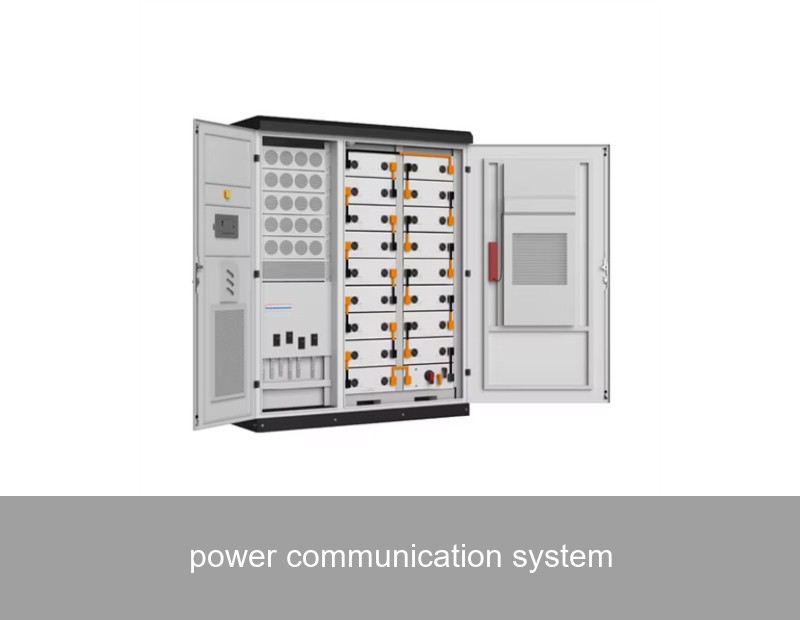
Imagine a symphony orchestra without a conductor. Individual instruments might play beautifully, but the result would be chaotic. In the world of modern energy, especially with the rapid rise of solar and wind power, the power communication system plays the role of that essential conductor. It's the invisible network that allows generation, storage, and consumption to harmonize, ensuring the lights stay on as we transition to a cleaner grid. For businesses, communities, and homeowners investing in renewables, understanding this digital backbone is key to unlocking true energy independence and resilience.
Table of Contents
- The Silent Crisis: When Renewable Energy Grids Fall Silent
- Data Speaks: The Quantifiable Impact of Robust Communication
- A Case Study: Grid Stability in Northern Germany
- Beyond Basic Control: The Intelligent Functions Enabled by Communication
- Highjoule's Approach: Integrated Intelligence for Seamless Power Management
- Future-Proofing Your Energy Assets: Key Considerations
The Silent Crisis: When Renewable Energy Grids Fall Silent
You've made a smart investment: a sprawling rooftop solar array for your factory, or perhaps a community microgrid powered by a local wind farm. The hardware is top-tier, the installation flawless. Yet, you encounter puzzling issues. Your battery storage system occasionally fails to charge during peak solar production, or worse, doesn't dispatch power when you need it most during an outage. The inverters and meters seem to be operating in isolation. This is the classic symptom of a weak or non-existent power communication system.
Without a sophisticated communication layer, an energy system is merely a collection of "dumb" devices. The solar panels produce when the sun shines, batteries charge until full, and inverters convert power blindly. There's no coordination, no awareness of grid conditions, electricity prices, or real-time consumption patterns. This lack of intelligence leads to inefficiency, wasted renewable potential, and can even threaten local grid stability as more such "silent" systems come online.
Data Speaks: The Quantifiable Impact of Robust Communication
The value of communication isn't theoretical; it's measured in kilowatt-hours, euros, and carbon reduction. Let's look at the numbers. According to a study by the National Renewable Energy Laboratory (NREL), advanced communication and control strategies for distributed energy resources (like solar+storage) can improve local hosting capacity—the amount of renewable energy a grid can absorb—by 50-200%. Furthermore, intelligent, communication-driven energy management can increase self-consumption of solar power for a commercial site by up to 35%, dramatically reducing reliance on the volatile grid and slashing energy bills.
Consider this simple table contrasting systems with and without advanced communication:
| Feature / Capability | System WITHOUT Advanced Communication | System WITH Advanced Communication |
|---|---|---|
| Demand Response Participation | Not possible | Yes - automatic, revenue-generating |
| Dynamic Peak Shaving | Static, rule-of-thumb | AI-predicted, optimizes for cost & equipment health |
| Grid Support Services | None | Can provide frequency regulation, voltage support |
| Fault Detection & Diagnostics | Manual, reactive | Remote, proactive, predictive maintenance |
A Case Study: Grid Stability in Northern Germany
The real-world imperative for these systems is clear in regions with high renewable penetration. Northern Germany, a global leader in wind energy, provides a compelling case. On a particularly windy day in 2023, the region experienced a near-miss grid event. A sudden drop in wind frequency, coupled with a lack of immediate responsive power, threatened instability. However, a pilot project involving over 500 aggregated residential and commercial battery storage systems, all linked via a secure power communication system, was activated.
Within seconds, the centralized control platform sent signals through this communication network, instructing the distributed batteries to simultaneously inject power into the grid. This collective action provided 11 MW of primary control reserve power for over 30 minutes, effectively stabilizing the grid frequency and preventing potential blackouts. This case, documented by the German Federal Ministry for Economic Affairs and Climate Action, underscores that communication isn't just about optimization—it's about resilience and enabling millions of small assets to act as a unified virtual power plant (VPP).

Image: Grid stability in high-renewable regions relies on advanced communication. Source: Unsplash
Beyond Basic Control: The Intelligent Functions Enabled by Communication
So, what exactly does a modern power communication system do? Think of it as the central nervous system for your energy assets. It enables functionalities that transform a passive setup into an active, earning asset:
- Real-Time Monitoring & Visualization: See every watt of generation, consumption, and storage flow from any device.
- Predictive Optimization: Using weather forecasts and usage patterns, the system pre-charges batteries before a cloudy period or pre-cools a building before peak heat, maximizing savings.
- Automated Market Participation: The system can automatically bid your battery's capacity into grid service markets (like frequency containment reserve) based on real-time price signals, generating revenue with no manual intervention.
- Cybersecurity & Protocol Agnosticism: A robust system uses encrypted, industry-standard protocols (like SunSpec Modbus, IEEE 2030.5, MQTT) to securely "talk" to equipment from any manufacturer, preventing vendor lock-in.
Highjoule's Approach: Integrated Intelligence for Seamless Power Management
At Highjoule, we've built our advanced Battery Energy Storage Systems (BESS) and energy management platforms with this communicative intelligence at their core. We understand that hardware is only half the solution. Our H-IQ Energy Platform acts as the unifying brain, featuring a sophisticated power communication system that seamlessly integrates with your solar inverters, legacy building management systems, and the utility grid.
For a commercial client in California, for instance, we deployed our H-Cube Industrial BESS paired with the H-IQ Platform. The system doesn't just store excess solar; it constantly communicates with the local utility's demand response program. When a "Flex Alert" is issued, the H-IQ Platform autonomously switches the facility to battery power within milliseconds, reducing grid strain and earning significant financial incentives for the client. This level of automated, value-driven response is impossible without a secure, reliable, and fast communication backbone.

Image: The intelligence behind energy management relies on secure data communication. Source: Unsplash
Future-Proofing Your Energy Assets: Key Considerations
When planning a solar-plus-storage or microgrid project, the communication strategy must be a priority from day one. Asking the right questions is crucial:
- Open Standards: Does the proposed system use open, non-proprietary communication protocols? This ensures you can add or change equipment in the future.
- Cybersecurity Architecture: How is data encrypted, authenticated, and protected from intrusion? The Cybersecurity & Infrastructure Security Agency (CISA) provides critical guidelines for energy systems.
- Scalability: Can the communication network easily accommodate additional assets, like EV charging stations or more storage units, without a complete overhaul?
- Edge Intelligence: Does the system have local processing capability (at the "edge") to make critical decisions even if the internet connection is temporarily lost?
This is where partnering with an experienced provider like Highjoule makes a tangible difference. Our solutions are designed not just for today's needs but for the evolving demands of the grid, ensuring your investment remains smart, responsive, and valuable for decades.
Your Grid, Your Symphony
The energy transition is accelerating. As you take control of your power generation and consumption, will your system merely play notes, or will it conduct a masterpiece of efficiency, resilience, and revenue? The difference lies in the silent, digital conductor: the power communication system.
Is your current or planned energy system capable of listening to the grid and responding intelligently, or is it operating in a silo? We invite you to explore what integrated intelligence can do for your energy goals.
 Inquiry
 Online Chat