


Portable Solar Panels South Africa: Your Guide to Unplugged Power and Energy Independence
Imagine having reliable, clean electricity wherever you go in South Africa—from the sun-drenched shores of the Western Cape to the remote vastness of the Karoo. This is the promise of portable solar panels South Africa enthusiasts are increasingly turning to. For residents, adventurers, and businesses across the nation, these compact power solutions are not just gadgets; they are a direct response to the dual challenges of frequent load-shedding and the need for sustainable, off-grid energy. In this guide, we'll explore how portable solar technology is powering a more resilient South Africa, and how companies like Highjoule are integrating these mobile solutions into broader, smarter energy ecosystems.
Table of Contents
- The Rise of Portable Solar in South Africa
- Key Components of a Portable Solar Power System
- Real-World Case Study: The Eco-Lodge in Limpopo
- Choosing the Right Portable Solar Panel
- Beyond the Panel: The Role of Advanced Battery Storage
The Rise of Portable Solar in South Africa: A Response to a National Need
The phenomenon is hard to miss. Sales of portable solar panels and power stations have surged. But what's driving this? The primary catalyst is South Africa's persistent load-shedding, which has moved from an occasional inconvenience to a structured part of daily life. The economic cost is staggering, with the Council for Scientific and Industrial Research (CSIR) estimating losses in the hundreds of billions of Rands annually. For the average household or small business, this translates to spoiled food, lost productivity, and immense frustration.
Portable solar panels offer a nimble and immediate solution. Unlike permanent installations, they can be deployed in minutes—powering essential devices during an outage, or taken on a weekend camping trip to the Drakensberg. Their versatility is their superpower. But it's crucial to understand that a portable panel alone is not a complete power system. Its true potential is unlocked when paired with intelligent energy storage.

Image Source: Unsplash - Portable solar solutions provide flexibility for both urban and remote settings.
Key Components of a Portable Solar Power System
Think of your portable power setup as a mini, movable power plant. It has three core parts:
- The Portable Solar Panel(s): These are the generators, converting sunlight into direct current (DC) electricity. Modern panels are foldable, lightweight, and use high-efficiency monocrystalline cells.
- The Power Station (Portable Battery): This is the heart of the system. It stores the DC electricity from the panels. Its capacity, measured in watt-hours (Wh), determines how many devices you can charge and for how long.
- The Charge Controller & Inverter: Often built into the power station, these manage the energy flow (preventing battery damage) and convert DC power to the alternating current (AC) that most household appliances use.
| Component | Primary Function | What to Look For |
|---|---|---|
| Portable Solar Panel | Converts sunlight to DC electricity | High wattage (100W+), efficiency (>21%), durability, foldable design |
| Portable Power Station | Stores electrical energy for later use | Capacity (Wh), pure sine wave inverter, multiple output ports, LiFePO4 battery chemistry |
| Charge Controller | Regulates voltage/current from panel to battery | MPPT (Maximum Power Point Tracking) technology for optimal efficiency |
Real-World Case Study: The Limpopo Eco-Lodge's Hybrid Solution
Let's move from theory to practice. A compelling example comes from a family-run eco-lodge in the Limpopo Province. Their challenge was twofold: provide 24/7 power for guest comfort (lighting, fridge, fans) without the noise and pollution of diesel generators, and do so in a location far from reliable grid infrastructure.
Their Solution: A hybrid system that cleverly combines portability with permanence.
- They installed a central, high-capacity Highjoule H2 Series lithium-ion battery storage system as the lodge's core energy bank.
- For fixed power generation, they have a primary rooftop solar array.
- The game-changer was the integration of several high-wattage portable solar panels. During the day, staff can deploy these panels in optimal sunspots around the property, connecting them directly to the H2 system to maximize solar harvest. At night, the panels can be securely stored.
- Guests can also rent smaller portable solar kits for power in their private units or for guided walking safaris.
The Data-Driven Outcome: Within six months, the lodge reported a 90% reduction in generator use, slashing fuel costs and maintenance. Their overall energy independence increased to 95%, a critical selling point for environmentally conscious travelers. This case perfectly illustrates how portable solar panels in South Africa can be more than a stopgap; they are a scalable, flexible component of a professional energy strategy.
Where Highjoule Fits In: From Portable Power to Whole-System Intelligence
While portable panels excel at mobility, resilience for homes and businesses often requires a more robust, integrated approach. This is where Highjoule's expertise becomes vital. As a global leader in advanced energy storage since 2005, we don't just provide batteries; we provide intelligent energy management systems.
For a South African homeowner tired of load-shedding, a Highjoule residential battery system, like our Resi-Cell series, can be seamlessly integrated with your existing or new solar panels—both fixed and portable. Our systems feature advanced software that learns your energy usage patterns, automatically switches to battery power during outages, and can even optimize for time-of-use tariffs if applicable. Think of your portable solar panels as excellent solar scouts, and a Highjoule system as the command center that strategically deploys all the energy they collect.
Choosing the Right Portable Solar Panel for Your Needs in South Africa
With many options on the market, selection can be daunting. Focus on these key factors:
- Power Output (Wattage): Match this to your power station's input capability and your energy needs. A 100W-200W panel is a great start for charging phones, laptops, and a small fridge.
- Battery Chemistry: For the power station, Lithium Iron Phosphate (LiFePO4) batteries are superior. They are safer, have a longer lifespan (3,000+ cycles), and perform better in heat—a key consideration for the South African climate.
- Portability vs. Power: Balance weight and size against the wattage you require. Check if the panel includes a sturdy carry case.
- Regulatory Standards: Ensure equipment has relevant South African or international safety certifications (like IEC standards).

Image Source: Unsplash - Choosing the right connector and compatible equipment is crucial for system efficiency.
Beyond the Panel: The Critical Role of Advanced Battery Storage
Here's a fundamental insight: Solar panels generate, but batteries empower. The sun isn't always shining, especially during peak evening load-shedding. The value of your solar investment—portable or fixed—is ultimately determined by the quality and intelligence of the storage it feeds.
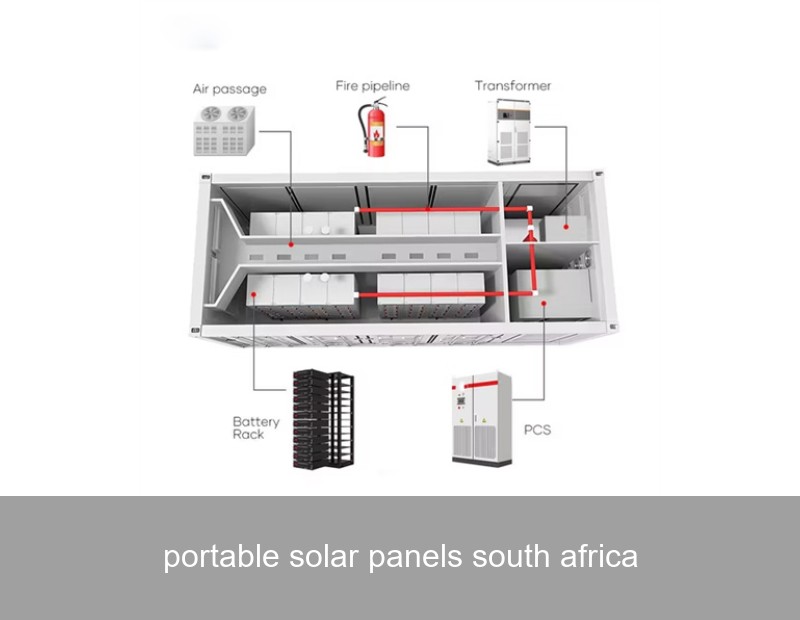
Highjoule's commercial and industrial (C&I) solutions, such as our GridMax series, take this further. For a South African factory or farm, these large-scale battery energy storage systems (BESS) can be paired with massive solar farms (or a fleet of portable panels for temporary sites) to:
- Provide uninterrupted power during grid outages, keeping operations running.
- Manage energy demand to avoid costly peak utility charges ("peak shaving").
- Stabilize local microgrids, a growing solution for remote communities and mines.
The Future: Portable Panels as Part of a Smarter, Decentralized Grid
The trajectory is clear. Energy systems are becoming more distributed and flexible. Portable solar panels in South Africa are a visible symbol of this shift, putting power generation directly in the hands of users. The next evolution is connecting these distributed assets into intelligent networks.
Highjoule is at the forefront of this with our integrated energy management platforms. Imagine a future where your home's Highjoule system, your electric vehicle, and your portable solar panels all communicate. During a widespread grid outage, your system could prioritize power to essential medical devices, while your portable kit could be loaned to a neighbor to charge their phone—all managed through a simple smartphone app. This level of resilience and community cooperation is the true endgame of the portable solar revolution.
Your Energy Independence Journey Starts with a Question
Whether you're packing for a cross-country trip in a 4x4 or simply trying to keep the lights on during stage 6 load-shedding, portable solar panels offer a tangible step toward energy freedom. But we're curious: What does "energy resilience" look like for you—is it about keeping the wifi on for your family, ensuring your small business never skips a beat, or having the freedom to explore off the map without leaving a carbon footprint? Defining your goal is the first step to building the right system, and it's a conversation we at Highjoule are passionate about having. The sun is providing the power; the technology is here to capture and use it wisely. The next move is yours.
 Inquiry
 Online Chat