


Portable Power Station Allpowers: Your Ultimate Guide to Off-Grid Energy Freedom
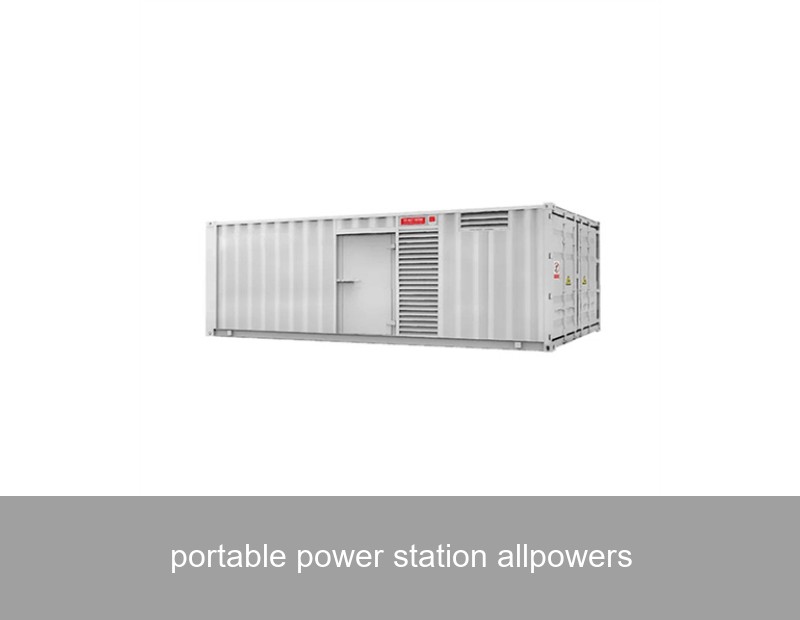
Imagine you're halfway through a critical project on a remote job site, and your tools die. Or you're at the peak of a camping trip, and your phone—your camera, map, and lifeline—runs out of juice. This modern frustration is a common phenomenon, highlighting our deep dependence on reliable electricity, even when we step away from the grid. This is where the portable power station, particularly innovative solutions from brands like Allpowers, becomes not just convenient but essential. Unlike traditional gas-guzzling generators, these silent, clean-energy hubs store power in high-capacity batteries, offering a safe, fume-free way to run everything from laptops to mini-fridges. As a leader in advanced energy storage, Highjoule understands that the principles behind these portable units—efficiency, safety, and intelligent management—are the very foundation of the larger-scale systems powering homes and businesses globally. Let's explore how the right portable power station can unlock true energy independence.
Table of Contents
- What is a Portable Power Station?
- Why Allpowers Stands Out in the Crowd
- Key Features to Look For
- A Real-World Case Study: The Digital Nomad's Solution
- Beyond Portable: Highjoule's Integrated Energy Vision
- Choosing the Right Power Station for You
What is a Portable Power Station?
Think of a portable power station as a giant, sophisticated power bank on wheels (or with a handle). At its core, it's a large-capacity lithium-ion or LiFePO4 battery pack equipped with an inverter, charge controller, and multiple output ports. It quietly converts stored DC power into standard AC electricity, providing multiple outlets for your devices. The key difference from a traditional generator? Zero emissions, near-silent operation, and minimal maintenance. They are typically recharged via a wall outlet, car socket, or, most compellingly, solar panels, creating a personal, renewable microgrid.
The Technology Inside: More Than Just a Big Battery
While the user experience is simple—plug and play—the internal technology is what separates premium models from the rest. A high-quality portable power station like those from Allpowers features:
- Advanced Battery Chemistry (LiFePO4): Many top models now use Lithium Iron Phosphate batteries. They offer longer lifespans (3,000+ cycles), superior safety due to thermal stability, and consistent power delivery even at low charge levels.
- Pure Sine Wave Inverters: This is crucial for sensitive electronics like medical devices, laptops, and audio equipment. A pure sine wave replicates the smooth, clean electricity from the grid, preventing potential damage caused by the "modified sine wave" from cheaper inverters.
- MPPT Solar Charge Controllers: When using solar panels, a Maximum Power Point Tracking controller maximizes efficiency, squeezing up to 30% more energy from your panels compared to older PWM technology.

Image Source: Unsplash - Portable power in use outdoors.
Why Allpowers Stands Out in the Crowd
In a bustling market, Allpowers has carved a niche by focusing on smart, solar-optimized portable power. Their products often strike a balance between capacity, weight, and charging speed, with a strong emphasis on solar input capabilities. For users serious about off-grid sustainability, this focus is a game-changer. It allows for true energy independence, where sunlight becomes your primary fuel source. This philosophy of leveraging renewable energy aligns perfectly with Highjoule's mission for larger-scale applications. While Highjoule's commercial battery storage systems stabilize grids and reduce demand charges for businesses, the core idea is the same: intelligently store clean energy for when and where it's needed most.
Key Features to Look For in Your Portable Power Station
Navigating specifications can be daunting. Here’s a breakdown of the critical specs, using typical Allpowers models as a benchmark:
| Feature | What It Means | Why It Matters |
|---|---|---|
| Capacity (Wh) | Watt-hours. The total energy storage. | A 500Wh unit can run a 50W laptop for ~10 hours. Choose based on your device's total wattage and runtime needs. |
| Power Output (W) | Max continuous wattage the AC outlets can support. | Must exceed the startup surge of your largest device (e.g., a coffee maker or electric kettle). |
| Battery Chemistry | LiFePO4 vs. standard Li-ion. | LiFePO4 is safer, lasts many more charge cycles, and performs better in varied temperatures. |
| Solar Input (Max) | The maximum wattage of solar panels it can accept. | Higher wattage (e.g., 400W+) means faster solar recharging, crucial for multi-day adventures. |
| Output Ports | AC, DC, USB-C PD, USB-A, Carport. | Versatility. USB-C Power Delivery (PD) is essential for fast-charging modern phones and laptops. |
A Real-World Case Study: The Digital Nomad's Solution
Let's move from theory to practice. Meet Sarah, a landscape photographer based in California. Her work takes her to remote national parks for days at a time. The phenomenon: she needed to keep her drone batteries (approx. 60W each), camera gear, and satellite communicator charged reliably, without access to any grid power. Relying on her car's battery was inefficient and risky.
The Data & Solution: Sarah calculated her daily energy needs at around 400Wh. She chose an Allpowers S1500, a 1500Wh LiFePO4 unit with a 1200W output. Its key feature was a high 500W max solar input. She paired it with two 200W Allpowers solar panels.
- Performance Data: On a typical sunny day, her solar array generated roughly 800-1000Wh. This meant she could fully recharge the unit from 0% in about 2-3 hours of sunlight, while simultaneously powering her gear. Over a 3-day shoot, she never dipped below 40% capacity, creating a sustainable, closed-loop system.
- The Outcome: Total energy independence. Sarah eliminated range anxiety for her gear, extended her field time, and reduced her environmental footprint—all while capturing stunning imagery. This case mirrors the benefits Highjoule delivers at scale: using smart storage + solar to provide resilient, clean power for remote microgrids or backup power for critical commercial operations.

Image Source: Unsplash - Solar panels in a remote location.
Beyond Portable: Highjoule's Integrated Energy Vision
While a portable power station liberates the individual, the same technology principles are amplified in Highjoule's stationary storage solutions. For over 15 years, Highjoule has been designing and deploying advanced Battery Energy Storage Systems (BESS) for homes, businesses, and utilities. Imagine the robust LiFePO4 battery and intelligent inverter from your portable unit, scaled up to the size of a wall or shipping container, and integrated with building energy management software.
For a European manufacturing plant, a Highjoule BESS might store cheap nighttime electricity or onsite solar to power daytime operations, slashing energy costs and carbon emissions. For a California homeowner, our residential storage systems provide backup power during public safety power shutoffs, while optimizing self-consumption of rooftop solar. The goal is unified: to make clean, reliable, and intelligent energy storage accessible at every scale, from your backpack to your business.
Choosing the Right Power Station for You
So, how do you select your perfect portable power partner? Follow this simple logic ladder:
- List Your Devices: What will you power? Note their wattage (found on the label) and estimated runtime.
- Calculate Capacity (Wh): Add up the wattage of all devices you'll run simultaneously, multiplied by hours of use. Add a 20% buffer.
- Check Peak Power (W): Ensure the unit's wattage rating exceeds the highest startup surge (often 1.5x the running wattage for motors).
- Prioritize Recharging: If you're going off-grid for more than a day, solar input capability is non-negotiable. Opt for a model with high solar input wattage and MPPT.
- Consider the Ecosystem: Look for brands, like Allpowers, that offer compatible solar panels and accessories for a seamless experience.
Your Next Step Towards Energy Independence
The world is moving towards decentralized, resilient power. Whether you're an avid camper, a remote worker, or a homeowner concerned about grid stability, taking control of your energy supply starts with understanding the tools available. A portable power station is a powerful first step into that future.
What does your ideal scenario of energy freedom look like—is it a weekend camping trip with all the comforts of home, or ensuring your home office never loses power during an outage? How might integrating smart storage at different scales change your relationship with energy?
 Inquiry
 Online Chat