


Harnessing the Sun: Your Complete Guide to Photovoltaic Electricity
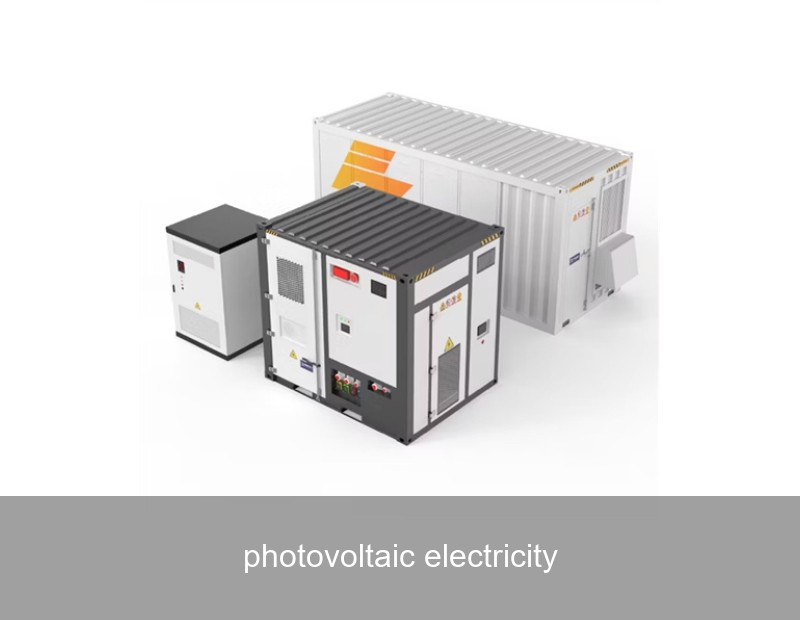
Have you ever looked at your rooftop on a sunny day and imagined it silently powering your home or business? That's the quiet promise of photovoltaic electricity. It's more than just solar panels; it's the direct conversion of sunlight into usable electrical current. But here's a truth many discover after installation: generating the power is only half the battle. The real magic—and the key to true energy independence—lies in what you do with that clean photovoltaic electricity once the sun is shining.
For nearly two decades, Highjoule has partnered with homeowners and businesses across Europe and North America. We've seen a common journey: initial excitement about solar generation, followed by the realization that without a strategy, a significant portion of that self-produced power flows back to the grid, often for less economic benefit. This article will demystify photovoltaic electricity, explore the critical need for storage, and show how intelligent systems are revolutionizing our relationship with the sun.
The Math Behind PV Generation: It's Not Always Linear
A photovoltaic (PV) system operates on a beautiful scientific principle: the photovoltaic effect. When photons from sunlight strike semiconductor material (like silicon in solar panels), they knock electrons loose, creating a flow of direct current (DC) electricity. An inverter then converts this DC into the alternating current (AC) that powers our lives.
However, the output isn't constant. It's a curve that mirrors the sun's path:
- Peak Generation: Occurs around midday, often exceeding the property's immediate consumption.
- Low/No Generation: In the early morning, late evening, and of course, at night.
- Weather Dependence: Cloud cover can cause dramatic, unpredictable dips in production.
This intermittency creates a fundamental mismatch. The U.S. Department of Energy's Solar Energy Technologies Office notes that while solar is now one of the cheapest new sources of electricity, its variable nature requires supportive grid management or storage for optimal use.

Image: A typical daily photovoltaic production curve. Source: Unsplash (Representational)
The Storage Imperative: Capturing the Sun's Surplus
This is where the conversation evolves from simple generation to comprehensive energy management. Without storage, excess midday photovoltaic electricity is exported. Later, when the sun sets, you must import power from the grid. This "buy high, sell low" dynamic limits both savings and self-sufficiency.
Battery Energy Storage Systems (BESS) are the game-changer. They store surplus solar energy for use when you need it most. But not all storage is created equal. An effective system hinges on three pillars:
| Pillar | Description | Common Challenge |
|---|---|---|
| Capacity (kWh) | The total amount of energy the battery can store. | Oversizing increases cost; undersizing leaves energy wasted. |
| Power (kW) | The rate at which energy can be delivered (e.g., for starting large appliances). | Insufficient power can lead to "clipping" or inability to power whole home/business during outages. |
| Intelligence | The software that decides when to charge, discharge, or hold. | Basic systems discharge too quickly, leaving you unprotected before dawn. |
Case Study: A German Bakery's Recipe for Energy Independence
Consider "Bäckerei Schmidt" (name changed for privacy), a medium-sized artisan bakery in Bavaria. They installed a 50 kW rooftop PV system, generating ample photovoltaic electricity during the day. However, their energy profile was challenging:
- High Morning Demand: Ovens fired up at 4 AM, long before sunrise.
- Midday Lull: Peak solar production coincided with low consumption.
- Evening Spike: Retail lighting and equipment remained on until 8 PM.
Despite generating 85% of their annual consumption, their grid dependency remained over 65% due to timing mismatch. In 2022, they integrated a Highjoule H-Ion 30 Commercial battery storage system (30 kWh capacity, 25 kW power) with our proprietary Adaptive Load Predictor (ALP) software.
The results after one year were transformative:
- Self-Consumption Rate increased from 35% to 92%.
- Grid Energy Purchases fell by 78%, shielding them from volatile energy prices.
- Peak Demand Charges were reduced by 40% by using stored battery power to "shave" peak loads.
- The system paid for itself in under 5 years, factoring in German energy price trends and KfW subsidies.
This case exemplifies the shift from passive generation to active, intelligent consumption.
The Highjoule Solution: Beyond Generation to Intelligent Management
At Highjoule, we believe a storage system should be an autonomous energy manager. Our products, like the H-Ion Residential Series and the H-Ion Commercial/Industrial line, are built around our core Energy Operating System (EOS). This isn't just a battery; it's a brain for your building's energy flow.
How does EOS optimize your photovoltaic electricity?
- Weather-Adaptive Learning: Integrates local forecasts to pre-charge batteries before a cloudy day.
- Load Profile Prediction: Learns your daily and weekly patterns to ensure energy is reserved for your true peaks.
- Grid-Service Ready: In certain markets, can provide grid-stabilization services (like frequency response) creating a potential revenue stream, all without compromising your security.
For microgrids and larger industrial applications, our GridSynch Platform allows multiple storage units and generation sources to operate as a single, resilient entity. This is crucial for campuses, remote communities, or critical infrastructure seeking to maximize on-site renewable consumption.

Image: Intelligent energy storage integrates seamlessly into modern homes. Source: Unsplash (Representational)
The Importance of Safety and Longevity
Our expertise informs every cell choice and thermal management design. We utilize lithium iron phosphate (LFP) chemistry for its superior safety profile, long cycle life, and stability—a non-negotiable standard for systems integrated into your home or business. This focus on safety is echoed by leading research bodies like the Fraunhofer Institute in Europe, which continually advances battery safety and lifecycle testing.
The Future is a Smart, Self-Consuming Grid
The evolution of photovoltaic electricity is leading us away from a centralized, one-way grid model toward a decentralized network of "prosumers"—producers and consumers. In this future, the value of solar is maximized not at the meter, but at the point of use.
Technologies like vehicle-to-home (V2H) and advanced time-of-use rate arbitrage are on the horizon. Highjoule's systems are designed with this future in mind, ensuring your investment is software-upgradable and ready to integrate with new technologies as they become available.
So, as you consider harnessing photovoltaic electricity, we leave you with this question: Is your goal simply to generate green energy, or is it to fundamentally transform how you consume, control, and benefit from every kilowatt-hour your property produces? What would 90% energy independence mean for your operational resilience or household peace of mind?
 Inquiry
 Online Chat